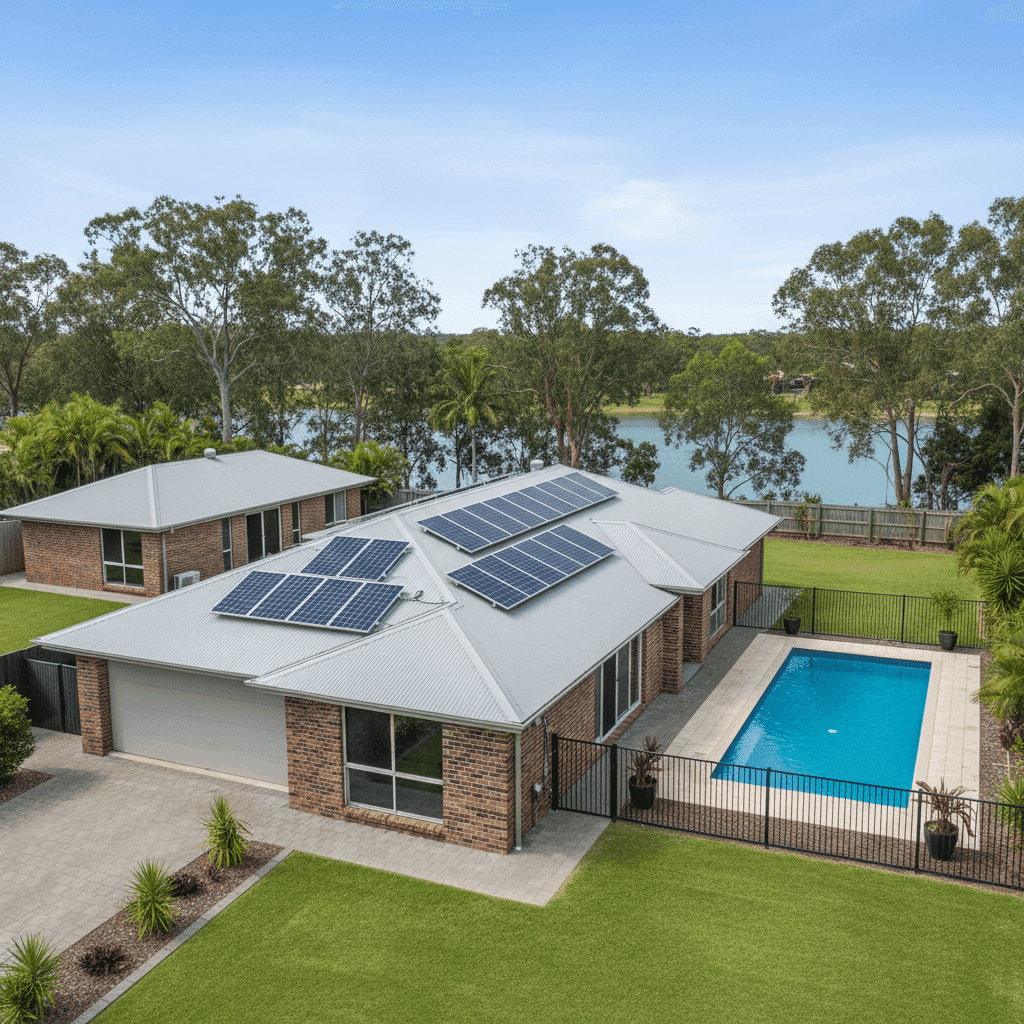
Banksia Beach is a sought-after coastal suburb on Bribie Island in South East Queensland, known for its relaxed lifestyle, waterway access, and modern residential developments. If you own a free standing home here, understanding how your insurance premium stacks up against local and national benchmarks is a smart way to make sure you're not overpaying — or underinsured.
This article breaks down a real home and contents insurance quote for a 4-bedroom, 4-bathroom free standing home in Banksia Beach (postcode 4507), and puts the numbers in context so you can make a more informed decision.
---
Is This Quote Fair?
The annual premium for this property came in at $3,837 per year (or $374/month), covering a building sum insured of $845,000 and contents valued at $80,000, each with a $2,000 excess.
CoverClub's pricing engine rates this quote as FAIR — Around Average, and the data backs that up. At $3,837/yr, this premium sits comfortably between the suburb's 25th percentile ($3,167/yr) and the median ($4,979/yr). In plain terms: roughly half of comparable quotes in Banksia Beach cost more than this, and about a quarter cost less. That's a reasonable position to be in, though there's still room to potentially do better.
It's worth noting that the suburb average premium is a notably high $8,007/yr — significantly skewed by expensive outliers in the dataset. The median is a more reliable benchmark, and at $4,979/yr, this quote comes in about $1,142 below the local median. That's a meaningful saving.
---
How Banksia Beach Compares
To put this quote in broader context, here's how Banksia Beach premiums sit relative to the rest of Queensland and the country:
| Benchmark | Average | Median |
|---|---|---|
| Banksia Beach (4507) | $8,007/yr | $4,979/yr |
| Queensland | $9,129/yr | $3,903/yr |
| National | $5,347/yr | $2,764/yr |
| Sunshine Coast LGA | $7,249/yr | — |
(Based on 77 quotes sampled for the Banksia Beach suburb. See full [Banksia Beach insurance stats](https://coverclub.com.au/stats/QLD/4507/banksia-beach), [QLD stats](https://coverclub.com.au/stats/QLD), and [national stats](https://coverclub.com.au/stats/national).)
A few things stand out here. Queensland's average premium of $9,129/yr is the highest in the country by a significant margin, largely driven by the state's exposure to extreme weather events including floods, storms, and cyclones. The wide gap between Queensland's average ($9,129) and median ($3,903) tells you that a subset of high-risk properties is pulling the average up considerably.
For Banksia Beach specifically, the Sunshine Coast LGA average of $7,249/yr reflects the region's mix of coastal and waterway-adjacent properties, many of which attract flood or storm surge loadings. At $3,837/yr, this quote is well below both the LGA and state averages — a positive outcome for the homeowner.
---
Property Features That Affect Your Premium
Several characteristics of this property influence the final premium, both positively and negatively.
Features That Help Keep Costs Down
- Brick veneer construction is generally viewed favourably by insurers. It's more resistant to fire and wind damage than lightweight cladding, which can translate to lower premiums.
- Steel/Colorbond roof is a durable, low-maintenance roofing material that performs well in Queensland's storm season. Insurers tend to price this more competitively than older tile or timber roofing.
- Concrete slab foundation provides structural stability and reduces subsidence risk, which is a factor in some parts of coastal Queensland.
- Built in 2016, this is a relatively modern home. Newer builds typically comply with more recent building codes — including improved cyclone and storm resistance standards introduced after events like Cyclone Yasi — which can reduce risk in insurers' eyes.
- No cyclone risk area designation is a notable positive for a Queensland coastal property. Many Bribie Island properties escape the higher cyclone loading applied to areas further north.
Features That Add Complexity (and Cost)
- Swimming pool adds liability exposure and increases the overall replacement cost of the property, both of which can lift premiums modestly.
- Solar panels represent a significant asset — systems on a home this size could easily be worth $10,000–$20,000 or more. It's important to confirm with your insurer whether panels are covered under the building sum insured or require separate listing.
- Granny flat adds substantial insurable value to the property. A secondary dwelling increases the total rebuild cost and may affect how your policy responds to a claim — always confirm your building sum insured accounts for the full structure.
- Ducted climate control is a high-value fixed asset that forms part of the building sum insured. Ensure your $845,000 building cover adequately reflects this and other inclusions.
- Timber/laminate flooring can be more costly to replace than tiles, particularly if the flooring runs throughout a 244 sqm home.
---
Tips for Homeowners in Banksia Beach
1. Double-Check Your Building Sum Insured
At 244 sqm with a granny flat, pool, solar panels, and ducted air conditioning, the total rebuild cost of this property could be substantial. Use a building cost calculator or speak with a quantity surveyor to validate whether $845,000 is sufficient. Underinsurance is one of the most common — and costly — mistakes homeowners make.
2. Review What's Covered Under Contents
$80,000 in contents cover may be appropriate, but it's worth doing a proper home inventory. High-value items like jewellery, electronics, or artwork may need to be separately listed to be fully covered. Don't forget outdoor furniture, which is often covered under contents.
3. Compare Quotes Annually
The insurance market in Queensland is dynamic. Premiums can shift significantly year to year as insurers reassess their risk exposure. Even if you're happy with your current insurer, running a comparison at renewal time takes minutes and could save hundreds of dollars.
4. Ask About Discounts for Security Features
Modern homes often have smoke alarms, deadbolts, and security systems that qualify for premium discounts. If this home has any of these features, make sure your insurer knows — it may not be automatically factored in.
---
Ready to Compare?
Whether you're buying, renewing, or just curious about what you should be paying, CoverClub makes it easy to see how your premium stacks up. Get a home insurance quote in minutes and compare it against real data from your suburb, your state, and across Australia. Knowledge is the best tool you have when it comes to getting a fair deal on home insurance.