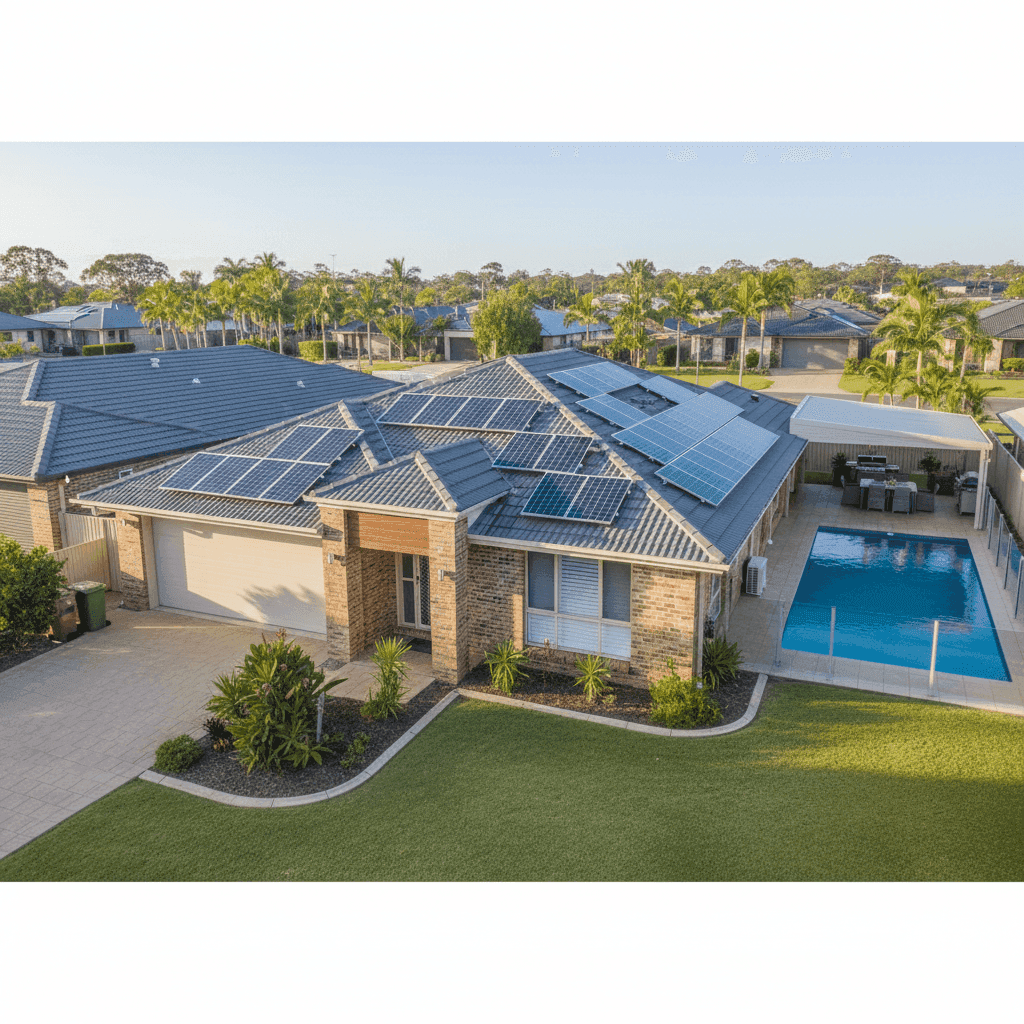
Nestled on Bribie Island just north of Brisbane, Banksia Beach is a relaxed coastal suburb that's become increasingly popular with families and sea-changers alike. If you own a free standing home here — particularly a larger four-bedroom property — understanding what you should be paying for home and contents insurance is an important part of protecting one of your biggest assets. This article breaks down a real quote for a four-bedroom, two-bathroom brick veneer home in Banksia Beach (postcode 4507) and puts the numbers in context.
---
Is This Quote Fair?
The quote in question comes in at $4,330 per year (or $423 per month) for combined home and contents cover, with a building sum insured of $987,000 and contents valued at $91,733. Both the building and contents excess sit at $1,000.
Our pricing engine rates this quote as Fair — Around Average, and the data backs that up. When you look at Banksia Beach suburb insurance statistics, the median premium across 77 quotes sits at $4,979 per year. This quote comes in roughly $650 below that median, which is a reasonable outcome — not a bargain, but certainly not overpriced either.
The "fair" rating reflects that there's room to do better (the 25th percentile of local quotes sits at $3,167/yr), but also that this quote is well within normal market range for the area. For a 325 sqm home with a pool, solar panels, and ducted climate control, a sub-$4,500 annual premium is a respectable result.
---
How Banksia Beach Compares
To truly understand whether a premium is reasonable, you need to look beyond the suburb and zoom out.
| Benchmark | Average | Median |
|---|---|---|
| Banksia Beach (4507) | $8,007/yr | $4,979/yr |
| Queensland | $9,129/yr | $3,903/yr |
| National | $5,347/yr | $2,764/yr |
A few things stand out here. First, the suburb average of $8,007 is notably high — almost double the suburb median of $4,979. This tells us the local market has a wide spread, with some properties attracting very high premiums that pull the average up. The quote at $4,330 sits comfortably below both the suburb average and median, which is encouraging.
Second, Queensland as a state carries a significantly elevated average premium of $9,129 — one of the highest in the country — largely driven by the state's exposure to severe weather events including flooding, storms, and cyclones. The LGA average for the Sunshine Coast region is $7,249/yr, again well above this quote.
Against national benchmarks, the average premium of $5,347 and median of $2,764 reflect the enormous variability across Australia. Properties in lower-risk postcodes in Victoria or South Australia, for example, can attract premiums well under $2,000 — but coastal Queensland is a different risk environment entirely.
The bottom line: at $4,330, this quote is performing well relative to its local and state context, even if it looks higher than the national median.
---
Property Features That Affect Your Premium
Several characteristics of this property have a direct influence on what insurers charge. Here's how they play out:
Brick Veneer Walls & Tiled Roof Brick veneer construction with a tiled roof is generally viewed favourably by insurers. It's more resistant to fire than timber-framed cladding, and tiles hold up better in storms compared to some metal roofing products. This combination typically attracts moderate-to-lower risk ratings for building cover.
Slab Foundation A concrete slab foundation is standard in Queensland and generally considered low-risk from a structural standpoint. Unlike homes on stumps or piers, slabs offer less exposure to subsidence and pest ingress — both of which can affect premiums.
Timber & Laminate Flooring While aesthetically popular, timber and laminate flooring can be more susceptible to water damage than tiles. In the event of a storm or burst pipe, these floors may need full replacement, which can push contents and building claims higher. Insurers factor this in.
Swimming Pool A pool adds to the insured value of the property and introduces additional liability considerations. Pool equipment (pumps, filters, heating systems) can be costly to repair or replace, and some policies treat these as part of building cover — contributing to the higher sum insured.
Solar Panels Solar panels are increasingly common in Queensland, and most insurers now include them under building cover. However, they do add to the replacement cost of the home, which is reflected in the building sum insured. It's worth confirming your policy explicitly covers panels for storm damage, hail, and electrical faults.
Ducted Climate Control Ducted air conditioning systems are a significant fixed asset and are typically covered under building insurance. Like solar, they increase the overall replacement value of the home and can affect premiums accordingly.
Property Size (325 sqm) At 325 sqm, this is a sizeable home. Larger floor areas mean higher rebuild costs, which is directly reflected in the $987,000 sum insured. Getting the sum insured right is critical — underinsurance is one of the most common and costly mistakes homeowners make.
---
Tips for Homeowners in Banksia Beach
1. Review Your Sum Insured Annually Building costs in Queensland have risen significantly over recent years due to labour shortages and material price increases. A sum insured set three years ago may no longer reflect what it would actually cost to rebuild your home today. Use a building cost calculator or speak with a quantity surveyor to make sure you're adequately covered.
2. Check What's Included for Your Pool and Solar Not all policies treat pools and solar panels the same way. Some exclude certain types of damage (e.g. gradual deterioration of solar panels, or pool equipment breakdown). Read the Product Disclosure Statement (PDS) carefully and ask your insurer directly what's covered.
3. Consider Your Excess Strategy Both the building and contents excess on this quote are set at $1,000. Opting for a higher excess — say $2,500 or $5,000 — can meaningfully reduce your annual premium. If you have the financial buffer to absorb a larger out-of-pocket cost in a claim, this can be a smart way to lower ongoing costs.
4. Compare Quotes Before Renewal Insurers don't always reward loyalty — in fact, many offer their best pricing to new customers. Before your policy renews each year, it's worth getting at least two or three competing quotes. With the suburb's 25th percentile sitting at $3,167/yr, there's a real possibility of finding a lower premium without sacrificing cover quality.
---
Ready to Compare?
Whether you're reviewing an existing policy or shopping for the first time, CoverClub makes it easy to see how your quote stacks up. Get a home insurance quote today and compare it against real data from your suburb, your state, and across Australia. Knowledge is your best tool for getting a fair deal.