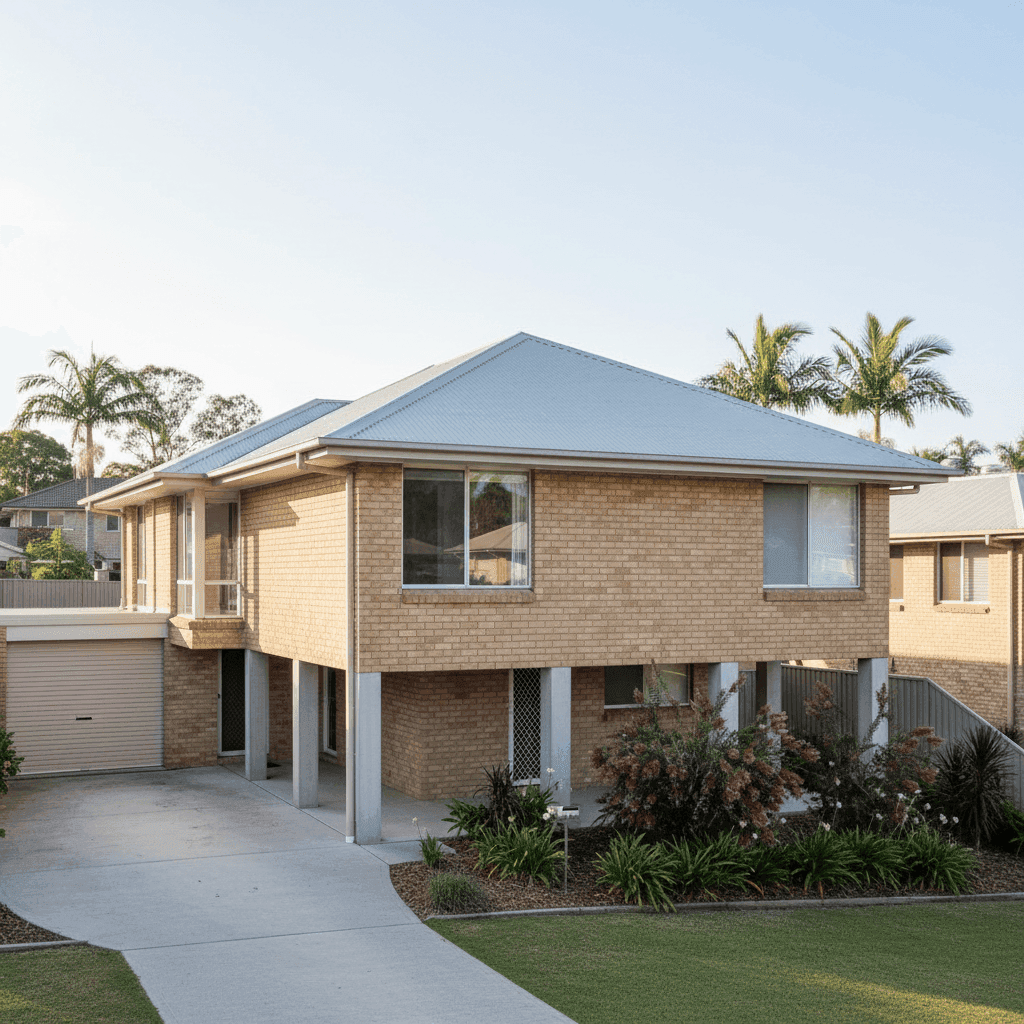
If you own a semi detached home in Banora Point, NSW 2486, you're probably wondering whether your home insurance premium is reasonable — or whether you're quietly overpaying year after year. In this article, we analyse a real building insurance quote for a 3-bedroom, 2-bathroom semi detached property in Banora Point and compare it against suburb, state, and national benchmarks to help you make a more informed decision.
---
Is This Quote Fair?
The quote in question comes in at $2,742 per year (or $263/month) for building-only cover, with a sum insured of $588,000 and a building excess of $5,000. Our price rating for this quote is CHEAP — below average for the area.
That's a meaningful finding. Based on data collected from 27 quotes in the Banora Point area, the suburb average sits at $5,083 per year, and the median is $4,189 per year. This quote lands well below even the 25th percentile of $3,531 — meaning it's cheaper than at least 75% of comparable quotes we've seen in the postcode.
Put simply: if you've received a quote in this range, it represents strong value relative to what most Banora Point homeowners are paying.
That said, it's always worth scrutinising what's included. A lower premium can sometimes reflect higher excesses, narrower cover, or specific exclusions. In this case, the building excess of $5,000 is on the higher end, which partially explains the competitive pricing. Make sure you're comfortable with that out-of-pocket cost in the event of a claim before committing.
---
How Banora Point Compares
Understanding your premium in isolation only tells part of the story. Here's how Banora Point stacks up against broader benchmarks:
| Benchmark | Average Premium | Median Premium |
|---|---|---|
| Banora Point (2486) | $5,083/yr | $4,189/yr |
| NSW (State) | $9,528/yr | $3,770/yr |
| National | $5,347/yr | $2,764/yr |
| Tweed LGA | $26,089/yr | — |
A few things stand out here. First, the NSW state average of $9,528 is dramatically higher than the median of $3,770 — a sign that a small number of very high-risk properties (likely in flood, bushfire, or cyclone-prone areas) are pulling the average up significantly. The median is a more reliable guide for typical homeowners.
Second, the Tweed LGA average of $26,089 is striking. This figure is heavily influenced by high-risk properties within the broader local government area — particularly those with significant flood or storm exposure. Banora Point, situated on the Tweed River near the Queensland border, does carry some natural hazard risk, but this quote suggests the specific property characteristics here are keeping premiums well in check.
You can explore NSW home insurance statistics or national home insurance data to see how your area compares at a broader level.
---
Property Features That Affect Your Premium
Several characteristics of this property are likely contributing to its competitive premium. Here's a breakdown of the key factors at play:
Brick Veneer Walls & Colorbond Roof
Brick veneer is one of the most common and well-regarded construction types in Australia. It offers solid fire resistance and structural durability, which insurers generally view favourably. Paired with a steel Colorbond roof, this home benefits from a roofing material that's highly resistant to ember attack, corrosion, and storm damage — all of which matter in coastal NSW.
Slab Foundation
A concrete slab foundation is generally considered lower risk than a raised timber subfloor, particularly when it comes to termite ingress and moisture-related damage. This is a positive factor for insurers assessing structural risk.
Elevated by At Least 1 Metre
Being elevated by at least 1 metre is a significant advantage in a region like the Tweed, where flooding is a genuine risk. Properties that sit higher off the ground are less susceptible to inundation, which can dramatically reduce flood-related premium loadings. This single feature may be one of the biggest reasons this quote comes in well below the LGA average.
2001 Construction
Homes built around 2001 benefit from relatively modern building codes, particularly around cyclone and wind resistance standards that were tightened in the late 1990s. This vintage tends to be seen as a lower-risk era compared to older homes with potentially outdated wiring, plumbing, or roofing.
No Pool, No Solar, No Ducted Climate Control
The absence of a swimming pool, solar panel system, and ducted air conditioning removes several common sources of claims complexity and premium loading. Each of these features can add meaningful cost to a policy, so their absence here is working in the homeowner's favour.
---
Tips for Homeowners in Banora Point
Whether you're reviewing an existing policy or shopping for a new one, here are four practical steps worth taking:
- Check your sum insured carefully. A sum insured of $588,000 for a 235 sqm semi detached home built in 2001 may be appropriate, but building costs in coastal NSW have risen sharply in recent years. Use a building cost calculator or speak with a quantity surveyor to confirm your rebuild estimate is current — being underinsured can be costly when it matters most.
- Understand your flood and storm cover. Banora Point sits near the Tweed River, and parts of the area have a documented flood history. Make sure your policy explicitly includes flood cover (not just storm or rainwater damage) and check whether your specific address is in a flood-mapped zone. Some insurers apply significant loadings or exclusions for flood risk.
- Consider the trade-off on excess. This quote carries a $5,000 building excess, which helps keep the annual premium down. If cash flow allows, this can be a smart strategy — but make sure you have that amount readily accessible in case of a claim. If $5,000 feels too steep, compare quotes with a lower excess to see the premium difference.
- Compare at renewal, every year. Insurance premiums can shift considerably from year to year, and loyalty doesn't always pay. Use a comparison tool like CoverClub to benchmark your renewal quote against the market before auto-renewing.
---
Ready to Compare Home Insurance Quotes?
Whether this quote is yours or you're simply researching what a fair price looks like for a semi detached home in Banora Point, the best move is always to compare. At CoverClub, we help Australian homeowners see how their premiums stack up — and find better value without sacrificing cover. Get a quote and compare today, or explore the latest home insurance data for Banora Point and the surrounding area.