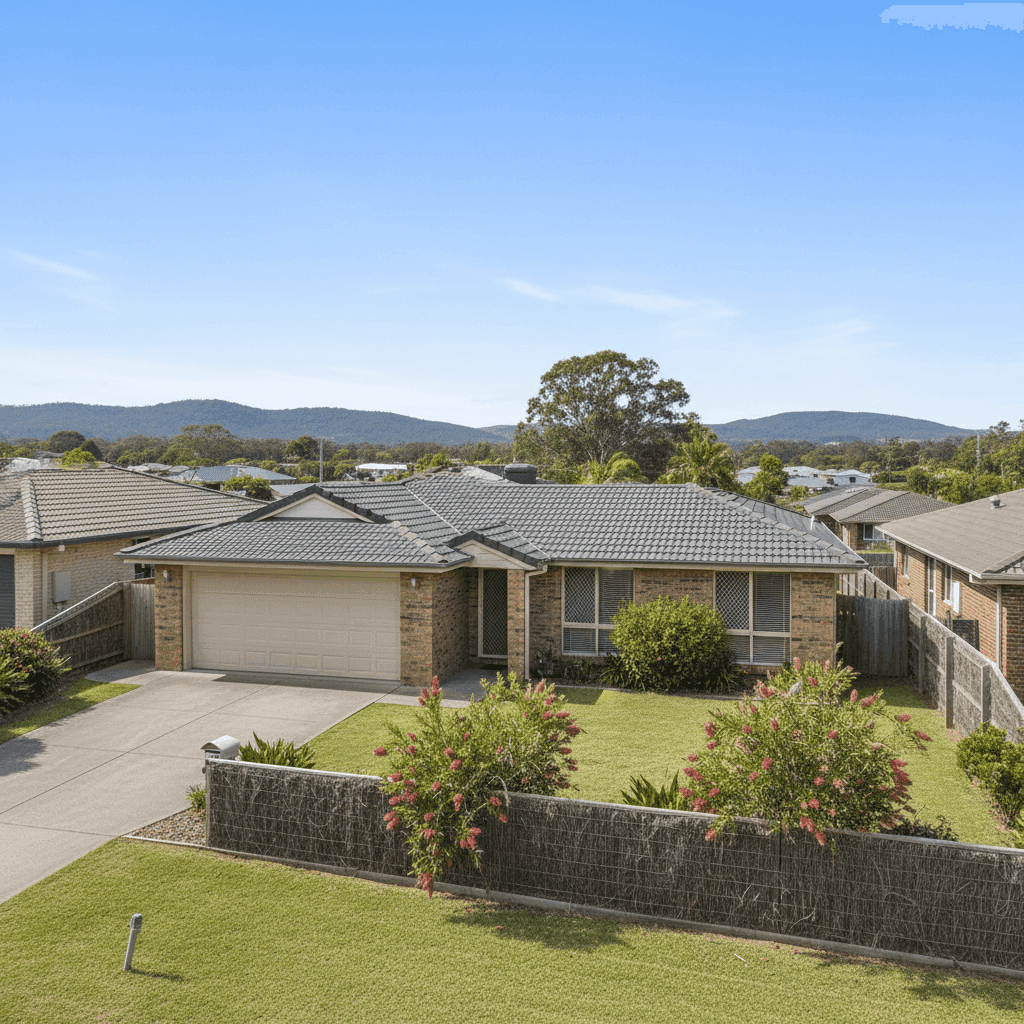
Nestled along the Tweed River estuary near the Queensland border, Banora Point is a relaxed, family-friendly suburb that has grown steadily in popularity over the past two decades. If you own a free standing home here, understanding what you should be paying for building insurance is one of the smartest financial checks you can make. This article breaks down a real building-only insurance quote for a three-bedroom, two-bathroom brick veneer home in Banora Point (postcode 2486) — and explains exactly what the numbers mean for you.
---
Is This Quote Fair?
The short answer: yes — and then some. This quote came in at $2,363 per year (or $244 per month) for building-only cover with a $3,000 excess on a sum insured of $710,800. CoverClub's pricing engine rates this as CHEAP, meaning it sits well below average for the area.
To put that in perspective, the suburb average premium in Banora Point currently sits at $5,083 per year, and the median is $4,189 per year. Even the 25th percentile — the point at which 75% of quotes are more expensive — comes in at $3,531 per year. This quote beats all of those benchmarks comfortably, landing roughly 53% below the suburb average.
For homeowners who haven't reviewed their policy recently, this kind of comparison can be eye-opening. Many people stay with their existing insurer out of habit, quietly paying hundreds — sometimes thousands — of dollars more than they need to each year.
---
How Banora Point Compares
Zooming out to a broader view helps put Banora Point's insurance market in context. Based on data from 27 quotes collected for this suburb, premiums here vary widely — from under $3,531 at the lower quartile right up to $5,997 at the 75th percentile. That's a spread of over $2,400, which illustrates just how much insurers can differ in how they price the same suburb.
At the NSW state level, the picture is even more dramatic. The state average premium is a striking $9,528 per year, though the median is a more moderate $3,770 — a gap that suggests a small number of very high-risk or high-value properties are pulling the average upward significantly. Banora Point's median of $4,189 sits modestly above the state median, which is broadly consistent with a coastal suburb that carries some weather-related risk.
Compared to national benchmarks, where the average sits at $5,347 and the median at $2,764, Banora Point premiums are on the higher side — reflecting the coastal location and the elevated risk profile that comes with it.
One figure that stands out is the Tweed LGA average of $26,089 per year. This number is heavily influenced by cyclone-rated and flood-prone properties elsewhere in the Tweed local government area, particularly closer to the coast and river systems. Banora Point itself is not classified as a cyclone risk area, which helps keep premiums more manageable for most homeowners here.
---
Property Features That Affect Your Premium
The specific characteristics of this home play a meaningful role in how insurers calculate risk — and in this case, several features work in the homeowner's favour.
Brick veneer construction is generally viewed positively by insurers. While not as robust as full double-brick, brick veneer offers solid weather resistance and is far more durable than timber or lightweight cladding. It tends to attract more competitive premiums than alternative wall materials.
Tiled roofing is another tick in the right column. Tiles are durable, fire-resistant, and perform well in most weather conditions. They're a preferred roofing material for insurers compared to metal or, particularly, older fibrous cement options.
Slab foundation is standard for homes of this era and construction type, and it presents minimal additional risk from an underwriting perspective. Similarly, tiled flooring throughout the home is both practical and low-maintenance — reducing the likelihood of water damage claims compared to timber or carpet.
The home was built in 1990, which places it in a relatively comfortable zone for insurers. It's old enough to have settled well but not so old that major structural concerns or outdated wiring become a factor. At 169 square metres, it's a modest-sized home, which keeps the sum insured and associated premium within a reasonable range.
The absence of a pool, solar panels, and ducted climate control also simplifies the risk profile. Each of those features can add complexity — and cost — to a policy.
---
Tips for Homeowners in Banora Point
1. Review your sum insured regularly. The building is insured for $710,800, which should reflect the full cost to rebuild — not the market value of the property. Construction costs have risen sharply in recent years, so it's worth revisiting this figure annually to ensure you're not underinsured. A quantity surveyor can provide a formal assessment if you're unsure.
2. Understand your flood and storm risk. While Banora Point is not a cyclone risk zone, parts of the suburb sit close to the Tweed River and may be subject to flood or storm surge risk. Check your council's flood mapping and make sure your policy clearly covers storm and flood damage — these are sometimes excluded or subject to separate conditions.
3. Don't let your policy auto-renew without comparing. The data above shows that premiums in Banora Point vary by thousands of dollars between insurers. If you've been with the same provider for more than a year, it's worth running a fresh comparison before your renewal date. Loyalty rarely pays in home insurance.
4. Consider the trade-off between excess and premium. This policy carries a $3,000 building excess. A higher excess typically reduces your annual premium, which can make sense if you have the savings to cover that amount in an emergency. However, make sure the excess level is realistic for your financial situation — a lower excess might be worth the slightly higher premium for peace of mind.
---
Compare Your Home Insurance at CoverClub
Whether you're buying, renewing, or simply curious about whether you're getting a fair deal, CoverClub makes it easy to compare home insurance quotes from multiple providers in minutes. Our suburb-level data means you can see exactly how your premium stacks up against your neighbours — not just a national average. Get a quote today and find out if you could be paying less.