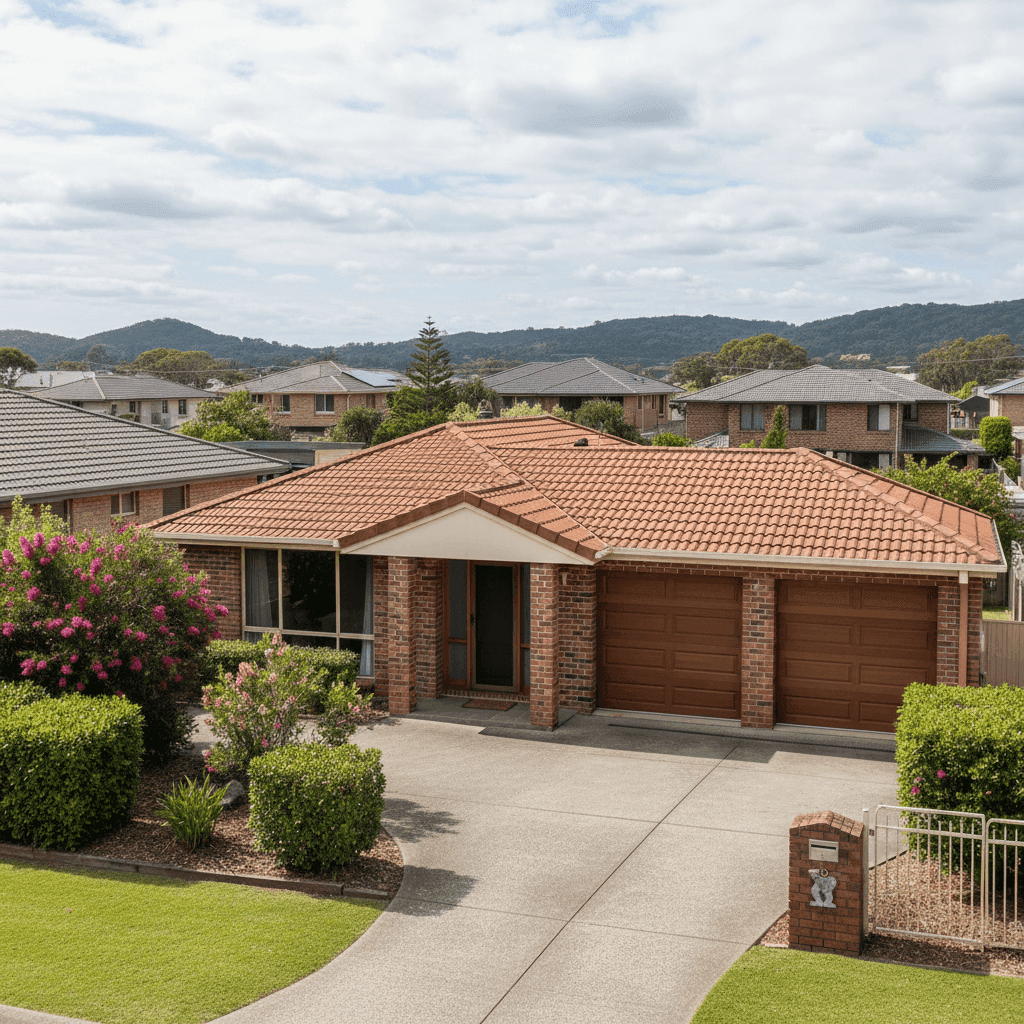
If you own a free standing home in Banora Point, NSW 2486, you've probably wondered whether you're paying a fair price for building insurance — or whether you're leaving money on the table. This article breaks down a real building-only insurance quote for a three-bedroom, two-bathroom brick veneer home in this popular Northern Rivers suburb, and puts it in context against local, state, and national benchmarks.
---
Is This Quote Fair?
The short answer: yes — this is a genuinely competitive quote.
At $2,036 per year (or around $210 per month), this building-only policy for a 169 sqm home insured at $519,000 has been rated CHEAP — meaning it sits well below the average for comparable properties in the area. For homeowners who've been stung by rising insurance costs in coastal New South Wales, that's a refreshing result.
The $3,000 building excess is fairly standard for policies at this price point, and it's worth keeping in mind that a higher excess is one of the levers insurers use to bring premiums down. As long as you're comfortable covering the first $3,000 of any claim out of pocket, this trade-off is entirely reasonable for a well-built, established home.
---
How Banora Point Compares
The numbers tell a compelling story. Here's how this quote stacks up across different benchmarks:
| Benchmark | Premium |
|---|---|
| This quote | $2,036/yr |
| Banora Point suburb average | $5,083/yr |
| Banora Point suburb median | $4,189/yr |
| Banora Point 25th percentile | $3,531/yr |
| NSW state average | $9,528/yr |
| NSW state median | $3,770/yr |
| National average | $5,347/yr |
| National median | $2,764/yr |
| Tweed LGA average | $26,089/yr |
This quote comes in below the suburb's 25th percentile — meaning it's cheaper than at least 75% of quotes recorded in Banora Point. It also sits well under both the NSW state average and the national average, and is even slightly below the national median of $2,764.
The Tweed LGA average of $26,089 per year is a striking figure, and it's largely driven by high-risk properties in flood and cyclone-prone pockets of the region. Banora Point itself sits on elevated ground near the Tweed River, and properties that avoid the most vulnerable flood zones — as this one appears to — can attract significantly more favourable premiums.
You can explore more local pricing data on the Banora Point suburb stats page.
---
Property Features That Affect Your Premium
Several characteristics of this particular home work in its favour from an underwriting perspective:
Brick veneer construction is well-regarded by insurers. It offers solid fire resistance and structural durability compared to lightweight cladding materials, and it's a common and well-understood building type across Australian suburbs — which means insurers can price it with confidence.
Tiled roof is another positive signal. Terracotta and concrete tiles are durable, fire-resistant, and less susceptible to wind damage than corrugated iron or Colorbond in moderate-wind zones. For a home built in 1990, a tiled roof that has been maintained well represents a low-risk profile.
Concrete slab foundation adds further stability. Slab homes are generally less exposed to subfloor moisture issues and pest ingress compared to homes on stumps or piers, which can factor into how insurers assess long-term structural risk.
No pool, no solar panels, and no ducted climate control all simplify the risk profile. Each of these additions can introduce liability, mechanical breakdown, or replacement cost considerations that push premiums higher. Their absence here helps keep the quote lean.
Standard fittings also play a role. High-end fixtures, custom joinery, and imported materials can dramatically increase the cost to rebuild — and therefore the sum insured. A standard-quality fit-out keeps the rebuild estimate grounded, which is reflected in the $519,000 sum insured for a 169 sqm home.
The property's 1990 construction year places it in a mature but not ageing category. Homes from this era were built to solid standards and are generally past the stage where major structural issues emerge unexpectedly, yet not so old that electrical or plumbing systems are considered high-risk by default.
---
Tips for Homeowners in Banora Point
Whether you're reviewing an existing policy or shopping around for the first time, here are some practical steps to make sure you're getting the best outcome:
1. Check your sum insured regularly Building costs have risen sharply across Australia in recent years. A sum insured that was accurate in 2020 may no longer reflect the true cost to rebuild your home. Use a building cost calculator or ask your insurer to reassess — being underinsured at claim time can be a costly mistake.
2. Understand your flood zone status The Tweed region has areas with significant flood exposure, and flood cover can dramatically affect premiums. If your property sits outside a designated flood zone, make sure your insurer has this correctly noted. Conversely, if you are in a flood-prone area, confirm that your policy actually includes flood cover — it's not always included by default.
3. Consider whether building-only cover is right for you A building-only policy like this one covers the physical structure but not your contents. If you own valuable furniture, appliances, or personal belongings, a combined building and contents policy may offer better overall value. Compare both options side by side before committing.
4. Review your excess strategically The $3,000 excess on this policy is one reason the premium is so competitive. If you have an emergency fund that could comfortably absorb that cost, it's a smart trade-off. If not, it may be worth paying a slightly higher premium for a lower excess — particularly for a home that could be vulnerable to weather events.
---
Compare Your Own Quote
Prices vary significantly between insurers, and the best way to know whether you're getting a fair deal is to compare. At CoverClub, we make it easy to see how your current premium stacks up and find policies that suit your property and budget. Get a quote today and see what Banora Point homeowners are actually paying for their cover.