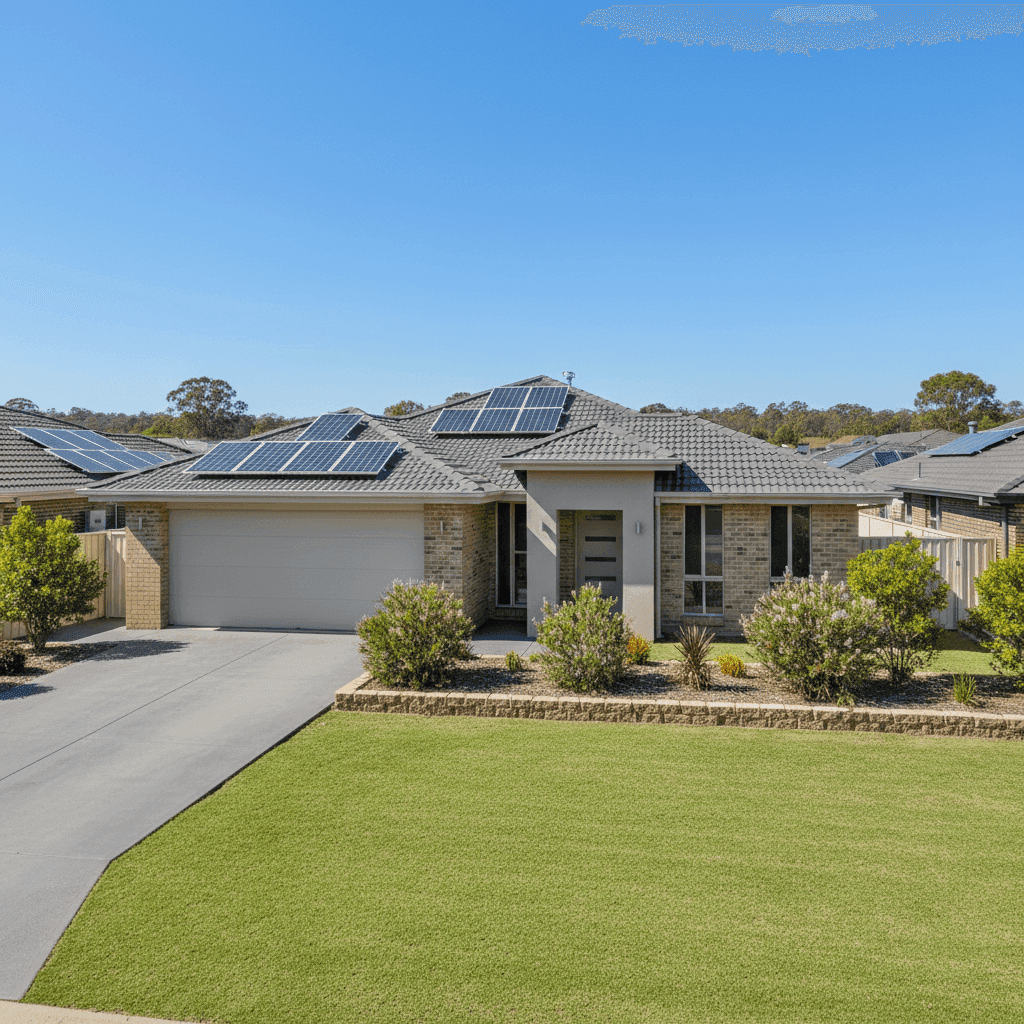
Banora Point is a leafy residential suburb on the New South Wales side of the Tweed region, sitting just minutes from the Queensland border and the Tweed River. It's a popular choice for families and retirees alike, offering a relaxed lifestyle with convenient access to the Gold Coast. If you own a free standing home here, understanding what you should be paying for home and contents insurance — and why — can save you a significant amount of money each year.
This article breaks down a recent home and contents insurance quote for a three-bedroom, two-bathroom free standing home in Banora Point, and puts the numbers in context against local, state, and national benchmarks.
---
Is This Quote Fair?
The quote in question comes in at $2,644 per year (or $268/month) for combined home and contents cover, with a building sum insured of $650,000 and contents valued at $92,000. The building excess is set at $3,000, while the contents excess sits at $1,000.
Our price rating for this quote is CHEAP — below the suburb average — and the data backs that up convincingly. Based on 27 quotes collected for the Banora Point 2486 area, the suburb average premium is $5,083 per year, with a median of $4,189. This quote sits well below even the 25th percentile of $3,531 — meaning it's cheaper than at least 75% of quotes seen in the area.
In plain terms: if you're paying $2,644 for comparable cover in Banora Point, you're getting a genuinely good deal. That said, it's always worth reviewing your policy details carefully — a lower premium sometimes reflects higher excesses or narrower cover, so make sure the policy terms suit your needs.
---
How Banora Point Compares
To appreciate just how competitive this quote is, it helps to zoom out and look at the broader picture.
| Benchmark | Premium |
|---|---|
| This Quote | $2,644/yr |
| Banora Point 25th Percentile | $3,531/yr |
| Banora Point Median | $4,189/yr |
| Banora Point Average | $5,083/yr |
| Banora Point 75th Percentile | $5,997/yr |
| NSW State Median | $3,770/yr |
| NSW State Average | $9,528/yr |
| National Median | $2,764/yr |
| National Average | $5,347/yr |
| Tweed LGA Average | $26,089/yr |
A few things stand out here. The NSW state average of $9,528 is dramatically higher than the state median of $3,770 — a sign that a relatively small number of very high-risk properties (think flood-prone or cyclone-exposed areas) are pulling the average upward. Banora Point sits comfortably below both figures.
Perhaps most striking is the Tweed LGA average of $26,089 per year. This is an extraordinary figure, and it reflects the fact that many properties within the broader Tweed local government area carry significant flood, storm, or coastal inundation risk. Banora Point, while part of the Tweed LGA, appears to attract considerably lower premiums — at least for properties with the right characteristics.
Compared to national benchmarks, this quote also performs well. The national median is $2,764, so this quote is broadly in line with what a typical Australian homeowner pays — despite being located in a coastal NSW region that often commands premium pricing.
---
Property Features That Affect Your Premium
Several characteristics of this property are likely contributing to its favourable premium. Understanding these factors can help you make smarter decisions when reviewing or updating your cover.
Brick veneer construction is generally well-regarded by insurers. It offers solid fire resistance and durability, and is less susceptible to storm damage than lightweight timber or weatherboard cladding. Combined with a concrete tile roof, the home presents a relatively low-risk profile from a structural standpoint.
The slab foundation is another positive. Homes on slabs tend to be more resistant to movement and subsidence, and they eliminate the underfloor moisture and pest risks that can affect raised or stumped homes. Tile flooring throughout is similarly practical — it's durable, easy to maintain, and less prone to water damage than carpet or timber.
The property is noted as being elevated by less than one metre, which places it in a relatively benign category. Significant elevation (such as a Queenslander-style home on high stumps) can sometimes increase rebuild costs, while properties at ground level in flood-prone areas carry obvious risk. A modest elevation here is unlikely to materially affect the premium either way.
The presence of solar panels is worth noting. While they add value to the property, solar systems can also add complexity to insurance claims — particularly if panels are damaged by hail or storm. It's important to confirm with your insurer that your solar system is explicitly covered under your building policy, and that the sum insured accounts for the replacement cost of the panels.
With no pool and no ducted climate control, the property avoids two common sources of additional liability and mechanical breakdown claims, which can quietly push premiums higher.
Finally, Banora Point is not classified as a cyclone risk area, which is a meaningful distinction for a property this close to the Queensland border. Cyclone-rated cover can add significantly to premiums for properties further north.
---
Tips for Homeowners in Banora Point
Whether you're renewing your policy or shopping around for the first time, here are some practical steps to make sure you're getting the right cover at the right price.
1. Check your sum insured reflects current rebuild costs. Building costs have risen sharply across Australia in recent years. A sum insured of $650,000 for a 139 sqm brick veneer home is worth validating against current construction rates in the Tweed region. Underinsurance is one of the most common and costly mistakes homeowners make — if your home is destroyed and your sum insured falls short, you'll be left covering the gap yourself.
2. Confirm your solar panels are covered. As mentioned above, solar systems aren't always automatically included in standard building cover, or may be subject to sub-limits. Ask your insurer directly how your panels are covered and whether storm or hail damage is included.
3. Review your excess settings annually. This quote carries a $3,000 building excess, which is on the higher side. A higher excess generally reduces your premium, but it also means you'll pay more out of pocket before your insurer steps in. Make sure your excess reflects what you can comfortably afford in the event of a claim.
4. Compare quotes at renewal — every year. The insurance market shifts constantly, and loyalty doesn't always pay. The fact that this quote is well below the suburb average suggests that shopping around genuinely works. Use a comparison tool like CoverClub to benchmark your renewal quote before you accept it.
---
Compare Your Own Quote
Curious how your home insurance stacks up? CoverClub makes it easy to see what other homeowners in Banora Point and across NSW are paying, so you can make an informed decision at renewal. Enter your address and get started — it only takes a few minutes, and you might be surprised by what you find.
For more suburb-level data, visit the Banora Point insurance stats page or explore NSW home insurance trends to see how your region compares.