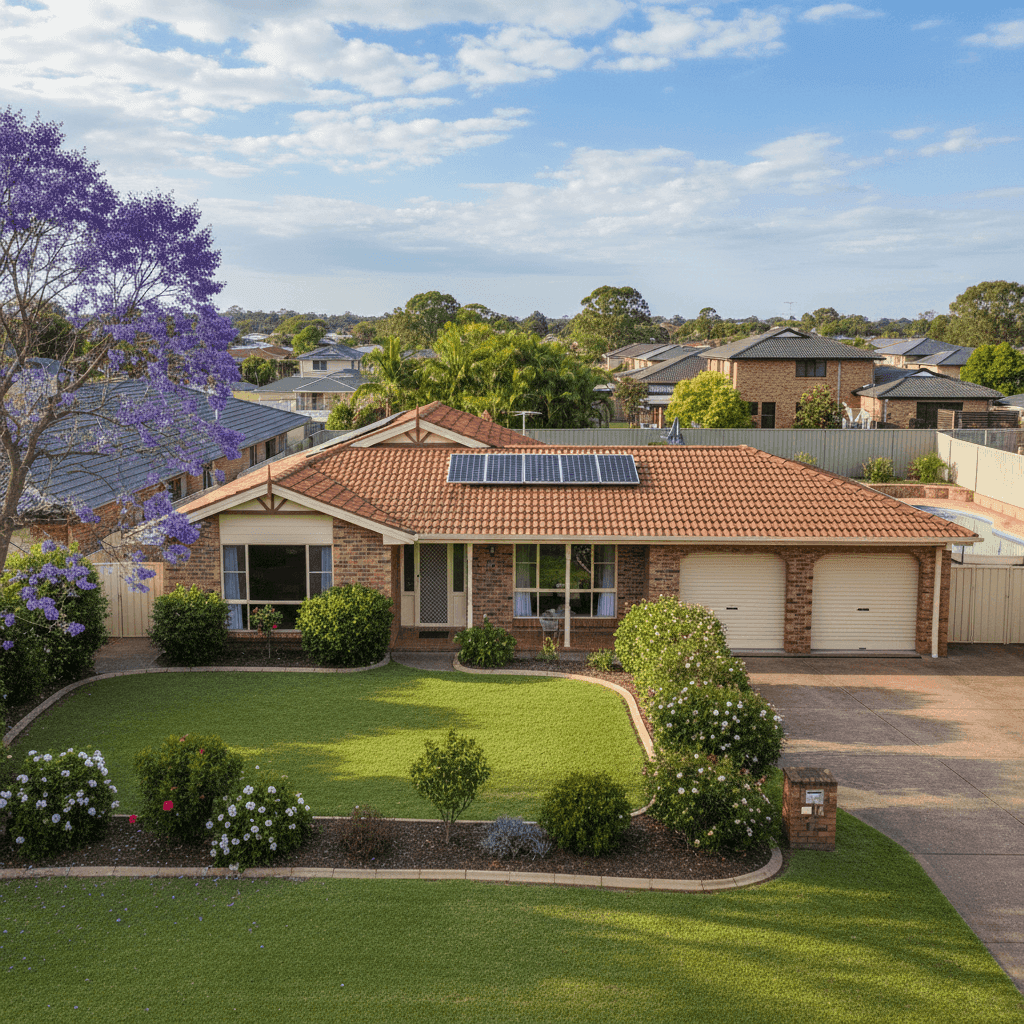
Banora Point is a leafy, family-friendly suburb tucked into the Tweed region of northern New South Wales, sitting just minutes from the Queensland border. It's a popular spot for families and sea-changers alike, with a mix of established brick homes, quiet streets, and proximity to the Tweed Coast. If you own a free standing home here, understanding what you should be paying for home and contents insurance — and why — can make a real difference to your household budget.
This article breaks down a real insurance quote for a 4-bedroom, 2-bathroom brick veneer home in Banora Point, compares it against local, state, and national benchmarks, and offers practical tips to help you get the best value cover.
---
Is This Quote Fair?
The quote in question comes in at $4,093 per year (or $367/month) for combined home and contents insurance, covering a building sum insured of $800,000 and contents valued at $60,000. The building excess is $2,000 and the contents excess is $1,000.
Our price rating for this quote is FAIR — Around Average.
To put that in context: the median premium for homes in Banora Point currently sits at $4,189 per year, based on 27 quotes collected for the 2486 postcode. At $4,093, this quote comes in just below that median, meaning roughly half of comparable homes in the suburb are paying more. It also sits comfortably within the interquartile range — between the 25th percentile of $3,531/yr and the 75th percentile of $5,997/yr — suggesting this is neither a bargain nor an overcharge.
For a home of this size (214 sqm), with a pool and solar panels adding complexity to the risk profile, landing near the suburb median is a reasonable outcome. That said, "fair" doesn't mean you can't do better — there's still meaningful room to shop around, particularly if you're sitting closer to that $5,997 upper quartile.
---
How Banora Point Compares
Understanding where Banora Point sits relative to broader benchmarks helps frame whether your premium is genuinely competitive.
| Benchmark | Average Premium | Median Premium |
|---|---|---|
| Banora Point (2486) | $5,083/yr | $4,189/yr |
| New South Wales | $9,528/yr | $3,770/yr |
| National | $5,347/yr | $2,764/yr |
| Tweed LGA | $26,089/yr | — |
A few things stand out here. The NSW state average of $9,528/yr is dramatically higher than the NSW median of $3,770/yr — a sign that the state average is heavily skewed by high-risk or high-value properties, particularly in flood, bushfire, and cyclone-prone areas. Banora Point's median of $4,189/yr sits above the NSW median, which reflects the region's coastal and near-border risk profile.
The national average of $5,347/yr and national median of $2,764/yr tell a similar story — averages are pulled upward by outlier-risk properties, making medians a more reliable comparison point for most homeowners.
Perhaps the most striking figure is the Tweed LGA average of $26,089/yr. This is almost certainly driven by high-value or high-risk properties within the broader Tweed area — including flood-prone and coastal zones — which can dramatically inflate LGA-level averages. Banora Point's own suburb figures are considerably more moderate, suggesting the suburb benefits from a relatively lower risk profile compared to some of its Tweed neighbours.
For a deeper look at how premiums vary across the postcode, visit the Banora Point insurance stats page.
---
Property Features That Affect Your Premium
Several characteristics of this property influence where the premium lands — both positively and negatively.
Brick Veneer Walls & Tiled Roof Brick veneer construction with a tiled roof is one of the most common and insurer-friendly combinations in Australian suburban housing. Both materials offer strong fire resistance and durability, which typically attracts more competitive premiums compared to timber-framed or metal-roofed homes.
Slab Foundation A concrete slab foundation is generally viewed favourably by insurers. It reduces the risk of subsidence and pest-related structural damage, and is well-suited to the soil conditions typical of coastal NSW.
Swimming Pool A pool adds to the replacement cost of the property and introduces some liability considerations, which can nudge premiums upward. Ensuring your building sum insured accurately accounts for the pool's value — including fencing, filtration systems, and surrounds — is important to avoid being underinsured.
Solar Panels Rooftop solar is increasingly common across Australian homes, but it does add to rebuild costs and can complicate roof-related claims. Insurers vary in how they treat solar panels — some include them automatically under building cover, while others may require specific mention. It's worth confirming your policy explicitly covers the system.
Standard Fittings Standard-quality fittings (as opposed to premium or luxury finishes) generally keep rebuild cost estimates — and therefore premiums — more moderate. This is reflected in the $800,000 sum insured, which for a 214 sqm home in this region appears broadly reasonable.
No Cyclone Risk Banora Point falls outside designated cyclone risk zones, which is a meaningful factor in keeping premiums lower than many parts of Queensland or northern WA. This is a genuine cost advantage for homeowners in this area.
---
Tips for Homeowners in Banora Point
1. Review your sum insured regularly Building costs have risen sharply in recent years. A sum insured of $800,000 for a 214 sqm home may be appropriate today, but it's worth recalculating your rebuild cost annually — particularly if you've made renovations or if local construction costs have shifted. Being underinsured can leave you significantly out of pocket after a major claim.
2. Confirm your solar panels and pool are explicitly covered Don't assume these features are automatically included in your policy. Check the product disclosure statement (PDS) to confirm how your insurer treats rooftop solar systems and swimming pools — including any sub-limits or exclusions that might apply.
3. Compare quotes before your renewal date Insurers don't always reward loyalty. With a suburb median of $4,189/yr and a 75th percentile of $5,997/yr, there's a wide spread of premiums being paid for similar homes in Banora Point. Shopping around at renewal — ideally 3–4 weeks before your policy expires — gives you time to compare and negotiate.
4. Consider your excess settings carefully This policy carries a $2,000 building excess and $1,000 contents excess. Higher excesses generally reduce your premium, but make sure the excess is an amount you could comfortably cover in the event of a claim. If the excess feels too high, it may be worth modelling a lower excess to see how it affects your annual cost.
---
Ready to Compare?
Whether you're renewing soon or just want to know if you're getting a fair deal, comparing quotes is the smartest first step. Get a home insurance quote at CoverClub and see how your premium stacks up against real data from your suburb. It takes just a few minutes and could save you hundreds of dollars a year.