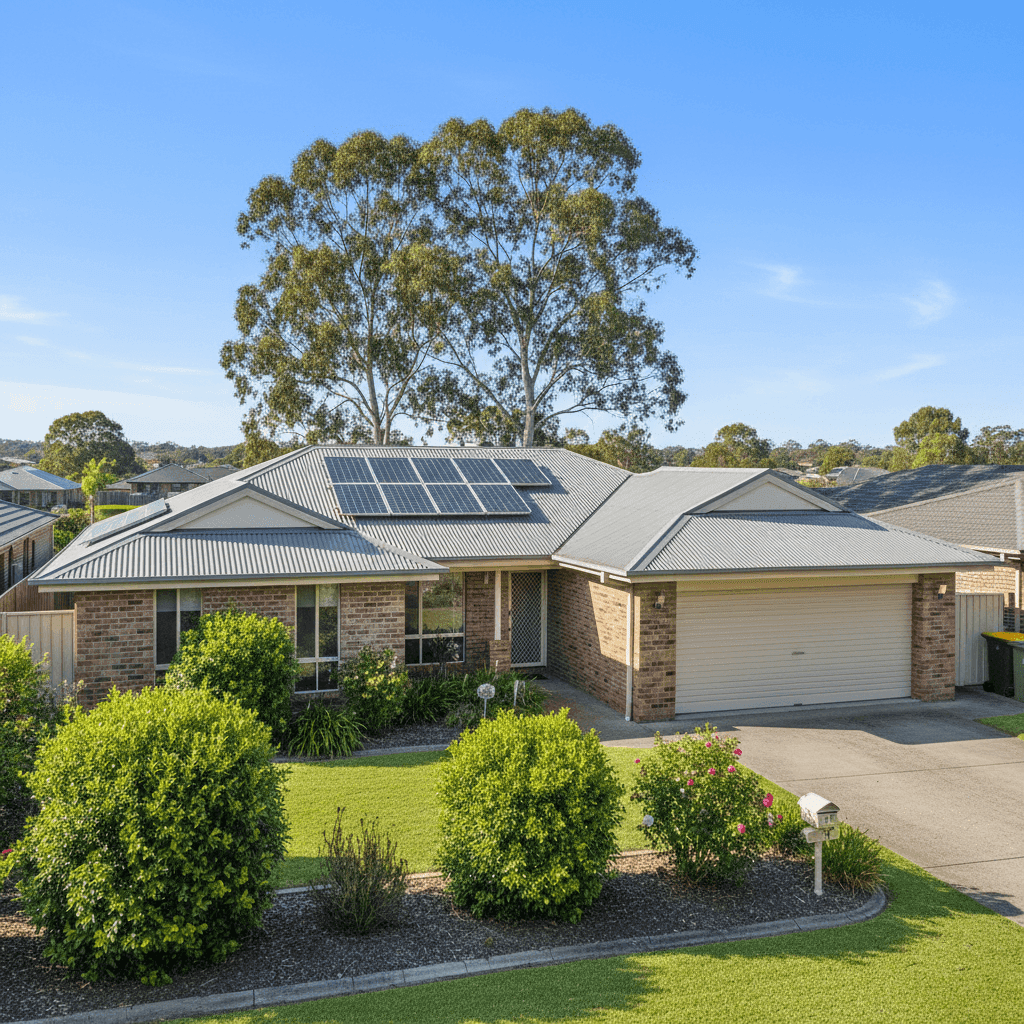
If you own a free standing home in Banora Point, NSW 2486, you're likely aware that home insurance premiums can vary enormously — even between neighbours on the same street. This article breaks down a real building-only insurance quote for a five-bedroom brick veneer home in Banora Point, compares it against suburb, state, and national benchmarks, and offers practical tips to help you get better value on your cover.
---
Is This Quote Fair?
The quote in question comes in at $5,030 per year (or $482/month) for building-only cover, with a $1,000 building excess and a sum insured of $824,000. Our price rating for this quote is FAIR — Around Average.
That rating reflects a genuine middle-ground position. The premium sits just slightly below the suburb average of $5,083/yr, which means this homeowner is not being overcharged relative to their immediate peers. However, it does sit notably above the suburb median of $4,189/yr — a distinction worth paying attention to.
The median is often a more reliable benchmark than the average, because averages can be skewed upward by a handful of very high-risk or high-value properties. The fact that this quote is around $841 above the suburb median suggests there may be room to shop around, even if the quote isn't unreasonable on its face.
For context, the suburb's 25th percentile sits at $3,531/yr and the 75th percentile at $5,997/yr — so this quote falls comfortably within the middle band of what Banora Point homeowners are paying. It's not a bargain, but it's far from the most expensive option in the area either.
---
How Banora Point Compares
Understanding where Banora Point sits in the broader insurance landscape helps put this quote in perspective. Here's a snapshot:
| Benchmark | Average Premium | Median Premium |
|---|---|---|
| Banora Point (2486) | $5,083/yr | $4,189/yr |
| NSW | $9,528/yr | $3,770/yr |
| National | $5,347/yr | $2,764/yr |
| Tweed LGA | $26,089/yr | — |
A few things stand out immediately. The NSW state average of $9,528/yr looks alarming at first glance, but the state median of just $3,770/yr tells a very different story. NSW averages are heavily distorted by extremely high-risk coastal and flood-prone areas — particularly parts of the Northern Rivers and greater Sydney — which drag the mean well above what most homeowners actually pay.
Banora Point's own suburb average of $5,083/yr is broadly in line with the national average of $5,347/yr, which is reassuring. It suggests the suburb doesn't carry extreme systemic risk, at least relative to the national picture.
The Tweed LGA average of $26,089/yr, however, is a striking outlier. This figure is almost certainly driven by high-risk flood and coastal properties within the broader Tweed local government area — not necessarily representative of Banora Point itself, which benefits from a more elevated, inland position relative to some of its LGA neighbours.
You can explore more detailed premium data for this suburb at CoverClub's Banora Point stats page, or compare it against NSW-wide insurance trends and national benchmarks.
> Note: The suburb sample size for this analysis is 27 quotes, which provides a reasonable directional guide but may not capture the full range of premiums in the area.
---
Property Features That Affect Your Premium
Several characteristics of this property play a meaningful role in how insurers price the risk:
Brick Veneer Walls Brick veneer is one of the more insurer-friendly wall types in Australia. It offers solid fire resistance and durability, which generally attracts more competitive premiums compared to timber or lightweight cladding. That said, it's not as robust as full-brick construction, so it won't always secure the lowest possible rate.
Steel/Colorbond Roof Colorbond roofing is well regarded by insurers for its resilience against fire, high winds, and general weathering. It's a common choice across coastal and semi-coastal NSW, and its durability typically has a neutral-to-positive effect on premium pricing.
Slab Foundation A concrete slab foundation is considered stable and low-risk by most insurers. It eliminates the underfloor moisture and pest risks associated with raised timber stumps, which can be a positive factor in premium calculations.
Timber/Laminate Flooring Timber and laminate floors can be more costly to replace after water damage or fire than tiles, which may contribute modestly to a higher sum insured or premium. Homeowners with timber flooring should ensure their building sum insured adequately reflects replacement costs.
Solar Panels This property includes solar panels, which are increasingly common across Australian homes. Many insurers now include solar panel cover under building policies, but it's worth confirming exactly what's covered — including inverters and mounting hardware — and whether the sum insured accounts for their replacement value.
1980 Construction Homes built in 1980 are now over 40 years old. While this doesn't automatically mean higher premiums, older properties can attract greater scrutiny around electrical wiring, plumbing, and structural integrity. Some insurers apply age-related loadings, so it's worth disclosing any recent renovations or upgrades that may offset this.
No Pool, No Cyclone Risk Zone The absence of a swimming pool removes a common liability and maintenance risk from the equation. And while Banora Point sits close to the Queensland border, it falls outside designated cyclone risk zones — a meaningful factor given the elevated premiums that cyclone-rated areas attract.
---
Tips for Homeowners in Banora Point
1. Review your sum insured carefully At $824,000 for a 277 sqm home, this quote reflects a rebuild cost of roughly $2,975 per square metre — a reasonable estimate for a brick veneer home in coastal NSW, but worth cross-checking against a quantity surveyor's assessment or an online building cost calculator. Being underinsured is a serious risk; being overinsured means you're paying unnecessarily.
2. Confirm your solar panels are covered Check whether your policy explicitly covers solar panels as part of the building, and whether the sum insured reflects their current replacement value. Panel and inverter costs have shifted significantly in recent years, so an outdated figure could leave you out of pocket after a claim.
3. Compare at least three quotes before renewing Given that this quote sits above the suburb median, there's a reasonable chance a competing insurer could offer similar cover at a lower price point. The gap between the 25th and 75th percentile in Banora Point is over $2,400/yr — that's real money, and it's worth spending 15 minutes to find out where you sit.
4. Ask about discounts for security and safety features If your home has monitored security, smoke alarms, or deadbolt locks, let your insurer know. Many providers offer modest discounts for these features, and they're easy to overlook when completing an online quote.
---
Compare Your Options with CoverClub
Whether you're renewing an existing policy or shopping for cover on a new property, CoverClub makes it easy to see what the market looks like before you commit. Get a building insurance quote today and find out whether you're paying a fair price — or whether there's a better deal waiting for you.