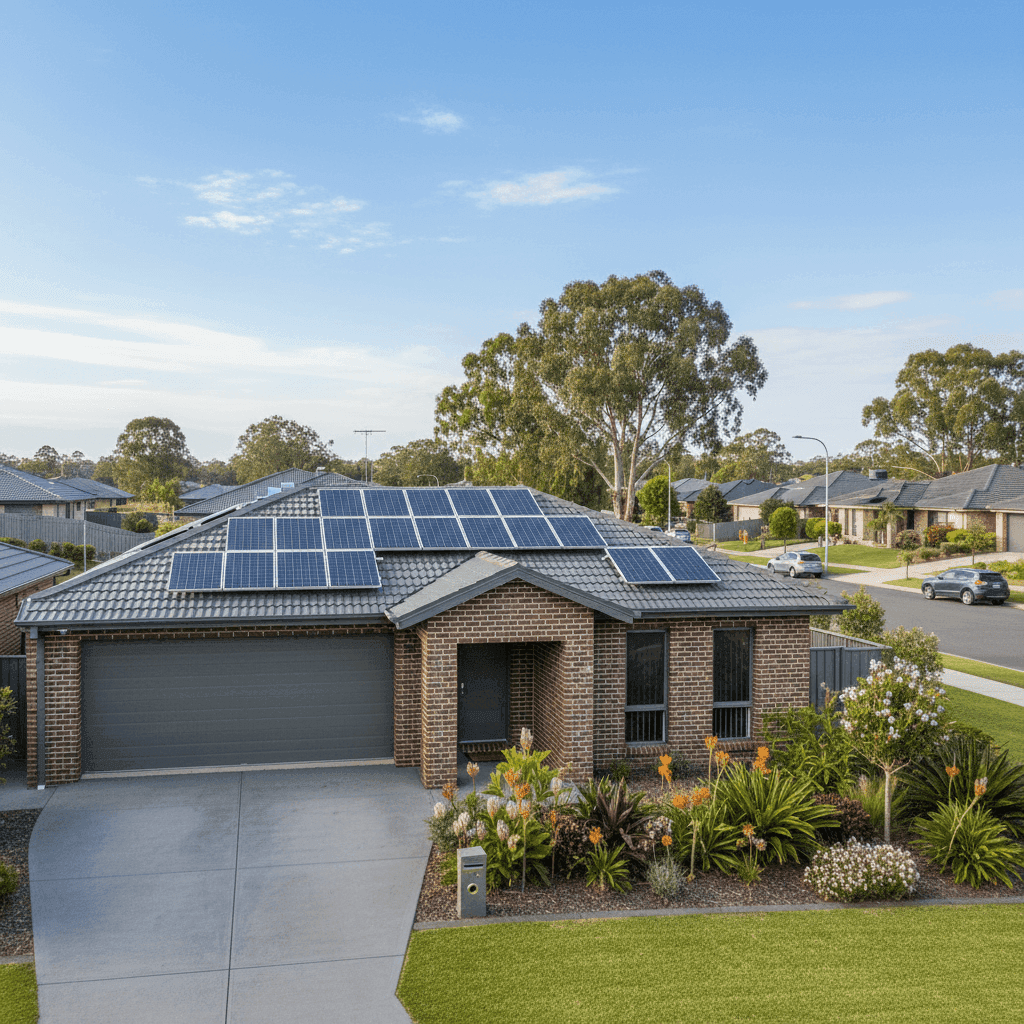
If you own a free standing home in Banora Point, NSW 2486, you already know the appeal — a relaxed coastal lifestyle on the NSW–Queensland border, with the Tweed River nearby and easy access to the Gold Coast. But living in this sought-after corner of New South Wales comes with its own set of insurance considerations, and premiums in the region can vary significantly depending on your property's characteristics and the level of cover you choose.
This article breaks down a real home and contents insurance quote for a four-bedroom, two-bathroom brick veneer home in Banora Point, comparing it against suburb, state, and national benchmarks to help you understand whether you're getting a fair deal.
---
Is This Quote Fair?
The quote in question comes in at $9,090 per year (or $871/month) for combined home and contents cover, with a building sum insured of $558,000 and contents valued at $50,000. Both the building and contents excess are set at $500.
Based on available market data, this premium is rated Expensive — above average for the area. That's not a trivial distinction. The suburb average for Banora Point sits at $5,083 per year, meaning this quote is running approximately 79% above the local average. Even against the suburb's 75th percentile — that is, the upper end of what most homeowners in the area are paying — the quote of $9,090 still exceeds the $5,997 benchmark.
That said, context matters. The building sum insured of $558,000 is a significant coverage amount, and the property includes solar panels and ducted climate control — both of which add to the replacement cost calculation and can push premiums higher. It's also worth noting that the 139 sqm floor area and 1998 construction year are fairly typical for the suburb, so those factors alone are unlikely to be driving the elevated price.
If you're seeing a quote in this range, it's well worth comparing alternatives on CoverClub before committing.
---
How Banora Point Compares
Understanding how your premium stacks up across different geographic benchmarks is one of the most useful tools for evaluating whether you're overpaying.
| Benchmark | Average Premium | Median Premium |
|---|---|---|
| Banora Point (2486) | $5,083/yr | $4,189/yr |
| NSW State | $9,528/yr | $3,770/yr |
| National | $5,347/yr | $2,764/yr |
| Tweed LGA | $26,089/yr | — |
A few things stand out here. First, the Tweed LGA average of $26,089 is extraordinarily high — this is heavily skewed by flood-prone and high-risk properties within the broader Tweed region, which includes areas with significant flood and storm exposure. Banora Point itself fares considerably better, with a suburb median of $4,189.
Second, the NSW state average of $9,528 is actually higher than this quote — but the state median of $3,770 tells a different story. The wide gap between the NSW average and median reflects how a relatively small number of very expensive policies (often in flood or bushfire zones) pull the average upward. The median is generally a more reliable guide for typical homeowners.
Nationally, the average sits at $5,347 and the median at $2,764, again showing significant skew from high-risk properties across the country.
You can explore detailed pricing data for the suburb at CoverClub's Banora Point stats page, or compare across all of NSW and nationally.
---
Property Features That Affect Your Premium
Several characteristics of this property have a direct bearing on what insurers charge.
Brick veneer construction with a tiled roof is generally viewed favourably by insurers. Brick veneer offers solid fire resistance and durability, while tiled roofs are considered low-maintenance and long-lasting. These features typically attract more competitive premiums compared to, say, weatherboard or Colorbond alternatives in certain risk categories.
Slab foundation is standard for the era and region, and doesn't introduce the additional risk factors associated with elevated or timber subfloor construction — particularly relevant in areas with varying soil moisture.
Solar panels are increasingly common on Australian homes, but they do add to the insured value of the property. Insurers need to account for the replacement cost of panels (which can run into the tens of thousands of dollars), as well as any associated electrical infrastructure. This is a legitimate driver of higher premiums and is worth confirming is explicitly covered in your policy wording.
Ducted climate control similarly adds to the building's replacement value. These systems are expensive to install and replace, and their inclusion in the sum insured is appropriate — but it does mean your overall coverage cost will be higher than a comparable home without this feature.
Vinyl flooring is relatively straightforward from an insurance perspective — it's durable and cost-effective to replace, so it's unlikely to be a significant premium factor.
The 1998 construction year places the home in a reasonably modern category. Properties built after the mid-1990s generally benefit from more contemporary building standards, which can reduce risk in the eyes of insurers.
---
Tips for Homeowners in Banora Point
1. Review your sum insured carefully A building sum insured of $558,000 is substantial. Make sure this figure accurately reflects the cost to rebuild — not the market value of your property. Overcovering can mean unnecessarily high premiums, while undercovering leaves you exposed. Tools like the Cordell Sum Sure calculator can help you estimate rebuild costs.
2. Shop around — seriously With this quote sitting well above the suburb average, comparing multiple insurers is essential. Premiums for the same property can vary by thousands of dollars depending on the insurer's risk appetite and pricing model. Get a comparison quote through CoverClub to see what else is available.
3. Check your solar panel and climate control coverage Not all policies automatically cover solar panel systems or ducted air conditioning as part of the building. Read the Product Disclosure Statement (PDS) carefully to confirm these are included — and at what value. If they're not explicitly listed, ask your insurer to confirm in writing.
4. Consider your excess strategy Both excesses on this policy are set at $500, which is relatively low. Opting for a higher excess (say, $1,000 or $2,000) can meaningfully reduce your annual premium. If you're unlikely to make small claims, a higher excess is often a cost-effective trade-off.
---
Ready to Find a Better Deal?
Whether you're reviewing an existing policy or shopping for the first time, comparing quotes is the single most effective way to ensure you're not overpaying. CoverClub makes it easy to see how your premium stacks up and find competitive alternatives — start your comparison here.