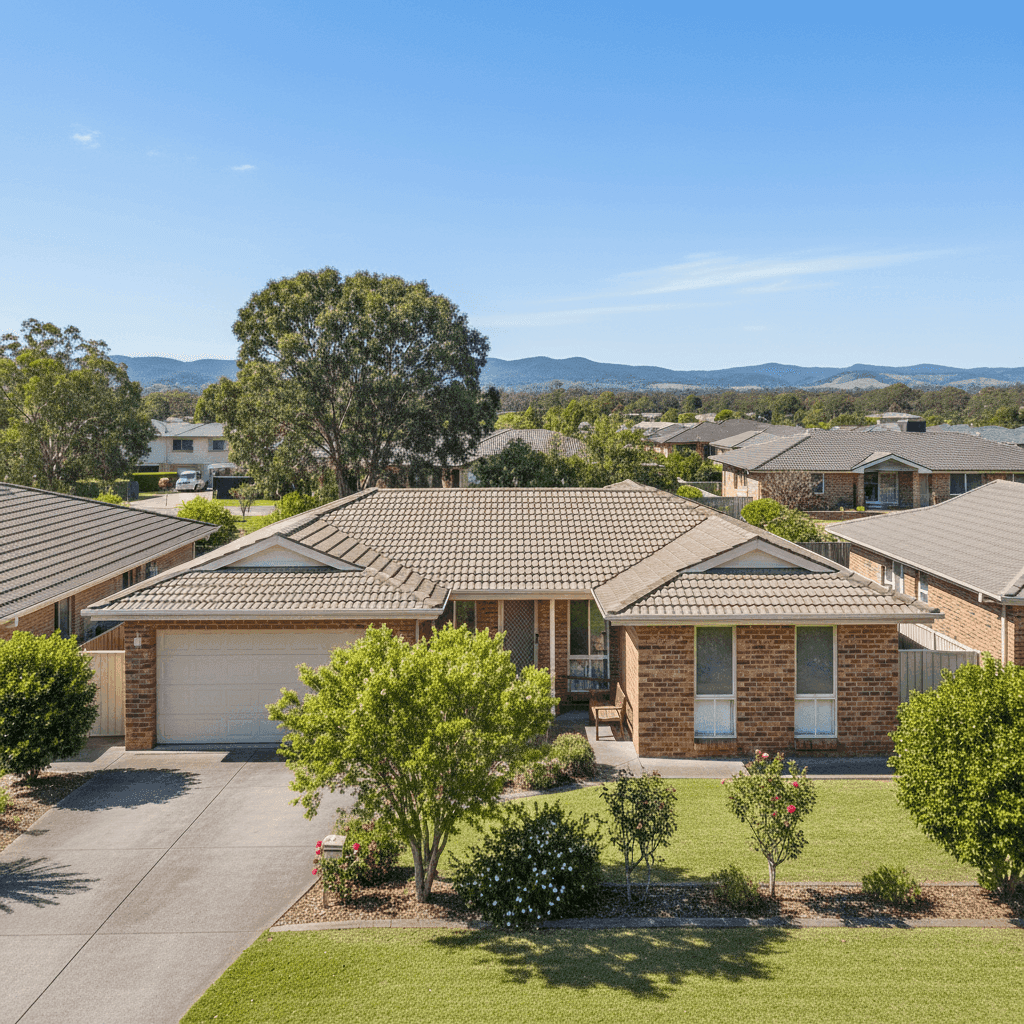
If you own a free standing home in Banora Point, NSW 2486, you already know it's one of the more desirable pockets of the Tweed region — close to the Gold Coast border, surrounded by waterways, and full of established family homes. But desirability comes with a cost, and home insurance is no exception. This article breaks down a real home and contents insurance quote for a four-bedroom brick veneer home in the suburb, compares it against local and national benchmarks, and offers practical guidance for homeowners looking to get better value on their cover.
---
Is This Quote Fair?
The quote in question comes to $9,316 per year (or $893/month) for combined home and contents insurance, covering a building sum insured of $619,000 and contents valued at $50,000. Both the building and contents excess sit at $1,000.
Our price rating for this quote is Expensive — above average for the suburb.
To put that in perspective: the average annual premium among quotes we've collected for Banora Point sits at around $5,083, with a median of $4,189. This quote is nearly double the suburb median, which is a significant gap worth unpacking.
That said, context matters. The building sum insured of $619,000 is on the higher end, and a 214 sqm four-bedroom, two-bathroom home built in 1995 with ducted climate control will naturally attract a higher replacement cost than a smaller or more modest property. The sum insured alone is likely one of the biggest drivers of the premium — insurers price buildings cover based on what it would cost to fully rebuild, not the market value of the land.
Still, even accounting for the property size and features, there is meaningful room to explore whether a lower premium is achievable with a different insurer. Comparing quotes is always worthwhile at this price point.
---
How Banora Point Compares
Understanding where your suburb sits relative to broader benchmarks helps frame whether a quote is genuinely expensive or simply reflective of local risk conditions.
Here's how Banora Point stacks up:
| Benchmark | Average Premium | Median Premium |
|---|---|---|
| Banora Point (NSW 2486) | $5,083/yr | $4,189/yr |
| New South Wales | $9,528/yr | $3,770/yr |
| National | $5,347/yr | $2,764/yr |
| Tweed LGA | $26,089/yr | — |
A few things stand out here. The Tweed LGA average of $26,089/yr is extraordinarily high — this is heavily influenced by flood and storm risk properties within the LGA, particularly those in low-lying areas or near waterways. Banora Point itself sits more comfortably, with suburb-level averages well below the LGA figure, suggesting the suburb carries a more moderate risk profile within the broader Tweed area.
The NSW state average of $9,528/yr is also notably high compared to the national average of $5,347/yr, reflecting the concentration of high-risk properties (bushfire, flood, coastal storm) across the state. Interestingly, the NSW median of $3,770/yr is much lower than the average, indicating a skewed distribution — a relatively small number of very high-risk properties are pulling the average up significantly.
For Banora Point specifically, the suburb's 25th percentile sits at $3,531/yr and the 75th percentile at $5,997/yr, based on 27 quotes in our dataset. This quote of $9,316 sits well above the 75th percentile, reinforcing the "expensive" rating.
You can explore more local data on our Banora Point insurance statistics page, or compare against the NSW state overview and national benchmarks.
---
Property Features That Affect Your Premium
Several characteristics of this property will influence how insurers assess and price the risk:
Brick veneer construction and tiled roof — This is generally considered a favourable combination by insurers. Brick veneer walls offer solid fire resistance, and tiled roofs are durable and less susceptible to wind damage than some alternatives. Homes with these materials often attract more competitive premiums compared to timber-framed or metal-roofed properties.
Concrete slab foundation — Slab foundations are standard in this era of construction and are generally viewed neutrally by insurers. They can, however, be more costly to repair if subsidence or cracking occurs, which some insurers factor into their pricing.
1995 construction year — A home built in 1995 is now around 30 years old. While it's not considered old by insurance standards, it's worth ensuring that the building sum insured accurately reflects current rebuilding costs, including updated materials, labour rates, and compliance with modern building codes. Underinsurance is a real risk for homes of this age if the sum insured hasn't been reviewed recently.
214 sqm floor area with ducted climate control — A larger home with ducted air conditioning increases the replacement cost significantly. Ducted systems are expensive to install and replace, and insurers will factor this into their assessment of what it would cost to rebuild the home to its current standard.
Carpet flooring and standard fittings — These are mid-range inputs that don't push the premium up the way high-end finishes might, but they do contribute to the overall contents and building replacement estimate.
No pool, no solar panels — The absence of a pool and solar panels removes two common sources of additional premium loading, which is a modest positive for this property's pricing profile.
---
Tips for Homeowners in Banora Point
1. Review your building sum insured annually With construction costs rising across Australia over recent years, the cost to rebuild a 214 sqm home has likely increased. Make sure your sum insured reflects current labour and materials costs — not what it would have cost five years ago. Underinsurance can leave you significantly out of pocket after a major claim.
2. Compare quotes before renewal Loyalty doesn't always pay in the insurance market. Insurers often offer better rates to new customers than they do on auto-renewals. Given this quote sits above the suburb's 75th percentile, shopping around could yield meaningful savings. Use a comparison tool like CoverClub to see multiple quotes side by side.
3. Consider your excess level Both the building and contents excess on this policy are set at $1,000. Opting for a higher excess — say $2,500 or $5,000 — can reduce your annual premium noticeably. If you have the savings to cover a larger out-of-pocket amount in the event of a claim, this can be a smart way to lower your ongoing costs.
4. Check what's included in your contents cover With $50,000 in contents cover, it's worth doing a proper audit of your belongings to make sure this figure is accurate. Both over-insuring and under-insuring contents are common mistakes — the former wastes money on premium, while the latter leaves you exposed after a loss. Don't forget to include items like furniture, electronics, appliances, clothing, and outdoor equipment.
---
Get a Better Deal on Your Home Insurance
Whether you're renewing soon or just keeping an eye on the market, it pays to know what others are paying for similar cover in your area. CoverClub makes it easy to compare home and contents insurance quotes from a range of Australian insurers — so you can see exactly where your current premium sits and whether there's a better option available.
Get a home insurance quote for your Banora Point property today and find out if you're paying more than you need to.