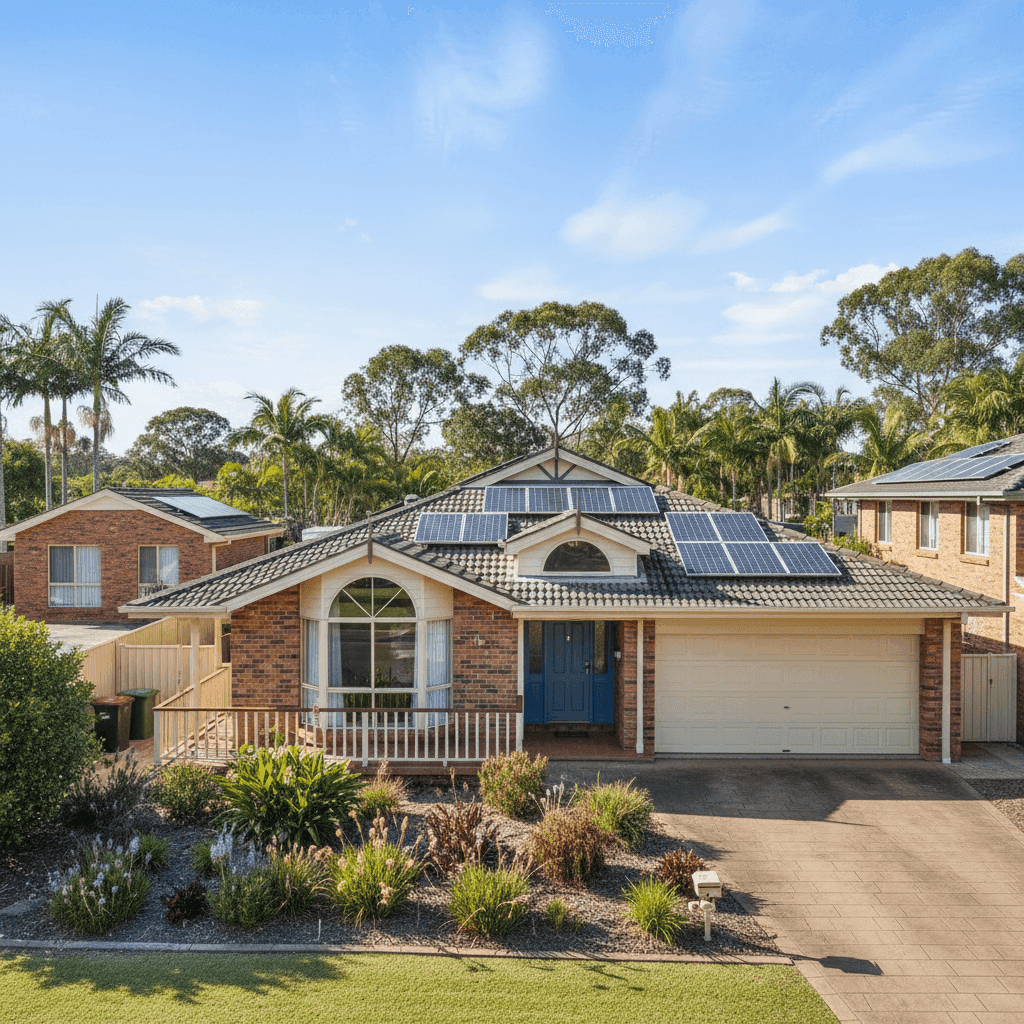
Banora Point is a well-established residential suburb nestled in the Tweed region of northern New South Wales, just minutes from the Queensland border. With its leafy streets, proximity to the Tweed River, and a mix of family homes built across several decades, it's a popular destination for owner-occupiers seeking the relaxed Northern Rivers lifestyle. If you own a free standing home here, understanding what you should be paying for home and contents insurance — and why — can save you hundreds of dollars a year.
This article breaks down a real home insurance quote for a 4-bedroom, 3-bathroom free standing home in Banora Point, compares it against local, state, and national benchmarks, and offers practical tips to help you get the best value cover.
---
Is This Quote Fair?
The quote in question comes in at $3,250 per year (or roughly $311 per month) for combined home and contents insurance, covering a building sum insured of $550,000 and contents valued at $50,000. Both the building and contents excess are set at $1,000.
Our pricing data rates this quote as CHEAP — below average for the Banora Point area. That's a meaningful finding. Based on 27 quotes collected for the Banora Point suburb (postcode 2486), the suburb average premium sits at $5,083 per year, and the median is $4,189 per year. This quote falls well below even the 25th percentile of $3,531 — meaning it's cheaper than at least 75% of comparable quotes in the area.
In plain terms: this is a genuinely competitive premium for this suburb. A homeowner on this quote is saving over $900 compared to the median Banora Point price, and nearly $1,850 compared to the local average. That's real money back in your pocket each year.
---
How Banora Point Compares
To put this quote in broader context, it helps to look at how Banora Point sits relative to New South Wales as a whole and the national picture.
| Benchmark | Average Premium | Median Premium |
|---|---|---|
| Banora Point (2486) | $5,083/yr | $4,189/yr |
| NSW | $9,528/yr | $3,770/yr |
| National | $5,347/yr | $2,764/yr |
| Tweed LGA | $26,089/yr | — |
A few things stand out here. The NSW average of $9,528 is extraordinarily high, but this is heavily skewed by flood- and cyclone-prone areas across the state — the NSW median of $3,770 is a much more representative figure for typical homeowners. Banora Point's median of $4,189 sits modestly above the state median, which makes sense given its coastal-adjacent location and the broader Tweed region's exposure to severe weather events.
The Tweed LGA average of $26,089 is a striking number, but again, this reflects the enormous variability within the LGA — some parts of the Tweed are significantly flood-affected, which drives premiums to extreme levels. Banora Point itself is not classified as a cyclone risk area, which helps keep premiums more manageable.
Nationally, the median of $2,764 is lower than Banora Point's median, reflecting the fact that many Australian homes are located in lower-risk inland areas. For a coastal NSW suburb, a premium in the $3,000–$4,000 range is broadly reasonable — and a quote at $3,250 for this level of cover is genuinely strong value.
---
Property Features That Affect Your Premium
Several characteristics of this property directly influence the insurance premium, either pushing it up or helping keep it down.
Brick veneer construction with a concrete tile roof is generally viewed favourably by insurers. Brick veneer offers solid weather resistance and fire resilience, while concrete roofing is durable and less susceptible to storm damage than older iron or fibreglass alternatives. Together, these materials typically attract more competitive premiums compared to timber-framed or sheet-metal-roofed homes.
Slab foundation is another positive factor. Homes on concrete slabs tend to be more stable and less prone to subsidence or pest-related structural issues than those on stumps or piers, which can reduce risk in the eyes of underwriters.
Timber and laminate flooring can be a double-edged sword. While aesthetically desirable, these materials are more susceptible to water damage than tiles, which is worth keeping in mind when assessing contents and building cover limits.
Solar panels are increasingly common across Australian homes, but they do add a layer of complexity to insurance. Panels installed on the roof can be damaged by hail, storms, or falling debris, and it's important to confirm with your insurer whether they are covered under the building policy — most standard policies include permanently fixed solar systems, but it pays to check.
Ducted climate control adds to the replacement value of the home and is a factor in setting an accurate building sum insured. With a $550,000 building sum insured, this property appears to be reasonably well covered for its size and fittings quality.
The granny flat is a notable feature. Secondary dwellings can complicate insurance if not properly disclosed — some policies cover a granny flat under the main building policy, while others require a separate or endorsed policy. Homeowners should verify this explicitly with their insurer to avoid a nasty surprise at claim time.
---
Tips for Homeowners in Banora Point
1. Verify your granny flat is covered Don't assume your granny flat is automatically included in your standard home policy. Contact your insurer and ask specifically whether the secondary dwelling — including its structure and any contents — is covered, and under what conditions. Some policies cap coverage or exclude certain uses (such as short-term rental).
2. Review your solar panel coverage Confirm that your solar panel system is listed as a covered item under your building policy. Ask whether storm damage, hail impact, and accidental breakage are included. If your system is relatively new or high-value, it may be worth checking whether the sum insured adequately reflects replacement cost.
3. Don't underinsure — especially with a granny flat With a 4-bedroom home, 3 bathrooms, ducted air conditioning, timber flooring, and a separate granny flat, the true cost to rebuild this property could easily exceed expectations. Underinsurance is one of the most common — and costly — mistakes Australian homeowners make. Use a building cost calculator or speak with a quantity surveyor if you're unsure whether $550,000 is sufficient.
4. Compare quotes regularly Even if you're on a competitive premium today, insurers adjust their pricing models frequently. It's worth comparing quotes at CoverClub at each renewal to ensure you're still getting strong value — and to check whether a different insurer might offer better coverage for the same price.
---
Ready to See What You Could Be Paying?
Whether you're a first-time buyer in Banora Point or a long-term homeowner wondering if you're overpaying, CoverClub makes it easy to benchmark your premium against real data from your suburb. Get a home insurance quote today and see how your current policy stacks up — you might be surprised at what's available.