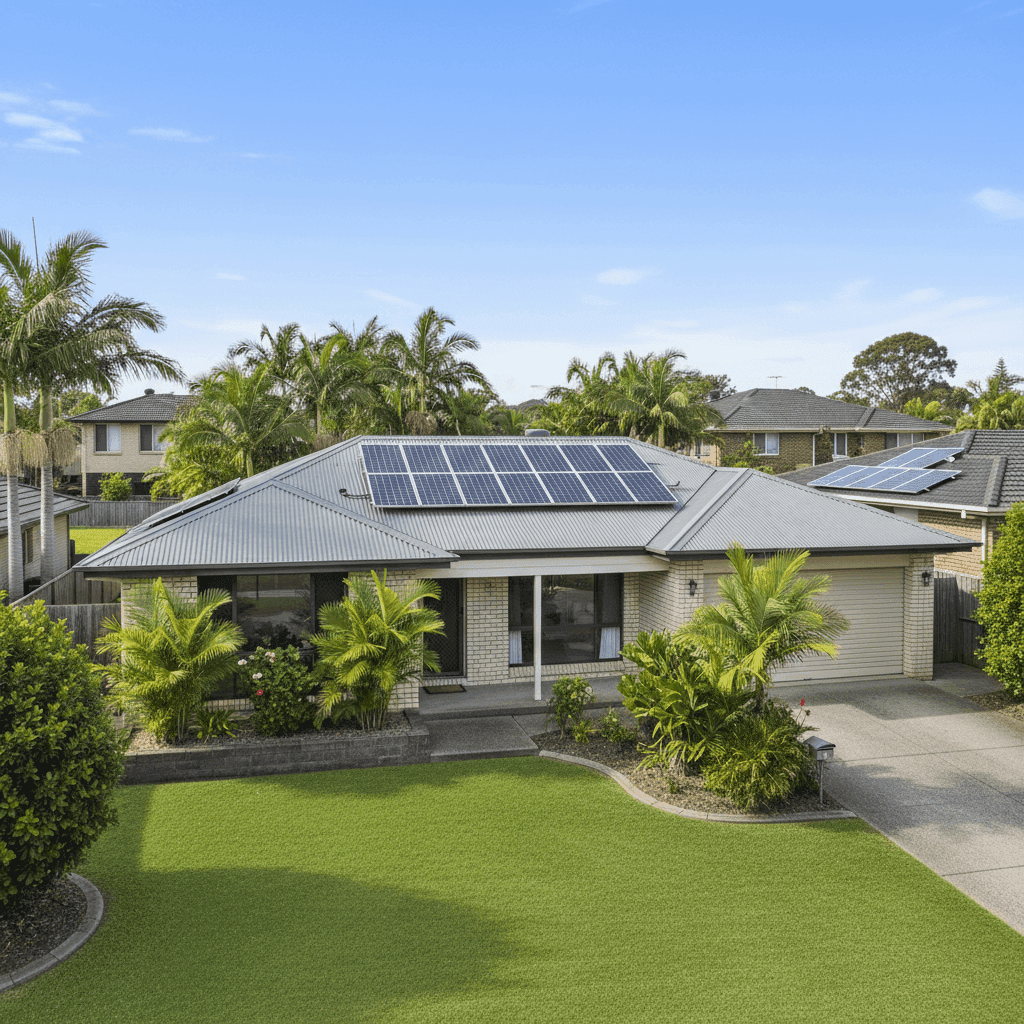
Banora Point is a leafy residential suburb nestled in the Tweed region of far northern New South Wales, sitting just minutes from the Queensland border and the Gold Coast. It's a popular spot for families and sea-changers alike, offering a relaxed lifestyle with easy access to beaches, waterways, and urban amenities. If you own a free standing home here, understanding what you should be paying for home and contents insurance — and whether your current quote is competitive — is an important part of protecting one of your biggest assets.
This article breaks down a real insurance quote for a 4-bedroom, 2-bathroom free standing home in Banora Point, and puts the numbers into context against local, state, and national benchmarks.
---
Is This Quote Fair?
The annual premium for this property came in at $2,990 per year (or $293/month), covering both building ($500,000 sum insured) and contents ($100,000), each with a $5,000 excess. Our price rating for this quote is CHEAP — below average for the area.
That's a strong result. To put it plainly: this homeowner is paying meaningfully less than most of their neighbours for comparable cover. Given the building and contents values involved, securing a combined policy under $3,000 per year represents genuine value — particularly in a coastal-adjacent suburb where insurers can sometimes price risk conservatively.
The $5,000 excess on both building and contents is worth noting. A higher excess is one of the most effective levers for reducing your premium, and it's a reasonable trade-off for many homeowners who are primarily seeking protection against major, catastrophic events rather than smaller claims. Just make sure you're comfortable covering that amount out of pocket if something does go wrong.
---
How Banora Point Compares
To understand just how competitive this quote is, it helps to look at the broader pricing landscape. You can explore full local data on the Banora Point insurance stats page.
| Benchmark | Premium |
|---|---|
| This quote | $2,990/yr |
| Banora Point suburb average | $5,083/yr |
| Banora Point suburb median | $4,189/yr |
| Banora Point 25th percentile | $3,531/yr |
| Tweed LGA average | $26,089/yr |
| NSW state average | $9,528/yr |
| NSW state median | $3,770/yr |
| National average | $5,347/yr |
| National median | $2,764/yr |
(Based on a sample of 27 quotes in the Banora Point area)
A few things stand out here. First, this quote sits below the suburb's 25th percentile of $3,531 — meaning it's cheaper than at least 75% of quotes collected in the area. That's a genuinely strong outcome.
Second, the Tweed LGA average of $26,089 is strikingly high. This figure is heavily influenced by flood-affected and high-risk properties across the broader Tweed region — many parts of the LGA have experienced significant flood events in recent years. Banora Point itself tends to fare better than some neighbouring areas, which is reflected in the suburb-level data being far more moderate. Still, it's a useful reminder of how dramatically risk can vary within a single local government area.
Compared to the NSW state average of $9,528, this quote is roughly 68% cheaper — a remarkable gap. Even against the national average of $5,347, it comes in at nearly half the price.
---
Property Features That Affect Your Premium
Several characteristics of this property work in the homeowner's favour from an insurance pricing perspective:
Brick Veneer Construction Brick veneer is generally viewed favourably by insurers. It offers solid fire resistance and structural durability compared to weatherboard or lightweight cladding, which can translate to lower building premiums.
Steel / Colorbond Roof Colorbond roofing is a popular choice in coastal and semi-coastal areas for good reason — it's highly durable, resistant to corrosion, and performs well in storms. Insurers tend to price Colorbond roofs more competitively than older tile or terracotta options that may be more prone to storm damage.
Slab Foundation A concrete slab foundation is considered low-risk by most insurers. It provides a stable base and is less susceptible to subsidence or pest-related issues compared to older pier-and-beam or timber stump foundations.
Elevated Less Than 1 Metre The property is slightly elevated, but by less than a metre. This modest elevation may offer a marginal benefit in terms of surface water drainage, without triggering the complexity or cost associated with more significantly raised structures.
Solar Panels The presence of solar panels adds some replacement value to the building sum insured, and it's important to confirm these are included under the building policy. Most standard home insurance policies cover rooftop solar as part of the building, but it's worth verifying with your insurer.
Ducted Climate Control Ducted air conditioning systems are a meaningful fixed asset and are typically covered under building insurance. Given the warm climate of the Tweed region, this is a valuable inclusion.
Above Average Fittings The above-average fittings quality — think stone benchtops, quality cabinetry, or premium fixtures — increases the rebuild cost, which is appropriately reflected in the $500,000 building sum insured. Underinsuring a well-appointed home is a common and costly mistake.
No Pool The absence of a swimming pool removes one potential liability and maintenance-related risk factor from the equation.
---
Tips for Homeowners in Banora Point
1. Review your sum insured regularly Building costs in Australia have risen significantly over the past few years. A sum insured that was adequate two or three years ago may no longer cover a full rebuild today — especially with above-average fittings. Use a building cost calculator annually and adjust your cover accordingly.
2. Confirm solar panels are covered If your panels aren't explicitly listed or confirmed under your policy, you could be left out of pocket in the event of storm damage or theft. Ask your insurer directly and get it in writing.
3. Understand the flood risk context While Banora Point is generally lower risk than many parts of the Tweed LGA, it's worth checking whether your specific property is in a mapped flood zone. The Tweed Council's flood mapping tools and your insurer's flood definitions can differ — so read the Product Disclosure Statement carefully.
4. Compare before you renew Loyalty doesn't always pay in insurance. Given that the suburb average sits at $5,083 and this quote came in at $2,990, the difference between the best and worst quotes in Banora Point is substantial. Shopping around at renewal time — even if you're happy with your current insurer — is one of the simplest ways to avoid overpaying.
---
Compare Your Own Quote
Whether you're a new homeowner in Banora Point or simply due for a renewal, it pays to know where your premium sits relative to the market. CoverClub makes it easy to get a home insurance quote and see how different insurers price your specific property — so you can make a confident, informed decision rather than just accepting whatever lands in your inbox at renewal time.