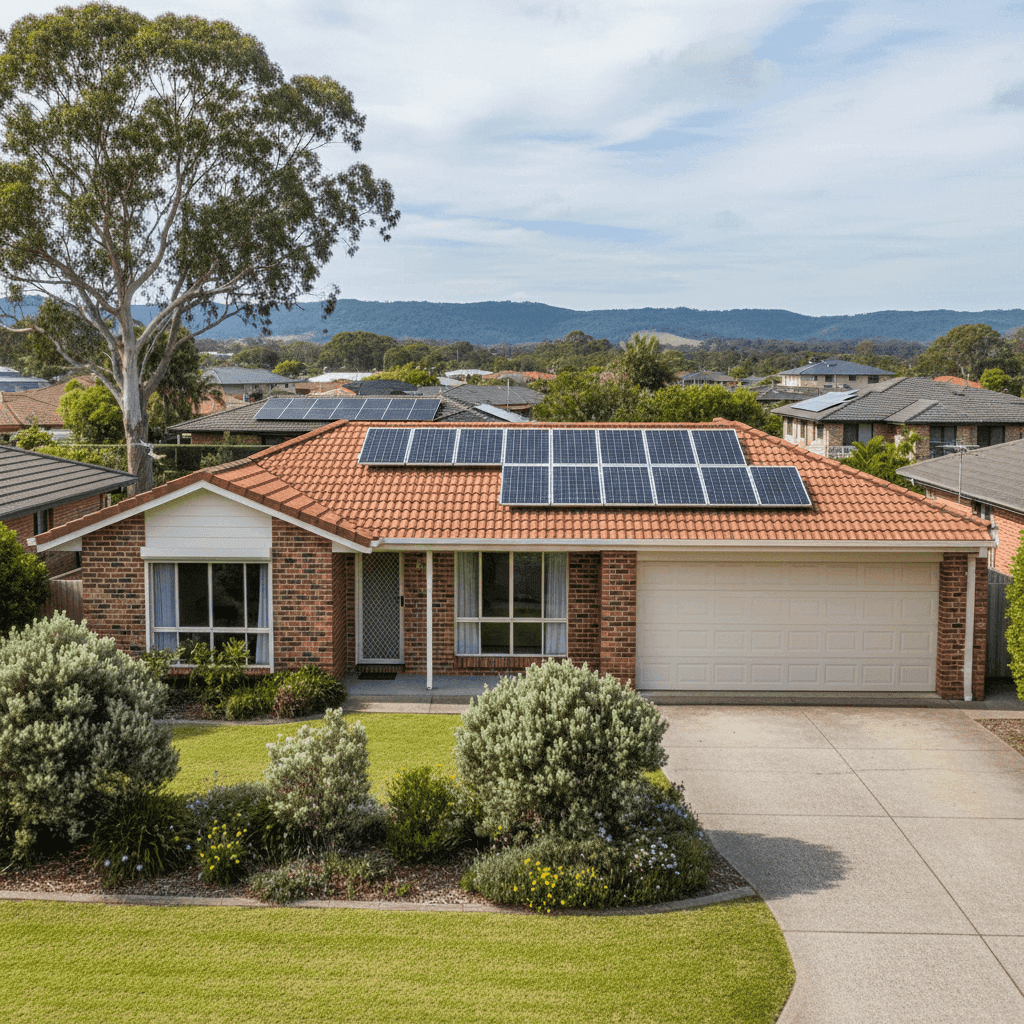
If you own a free standing home in Banora Point, NSW 2486, you've probably noticed that insurance premiums in the Tweed region can vary enormously. Banora Point sits in a sought-after pocket of coastal New South Wales — close to the Queensland border, flanked by the Tweed River and within easy reach of the Gold Coast. That geography brings lifestyle appeal, but it also shapes what insurers charge to protect your home. In this article, we break down a real building insurance quote for a three-bedroom, two-bathroom brick veneer home in the suburb, and put it into context against local, state, and national benchmarks.
---
Is This Quote Fair?
The quote in question comes in at $4,776 per year (or $458 per month) for building-only cover on a free standing home with a sum insured of $483,000 and a building excess of $5,000.
Our price rating for this quote is FAIR — Around Average, which is a reasonable outcome for Banora Point. Here's why that matters: "fair" doesn't necessarily mean cheap, but it does mean you're not being significantly overcharged relative to what others in the same suburb are paying.
Based on 27 quotes collected for the Banora Point area, the suburb average sits at $5,083 per year and the median is $4,189 per year. At $4,776, this quote lands between those two figures — above the median but below the average, which is exactly where a "fair" rating belongs.
The spread of premiums in Banora Point is also worth noting. The 25th percentile is $3,531/yr, meaning a quarter of quotes come in below that figure, while the 75th percentile reaches $5,997/yr. This $2,466 gap between the cheaper and more expensive end of the market illustrates just how much insurers can differ on the same suburb — a strong reason to compare before you commit.
---
How Banora Point Compares
To understand whether $4,776 is genuinely competitive, it helps to zoom out and look at the broader picture.
| Benchmark | Average Premium | Median Premium |
|---|---|---|
| Banora Point (suburb) | $5,083/yr | $4,189/yr |
| NSW (state) | $9,528/yr | $3,770/yr |
| National | $5,347/yr | $2,764/yr |
| Tweed LGA | $26,089/yr | — |
A few things stand out here. First, the NSW state average of $9,528/yr is dramatically higher than the state median of $3,770 — a sign that the NSW average is being pulled upward by high-risk postcodes (think flood-prone inland towns or cyclone-exposed coastal areas). Banora Point's premiums sit well below that inflated state average, which is reassuring.
Second, the Tweed LGA average of $26,089/yr looks alarming at first glance. However, this figure is heavily skewed by high-risk properties elsewhere in the Tweed local government area — particularly low-lying flood zones. Banora Point itself generally fares better than many of its LGA neighbours, and this quote reflects that.
Compared to the national average of $5,347/yr, this quote of $4,776 is modestly below average, which is a positive sign. The national median of $2,764 is considerably lower, but that figure is influenced by lower-risk, lower-value properties across regional and rural Australia — not a like-for-like comparison for a coastal NSW home with a $483,000 sum insured.
---
Property Features That Affect Your Premium
Several characteristics of this particular property influence how insurers assess and price the risk.
Brick Veneer Construction Brick veneer walls are generally viewed favourably by insurers. They offer solid fire resistance and durability compared to weatherboard or lightweight cladding, which can help moderate premiums.
Tiled Roof A tiled roof is considered a lower-risk roofing material than corrugated iron or colorbond in many contexts, though tiles can be more susceptible to hail damage. For a 1998-built home, the roof is now over 25 years old — age can be a factor insurers consider when assessing potential claims.
Slab Foundation Concrete slab foundations are standard for homes of this era in coastal NSW and are generally regarded as stable, though they can be more costly to repair if subsidence or plumbing issues arise beneath the slab.
Solar Panels This property has solar panels installed. Solar panels add value to the home and increase the cost to rebuild or repair, which is reflected in the sum insured. It's important to ensure your building sum insured accounts for the replacement cost of solar infrastructure — many homeowners underestimate this.
Ducted Climate Control Ducted air conditioning is a significant fixed asset within the building. Like solar panels, it contributes to the overall rebuild cost and should be factored into your sum insured calculation.
Building Size and Age At 139 sqm and built in 1998, this is a mid-sized home of moderate age. The 1998 construction year means it was built under relatively modern building codes, which is generally a positive for structural integrity and insurer risk assessment.
No Pool, No Cyclone Risk The absence of a pool removes a liability and maintenance risk that some insurers price in. Banora Point is also not classified as a cyclone risk area, which keeps premiums lower than they would be for comparable properties further north in Queensland.
---
Tips for Homeowners in Banora Point
1. Review Your Sum Insured Carefully At $483,000, this building sum insured needs to reflect the true cost of rebuilding the home from the ground up — not its market value. With solar panels and ducted climate control included, make sure these are accounted for in your estimate. Underinsurance is one of the most common and costly mistakes homeowners make.
2. Compare Quotes Across Multiple Insurers The 25th-to-75th percentile gap in Banora Point spans over $2,400 per year. That's real money left on the table if you don't shop around. Different insurers weigh flood zones, construction type, and suburb risk profiles very differently.
3. Consider Your Excess Strategically This quote carries a $5,000 building excess. A higher excess typically reduces your annual premium, but make sure you can comfortably cover that amount out of pocket if a claim arises. If $5,000 would be a financial stretch, it may be worth comparing quotes with a lower excess to understand the premium trade-off.
4. Check for Flood and Storm Definitions in Your Policy Banora Point's proximity to the Tweed River and its coastal location means storm and water damage are realistic risks. Read your policy's definitions of "flood," "storm surge," and "rainwater runoff" carefully — these distinctions can determine whether a claim is paid or rejected.
---
Ready to Find a Better Rate?
Whether this quote is your current renewal or one you're shopping around, it pays to compare. CoverClub makes it easy to see what insurers are quoting for homes like yours in Banora Point — without the hassle of ringing around. Get a home insurance quote today and find out if you could be paying less for the same level of cover.