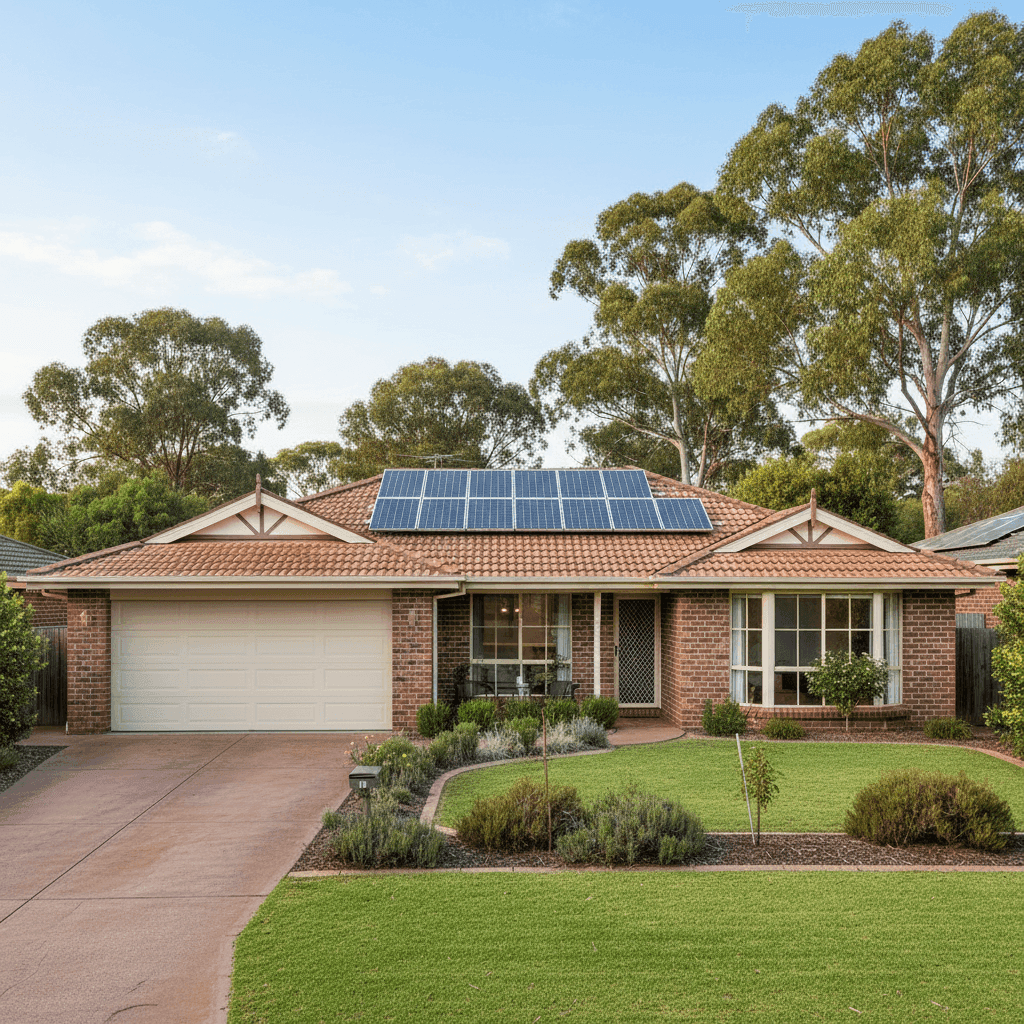
If you own a free standing home in Barnsley, NSW 2278, you're probably curious about what a fair home insurance premium looks like for your area. Barnsley is a quiet residential suburb in the Lake Macquarie local government area, sitting roughly 20 kilometres west of Newcastle. It's a well-established neighbourhood with a mix of older brick homes and leafy streets — the kind of place where knowing your insurance costs are competitive brings genuine peace of mind.
This article breaks down a real home and contents insurance quote for a three-bedroom, two-bathroom free standing home in Barnsley, comparing it against suburb, state, and national benchmarks so you can judge whether you're getting a fair deal.
---
Is This Quote Fair?
The annual premium on this quote comes in at $2,348 per year (or $234 per month), covering a building sum insured of $550,000 and contents valued at $150,000. The building excess is $3,000 and the contents excess is $1,000.
Based on our pricing data, this quote is rated CHEAP — sitting below the suburb average. That's a strong result. Across 30 quotes sampled in the Barnsley area, the suburb average sits at $4,100 per year and the median at $3,501 per year. This quote comes in well beneath the 25th percentile of $2,626 per year, meaning it's cheaper than at least 75% of quotes collected in this postcode. For a homeowner seeking solid coverage without overpaying, this is an encouraging outcome.
---
How Barnsley Compares
To put this quote into proper context, it helps to look at the broader pricing landscape across Barnsley (NSW 2278), New South Wales, and nationally.
| Benchmark | Average Premium | Median Premium |
|---|---|---|
| Barnsley (suburb) | $4,100/yr | $3,501/yr |
| New South Wales | $9,528/yr | $3,770/yr |
| National | $5,347/yr | $2,764/yr |
| Lake Macquarie LGA | $11,064/yr | — |
A few things stand out here. The NSW average premium of $9,528 is dramatically higher than the median of $3,770 — a sign that a small number of very high-risk or high-value properties are pulling the average upward significantly. The same pattern appears at the national level, where the average of $5,347 dwarfs the median of $2,764. This is why the median is often a more useful comparison point for typical homeowners.
Against the NSW median of $3,770 and the national median of $2,764, this quote of $2,348 holds up well — it's below both figures. The Lake Macquarie LGA average of $11,064 is particularly eye-catching, though this likely reflects a wide range of property types and risk profiles across the broader council area, including waterfront and flood-prone properties that carry substantially higher premiums.
For a standard residential home in Barnsley, this quote represents genuine value.
---
Property Features That Affect Your Premium
Several characteristics of this property influence how insurers price the risk. Understanding these factors helps explain why this quote lands where it does.
Brick veneer construction is generally viewed favourably by insurers. It offers solid fire resistance and structural durability compared to weatherboard or fibrous cement, which can contribute to a more competitive premium. The tiled roof is similarly well-regarded — tiles are durable, fire-resistant, and widely used across Australian suburban homes, making them a low-risk roofing choice in the eyes of underwriters.
The home was built in 1980, placing it in a common vintage bracket for Australian suburban properties. Homes of this era are generally well-understood by insurers, though older electrical systems, plumbing, and roofing can sometimes attract scrutiny. It's worth ensuring your policy reflects any renovations or upgrades that may have been made since original construction.
The stump foundation is worth noting. Homes on stumps can be more susceptible to certain types of movement and pest damage, though they also offer better ventilation and can be easier to inspect and repair underneath. Insurers typically factor this into their assessment, particularly in areas with reactive soils.
Solar panels are present on this property. While solar adds value to a home, it also introduces an additional insurable asset. Make sure your building sum insured accounts for the replacement cost of the panels themselves, as they can be expensive to replace following storm or hail damage.
Ducted climate control is another feature that adds to the replacement value of the home. Ducted systems are costly to install and should be factored into your building sum insured to avoid being underinsured in the event of a total loss.
The absence of a pool removes one common source of liability exposure, which can be a modest positive for premium pricing.
---
Tips for Homeowners in Barnsley
Whether you're reviewing an existing policy or shopping for new cover, here are four practical steps worth considering.
1. Review your building sum insured regularly. With construction costs rising across Australia, the sum insured that was adequate three years ago may no longer cover a full rebuild today. At $550,000 for a 139 sqm home, this quote's building sum insured equates to roughly $3,957 per sqm — a reasonable figure, but one worth verifying against current local building costs, particularly given the inclusion of solar panels and ducted climate control.
2. Check that your contents cover reflects what you actually own. Contents insurance of $150,000 is a solid starting point, but it's easy to underestimate the cumulative value of furniture, appliances, electronics, clothing, and personal belongings. Consider doing a room-by-room audit every year or two to ensure your contents sum insured keeps pace with your actual possessions.
3. Understand your excess before you claim. This policy carries a $3,000 building excess and a $1,000 contents excess. A higher excess typically lowers your premium, but it also means a larger out-of-pocket cost at claim time. Make sure these figures are amounts you could comfortably cover if you needed to make a claim unexpectedly.
4. Don't set and forget your policy. Insurance needs change as your property changes. Renovations, new additions, updated appliances, or changes in how you use the property (such as renting out a room) can all affect your coverage requirements. Review your policy annually and update your insurer about any significant changes.
---
Compare Your Options with CoverClub
Whether this quote is yours or you're simply researching what to expect for a home in Barnsley, the best way to ensure you're getting fair value is to compare multiple quotes side by side. At CoverClub, we make it easy to see how different insurers price your specific property — so you're never paying more than you need to. Get a home insurance quote today and see how your premium stacks up.