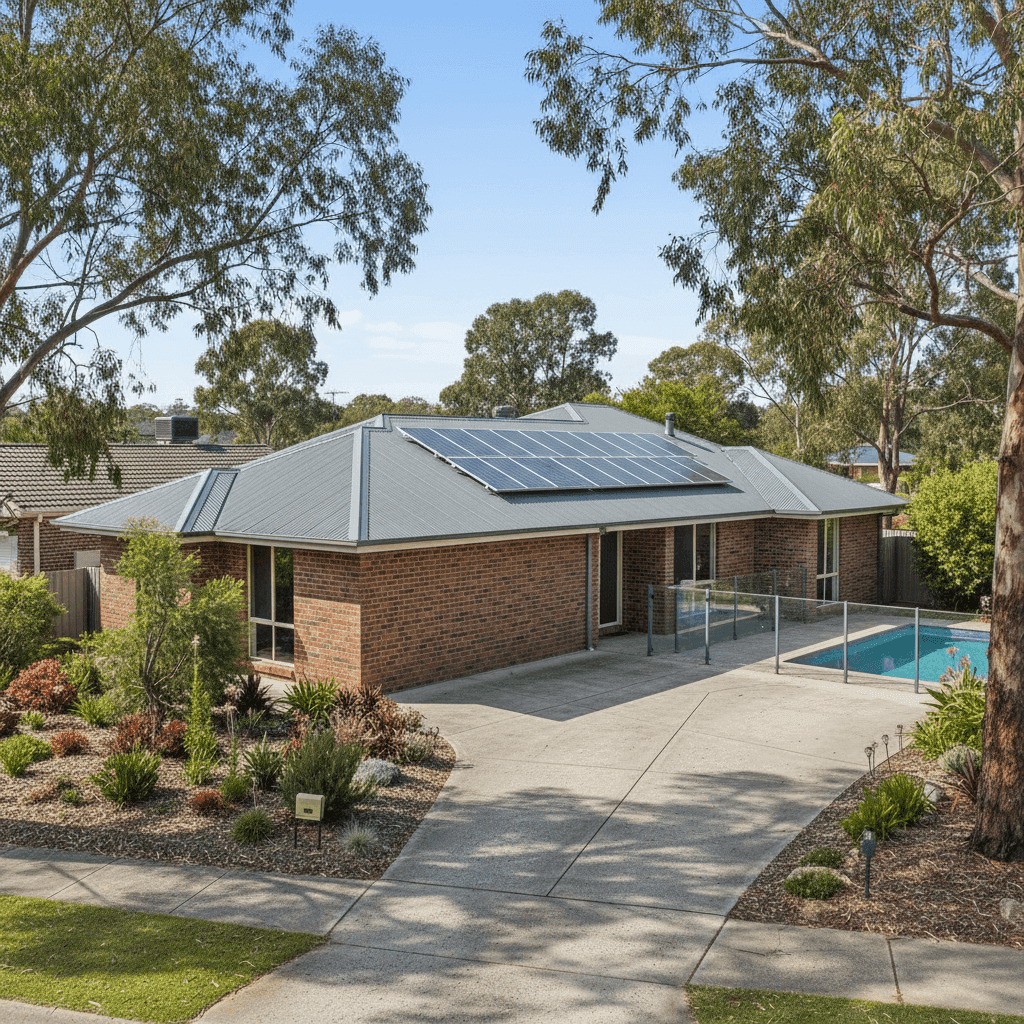
Basin Pocket is a quiet, established suburb sitting within the Ipswich local government area in South East Queensland. Known for its leafy streetscapes and mix of older and mid-era homes, it's the kind of suburb where a well-built five-bedroom free standing home on a slab foundation is a solid long-term asset. But how much should you expect to pay to protect one? We've analysed a real home and contents insurance quote for a property here — a 268 sqm, brick veneer home built in 1994 with a Colorbond roof, timber flooring, a swimming pool, and solar panels — to give you a clear picture of what's fair, what's typical, and where you might find savings.
---
Is This Quote Fair?
The annual premium for this property came in at $3,307 per year (or $310 per month), covering a building sum insured of $857,000 and contents valued at $117,000, each with a $1,000 excess.
Our pricing engine has rated this quote as FAIR — Around Average, and when you dig into the numbers, that assessment holds up well.
Compared to the suburb average for Basin Pocket of $7,453 per year, this quote is sitting at less than half the local average — a meaningful difference. Even against the suburb median of $4,828 per year, this quote comes in roughly $1,500 cheaper. That suggests the policyholder is getting a competitive deal relative to what others in the same postcode are paying.
Against Queensland state benchmarks, the picture is similarly encouraging. The state average sits at $4,547 per year and the state median at $3,931 — both above this quote. QLD is one of Australia's more expensive states for home insurance, largely due to flood exposure, storm risk, and cyclone-prone regions in the north, so landing below the state median is a reasonable outcome for a property in Ipswich.
The one area where this quote looks less exceptional is against national figures. The national average is $2,965 per year and the national median is $2,716 — both below this quote. That said, Queensland homeowners almost universally pay more than the national average, and a property of this size (268 sqm, five bedrooms, pool, solar) with a high building sum insured naturally attracts a higher premium than the typical Australian home. In context, this quote is reasonable.
---
How Basin Pocket Compares
To put the numbers side by side:
| Benchmark | Annual Premium |
|---|---|
| This Quote | $3,307 |
| Basin Pocket 25th Percentile | $2,817 |
| Basin Pocket Median | $4,828 |
| Basin Pocket Average | $7,453 |
| Basin Pocket 75th Percentile | $12,379 |
| Ipswich LGA Average | $5,055 |
| QLD State Average | $4,547 |
| National Average | $2,965 |
A few things stand out here. First, the wide spread in Basin Pocket premiums — from $2,817 at the 25th percentile all the way to $12,379 at the 75th — tells you that insurers are pricing properties in this postcode very differently depending on individual risk factors. Flood mapping, proximity to waterways, and property-specific features all play a role. With only 14 quotes in the sample, the local dataset is relatively small, which can skew averages.
Second, this quote at $3,307 sits comfortably between the 25th and 50th percentile for the suburb — meaning it's better than at least half of local quotes, and potentially better than more once a larger sample is considered. For a property of this size and value, that's a solid position to be in.
---
Property Features That Affect Your Premium
Several characteristics of this property will have influenced how insurers priced the risk:
Brick Veneer Walls & Colorbond Roof This is a well-regarded construction combination in Queensland. Brick veneer offers good structural integrity and fire resistance, while Colorbond steel roofing is durable, lightweight, and performs well in high-wind events. Insurers generally view this pairing favourably compared to, say, weatherboard cladding or older tile roofs.
Slab Foundation A concrete slab foundation is standard for homes of this era in Queensland and is generally considered low-risk from an insurance perspective. It avoids the subfloor moisture and pest issues sometimes associated with raised timber stumps.
Swimming Pool A pool adds both value and liability to a property. Insurers factor in the cost of pool equipment, surrounds, and fencing into the building sum insured, and some may also consider public liability exposure. It's worth confirming your policy explicitly covers pool-related structures.
Solar Panels Solar panels are increasingly common on Queensland homes, but they do add replacement cost to the building. A rooftop system can cost $5,000–$15,000 or more to replace, and not all standard policies cover panels automatically — or cover them adequately. Check that your building sum insured accounts for the full replacement value of your system.
Timber & Laminate Flooring Timber and laminate floors can be more expensive to repair or replace than tiles following a water damage event. This is a minor but real factor in how insurers assess contents and building risk.
Building Size: 268 sqm At 268 sqm, this is a larger-than-average home. A higher floor area directly increases rebuild cost estimates, which flows through to a higher building sum insured — and in turn, a higher premium. The $857,000 sum insured reflects this scale.
---
Tips for Homeowners in Basin Pocket
1. Check Your Flood Coverage Carefully Parts of the Ipswich region have well-documented flood history, and insurers treat flood risk very differently — some include it automatically, others exclude it or charge a significant add-on. Even if your specific property isn't in a high-risk zone, it's worth confirming exactly what your policy covers and under what conditions a flood claim would be paid.
2. Review Your Building Sum Insured Annually Construction costs in Queensland have risen sharply in recent years. A sum insured that was adequate when you first took out your policy may no longer cover the full cost of rebuilding a 268 sqm home. Use a building cost calculator or speak with a quantity surveyor to sense-check your figure — being underinsured is a costly mistake.
3. Confirm Solar Panel Coverage As noted above, solar panels aren't always covered as standard. Ask your insurer directly: are the panels covered under the building policy? What's the sub-limit? Does accidental damage apply? If your system is relatively new or high-value, this is worth getting in writing.
4. Compare Quotes Before Renewal The wide range of premiums in Basin Pocket — from under $3,000 to over $12,000 — is a strong signal that shopping around pays off. Insurers use different models to assess risk in this postcode, which means the same property can attract very different quotes. Don't let your policy auto-renew without checking the market first.
---
Compare Your Home Insurance at CoverClub
Whether you're reviewing an existing policy or shopping for cover on a new property, CoverClub makes it easy to see how your quote stacks up. Get a home insurance quote today and compare it against real suburb, state, and national data — so you can make a confident, informed decision about protecting your home.