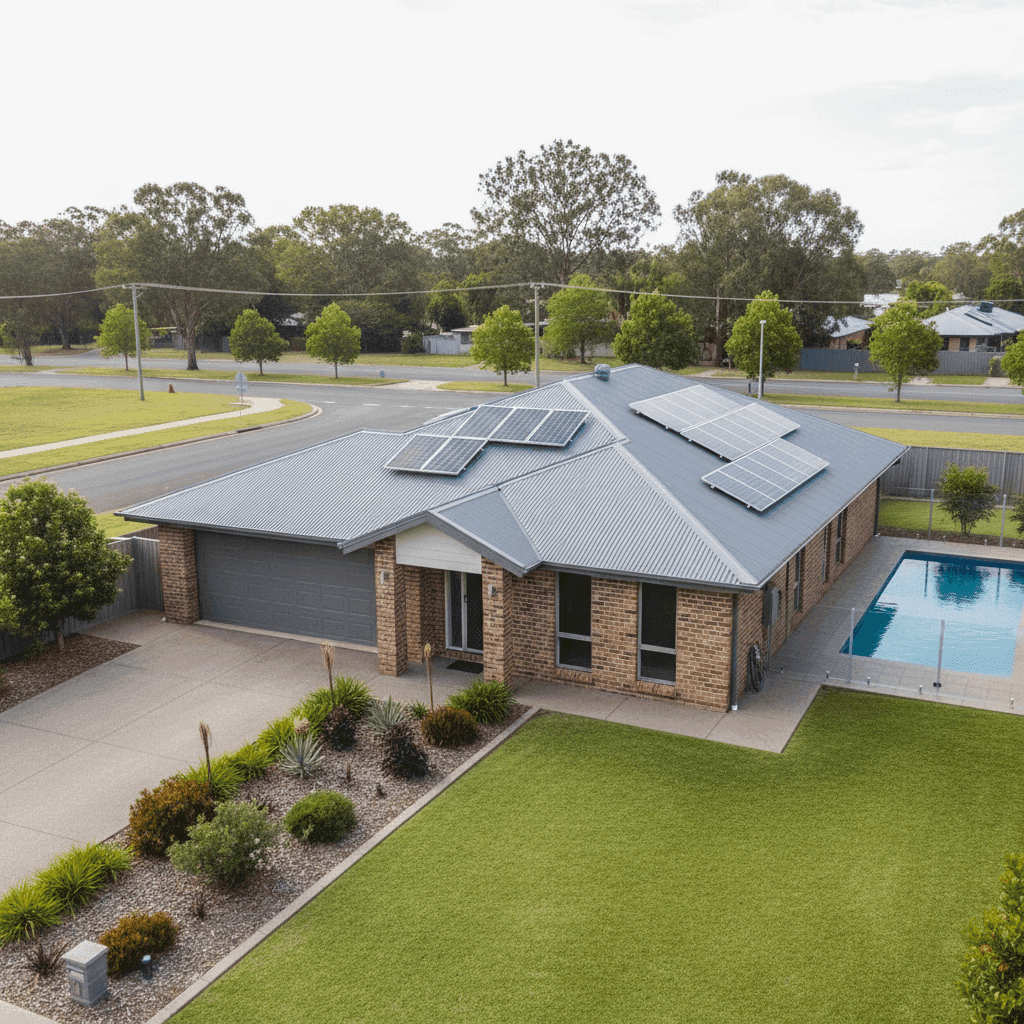
Home insurance premiums across Queensland can vary dramatically — even between neighbouring suburbs. This article takes a close look at a home and contents insurance quote for a five-bedroom free standing home in Basin Pocket, QLD 4305, breaking down whether the price stacks up, how local costs compare to state and national benchmarks, and what property features are likely driving the premium.
---
Is This Quote Fair?
The annual premium for this property came in at $3,853 per year (or roughly $362 per month), covering both building and contents. The building is insured for $1,073,000 with a contents value of $95,000, and both the building and contents excess are set at $1,000.
Our pricing engine has rated this quote as Fair — Around Average, which is a reasonable outcome for a property of this size and specification in the Basin Pocket area.
To put that in context:
- The suburb's median premium sits at $7,143/yr, meaning this quote comes in well below the midpoint for the area.
- The 25th percentile for Basin Pocket is $3,262/yr, so this quote sits just above the cheapest quarter of quotes in the suburb — a solid position.
- The 75th percentile reaches $12,435/yr, highlighting just how wide the pricing range can be locally.
In short, at $3,853, this homeowner is paying less than the majority of their neighbours for comparable cover — a genuinely competitive result.
---
How Basin Pocket Compares
Understanding where Basin Pocket sits relative to broader benchmarks helps put any individual quote in perspective. You can explore the full data on the Basin Pocket insurance stats page.
| Benchmark | Average Premium | Median Premium |
|---|---|---|
| Basin Pocket (suburb) | $25,896/yr | $7,143/yr |
| Ipswich LGA (Scenic Rim) | $8,744/yr | — |
| Queensland (state) | $9,129/yr | $3,903/yr |
| National | $5,347/yr | $2,764/yr |
A few things stand out here. The Basin Pocket average of $25,896 is extraordinarily high — nearly three times the Queensland state average and almost five times the national average. This is a strong signal that a small number of very high-value or high-risk properties in the suburb are pulling the mean upward significantly. The median of $7,143 is a far more representative figure for what most homeowners in the area actually pay.
Compared to the Queensland state average of $9,129, this quote is well below the norm. And against the national average of $5,347, it's also competitive — particularly given the property's size, features, and the historically elevated insurance costs seen across much of Queensland.
The Ipswich LGA average of $8,744 further reinforces that this quote represents good value for the region.
---
Property Features That Affect Your Premium
Several characteristics of this property will have influenced the final premium — both positively and negatively.
Construction & Materials
Built in 1994, this home sits in a sweet spot for insurers. It's old enough to have appreciated in value but young enough to have been built under modern building codes, which reduces the likelihood of structural issues. The brick veneer external walls are generally viewed favourably — they're durable, fire-resistant, and low-maintenance compared to weatherboard or cladding. The Colorbond steel roof is another positive: lightweight, corrosion-resistant, and well-suited to Queensland's climate.
Foundation & Flooring
A concrete slab foundation is typically considered lower risk than older stumped or timber-framed foundations, which can be more susceptible to movement, termites, and flood damage. The timber and laminate flooring is standard for a home of this era and doesn't significantly affect the premium either way, though it's worth noting that timber floors can be more costly to repair or replace following water damage.
Size & Bedrooms
At 268 sqm with five bedrooms and one bathroom, this is a sizeable family home. The high building sum insured of $1,073,000 reflects the cost to rebuild a property of this scale — and is the single biggest driver of the premium. Ensuring your sum insured accurately reflects current rebuild costs (not market value) is critical.
Pool, Solar & Ducted Climate Control
The swimming pool adds liability exposure and increases the overall replacement cost of the property, both of which nudge the premium upward. Solar panels introduce additional risk — they can be damaged by hail or storms and are expensive to replace — so their inclusion in cover is important. The ducted climate control system is a high-value fixed asset that also contributes to the building sum insured.
No Cyclone Risk
Being outside a designated cyclone risk zone is a meaningful advantage in Queensland, where cyclone-related loadings can add substantially to premiums in coastal and northern areas. This property benefits from that lower-risk classification.
---
Tips for Homeowners in Basin Pocket
1. Review your building sum insured annually With a rebuild value of over $1 million, even a small underestimate could leave you significantly out of pocket after a major claim. Construction costs have risen sharply in recent years — make sure your sum insured keeps pace. Use a quantity surveyor or your insurer's calculator to verify the figure each year.
2. Don't overlook your pool and solar panels Confirm that your policy explicitly covers your swimming pool structure and your solar panel system. Some standard policies exclude or limit cover for these items. Given the replacement cost of both, it's worth checking the product disclosure statement carefully.
3. Consider your excess strategically Both the building and contents excess on this policy are set at $1,000. Opting for a higher voluntary excess can reduce your annual premium, but make sure the saving is worth the additional out-of-pocket cost if you do need to claim. For a property of this value, a $2,000 excess might yield meaningful savings.
4. Compare quotes regularly The wide spread between the 25th percentile ($3,262) and the 75th percentile ($12,435) in Basin Pocket shows that insurers price this suburb very differently. Shopping around at renewal — rather than auto-renewing — can make a real difference. Get a new quote at CoverClub to see how your current premium measures up.
---
Compare Your Home Insurance Today
Whether you're a long-time Basin Pocket local or new to the area, it pays to know where your premium sits relative to the market. CoverClub makes it easy to compare home and contents insurance quotes in one place, with transparent pricing data so you always know if you're getting a fair deal.