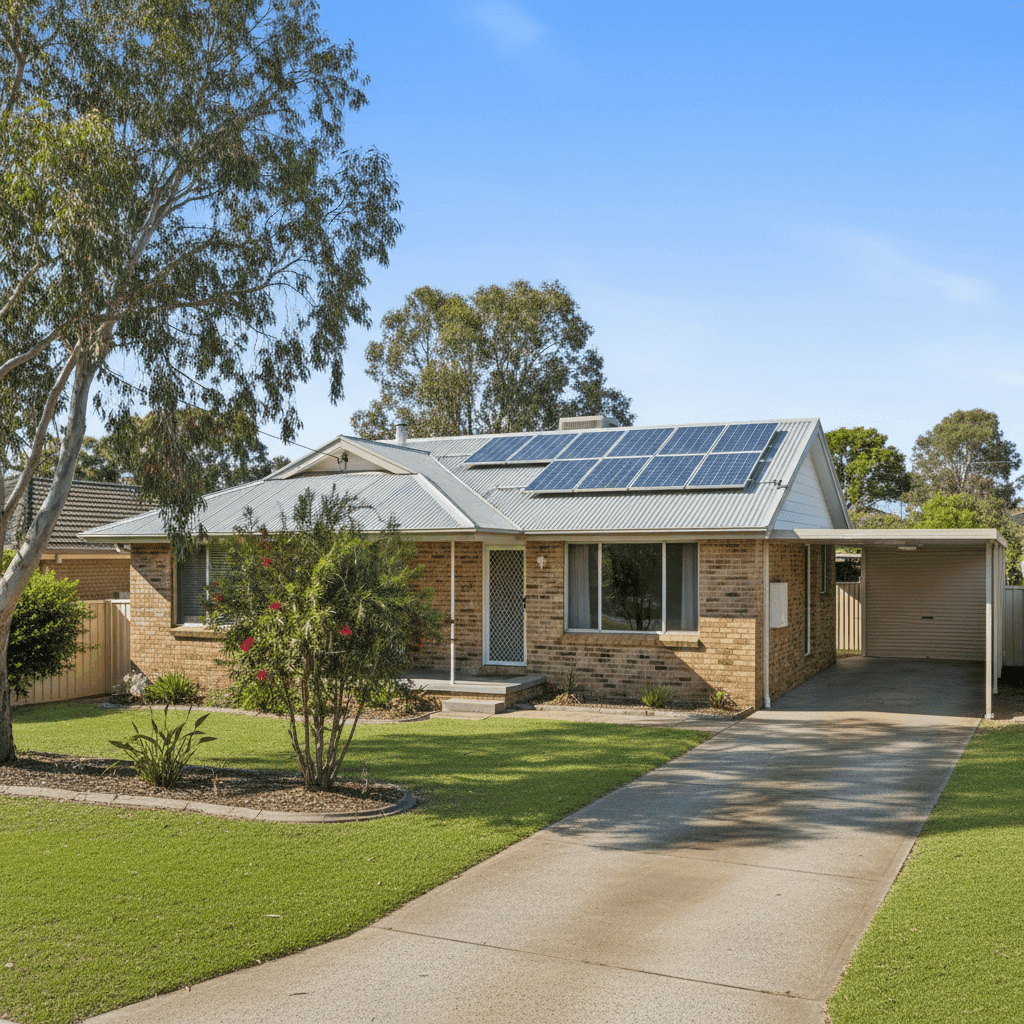
If you own a free standing home in Basin Pocket, QLD 4305, you already know that home insurance in south-east Queensland can sting. This article takes a close look at a real building insurance quote for a three-bedroom, two-bathroom property in the suburb — and puts that number under the microscope against local, state, and national benchmarks. Whether you're renewing your policy or shopping around for the first time, understanding where your premium sits in the broader market is the first step to making a smarter decision.
---
Is This Quote Fair?
The quote in question comes in at $14,520 per year (or roughly $1,417 per month) for building-only cover on a 139 sqm free standing home, with a building excess of $3,000 and a sum insured of $532,000.
Our price rating for this quote is EXPENSIVE — Above Average.
To put that in context: the suburb average premium in Basin Pocket sits at $7,453 per year, and the median is $4,828 per year. This quote is nearly double the suburb average and almost three times the suburb median. Even when you look at the upper end of the local market — the 75th percentile sits at $12,379 per year — this quote still exceeds it by more than $2,100 annually.
That's a significant gap, and it warrants a closer look at what's driving the cost. While some of the premium can be explained by property-specific factors (more on those below), a figure this far above the local norm is a strong signal that shopping around could yield meaningful savings.
---
How Basin Pocket Compares
To appreciate just how elevated this quote is, it helps to zoom out and look at the broader picture.
| Benchmark | Annual Premium |
|---|---|
| This Quote | $14,520 |
| Basin Pocket Suburb Average | $7,453 |
| Basin Pocket Suburb Median | $4,828 |
| QLD State Average | $4,547 |
| QLD State Median | $3,931 |
| National Average | $2,965 |
| National Median | $2,716 |
| Ipswich LGA Average | $8,744 |
You can explore the full data for Basin Pocket at our suburb stats page, compare it against the Queensland state overview, or see how it stacks up against the national picture.
A few things stand out here. First, Queensland premiums are already well above the national average — the QLD state average of $4,547 is 53% higher than the national average of $2,965. This reflects the elevated risk profile of south-east Queensland, where flooding, storms, and extreme weather events are more frequent than in many other parts of the country.
Second, even within Queensland, Basin Pocket's suburb average of $7,453 is notably higher than the state average — suggesting that this particular pocket of Ipswich carries additional localised risk factors that insurers are pricing in. The suburb sample size of 14 quotes provides a reasonable (if modest) basis for comparison.
The quote analysed here, however, sits well above even these elevated local benchmarks, placing it firmly in "expensive" territory.
---
Property Features That Affect Your Premium
Several characteristics of this property are likely influencing the premium — some pushing it up, others potentially working in the homeowner's favour.
Construction year (1970): Older homes built around this era often attract higher premiums. A 1970s build may have ageing plumbing, wiring, or structural elements that insurers view as a higher risk. Replacement costs for period-era materials and fittings can also be harder to estimate, which can lead to more conservative (read: higher) sum insured figures.
Double brick construction: This is generally viewed favourably by insurers. Double brick is durable, fire-resistant, and structurally sound — qualities that can moderate premiums compared to weatherboard or cladding exteriors. It's one of the more insurer-friendly wall types available.
Steel/Colorbond roof: Colorbond roofing is widely regarded as low-maintenance and resilient against wind and rain. Insurers typically view it positively, particularly in storm-prone regions like south-east Queensland.
Slab foundation: A concrete slab is generally considered stable and low-risk from an insurance perspective, particularly compared to older stumped or suspended timber foundations that can be more vulnerable to movement and moisture.
Timber/laminate flooring: Timber floors — especially in older homes — can be costly to replace or repair after a water damage event. This may contribute modestly to the overall premium.
Solar panels: The presence of solar panels adds to the replacement value of the property and is factored into the sum insured. Panels can also be damaged by hail or storm events, which insurers account for in their pricing.
Sum insured of $532,000: For a 139 sqm home, this works out to approximately $3,827 per square metre — which is on the higher end of the scale. It's worth reviewing whether this figure accurately reflects the rebuild cost (not the market value) of the home, as over-insuring can unnecessarily inflate your premium.
---
Tips for Homeowners in Basin Pocket
1. Review your sum insured carefully The sum insured should reflect the cost to rebuild your home from scratch — not its market value, and not an inflated estimate. At $532,000 for a 139 sqm home, it may be worth getting an independent building valuation to confirm this figure is accurate. Over-insuring is a common and costly mistake.
2. Compare multiple quotes before renewing With this premium sitting well above the suburb average, there's a real opportunity to save by comparing offers from multiple insurers. Premiums for the same property can vary by thousands of dollars between providers. Use CoverClub's free quote comparison tool to see what other insurers are offering.
3. Consider your excess strategically This policy carries a $3,000 building excess. Opting for a higher excess is one of the most effective ways to reduce your annual premium — but only if you're confident you could cover that amount out of pocket in the event of a claim. If you have sufficient savings, increasing your excess could meaningfully lower what you pay each year.
4. Ask about discounts for home security and maintenance Some insurers offer discounts for homes with monitored security systems, smoke alarms, or documented maintenance records. For an older home like this one, being able to demonstrate that the property has been well-maintained — updated wiring, plumbing in good condition — can sometimes improve your risk profile and, in turn, your premium.
---
Compare Your Options with CoverClub
Home insurance premiums in Basin Pocket are already above the Queensland and national averages — so paying well above the local benchmark is worth addressing. Whether you're looking to benchmark your current policy or find a better deal entirely, CoverClub makes it easy to compare building and contents insurance quotes from multiple Australian insurers in one place.
Get a free home insurance quote today and see how much you could save.
---