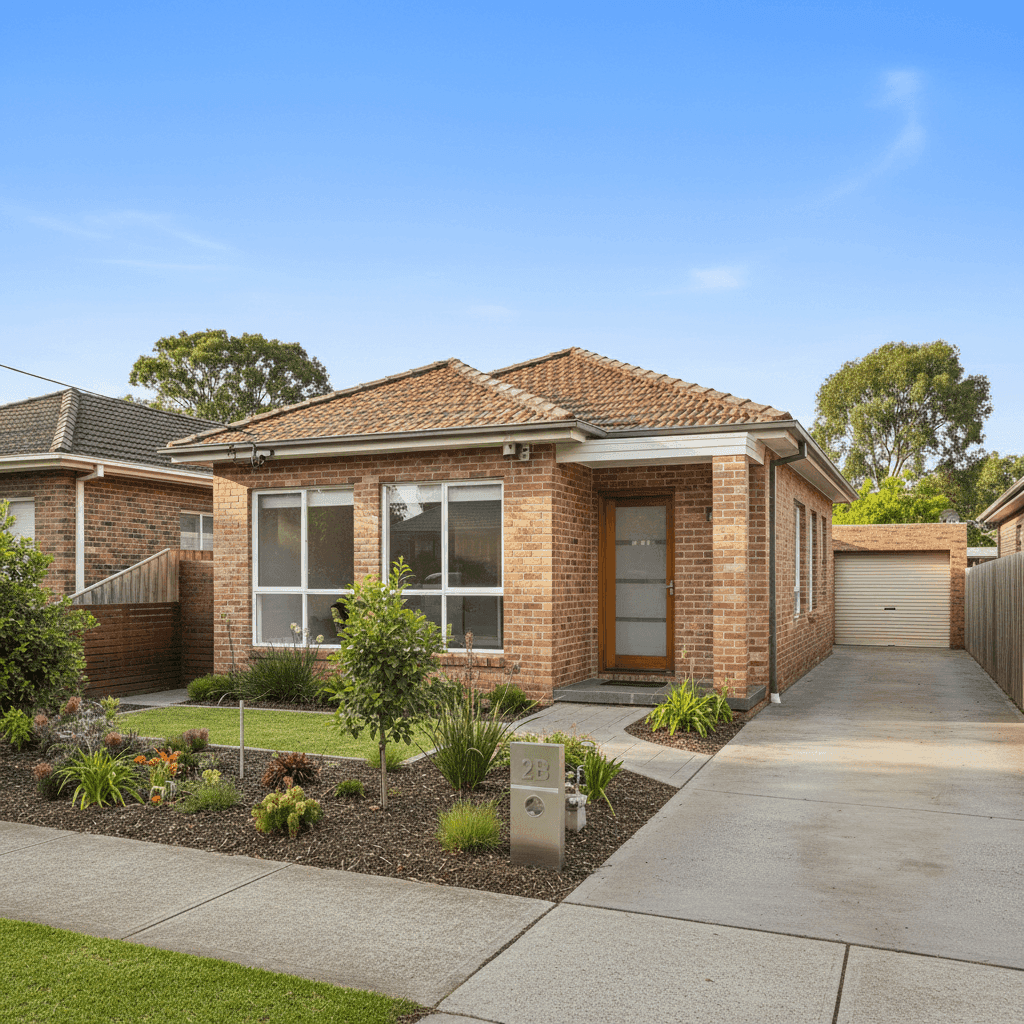
If you own a semi detached home in Bass Hill, NSW 2197, you're likely no stranger to the challenge of finding competitive home insurance. This south-western Sydney suburb sits within the Canterbury-Bankstown Local Government Area — a region that, as we'll explore, carries some notably elevated insurance costs. In this article, we analyse a real home and contents insurance quote for a four-bedroom, three-bathroom semi detached property in Bass Hill, and unpack what's driving the price — and what you can do about it.
---
Is This Quote Fair?
The quote in question sits at $3,233 per year (or $339/month), covering both building and contents. The building is insured for $1,000,000 and contents for $210,000, with a $3,000 building excess and a $1,000 contents excess.
Our price rating for this quote is Expensive (Above Average) — and the numbers back that up.
Compared to the Bass Hill suburb average of $1,687/year, this quote is nearly double what other homeowners in the same postcode are paying. Even against the suburb's 75th percentile of $1,954/year, this quote sits well above the pack.
That said, context matters. The sum insured here is substantial — $1,000,000 for the building alone — and the property features above-average fittings, which naturally pushes premiums higher. Still, a gap this wide is worth scrutinising closely before accepting any quote at face value.
---
How Bass Hill Compares
To put this quote in perspective, here's how Bass Hill stacks up against broader benchmarks:
| Benchmark | Average Premium | Median Premium |
|---|---|---|
| Bass Hill (suburb) | $1,687/yr | $1,581/yr |
| NSW (state) | $9,528/yr | $3,770/yr |
| National | $5,347/yr | $2,764/yr |
| Canterbury-Bankstown LGA | $9,344/yr | — |
A few things stand out here. The NSW state average of $9,528/year is extraordinarily high — driven by properties in flood-prone, bushfire-affected, or cyclone-risk regions across the state that carry very large premiums. The median of $3,770/year is a more reliable comparison point, and this quote at $3,233 sits below that NSW median, which is a more encouraging sign.
Against the national median of $2,764/year, this quote is moderately higher, though the $1,000,000 building sum insured is a key factor inflating the figure. The Canterbury-Bankstown LGA average of $9,344/year also reflects the broad range of property types and risk profiles across that council area, making suburb-level comparisons far more meaningful for Bass Hill residents.
The takeaway? While this quote is expensive relative to the local suburb sample, it's not out of step with what higher-value properties in NSW are paying — though there's still meaningful room to shop around.
---
Property Features That Affect Your Premium
Several characteristics of this property influence what insurers charge:
Brick Veneer Construction Brick veneer walls are generally viewed favourably by insurers. They offer solid fire resistance and durability, which can help moderate premiums compared to timber-framed or clad homes.
Tiled Roof Terracotta or concrete tile roofs are considered low-to-moderate risk by most Australian insurers. They're durable in most weather conditions, though they can be more expensive to repair after hail events compared to Colorbond.
Slab Foundation A concrete slab foundation is standard for homes built in the 2000s and is generally considered stable, reducing the risk of subsidence-related claims — a positive signal for insurers.
Built in 2010 A construction year of 2010 means the property is relatively modern and likely built to post-2000 building codes, which incorporated improved structural standards. Insurers typically price newer builds more favourably than ageing properties.
Above-Average Fittings This is one of the most significant premium drivers. Above-average fittings — think stone benchtops, quality cabinetry, premium appliances, and high-end fixtures — cost more to repair or replace, and insurers price accordingly. This factor alone can meaningfully separate a quote from the suburb average.
Ducted Climate Control Ducted air conditioning systems add to the replacement value of a home. If a system needs to be repaired or replaced after a covered event, the cost can run into the tens of thousands — so insurers factor this into the premium.
Contents Insured at $210,000 The contents value of $210,000 is on the higher end for a four-bedroom home, reflecting the above-average fittings and furnishings throughout. This contributes directly to the total premium.
---
Tips for Homeowners in Bass Hill
1. Review your sum insured carefully A $1,000,000 building sum insured may be appropriate — or it may be higher than necessary. Use a building cost calculator (many insurers provide these) to estimate your home's rebuild cost, not its market value. Over-insuring is a common and costly mistake.
2. Adjust your excess to manage your premium The $3,000 building excess on this quote is already moderately high. If you're comfortable self-funding smaller claims, increasing your excess further can bring the annual premium down. Just make sure you have that amount readily accessible if you ever need to claim.
3. Shop the market annually Insurers reprice their books regularly, and loyalty rarely pays in Australian home insurance. Use a comparison platform like CoverClub to benchmark your renewal quote against the current market — especially given the gap between this quote and the Bass Hill suburb average.
4. Bundle strategically — but verify the savings Some insurers offer discounts when you combine building and contents cover under a single policy, as is the case here. However, bundling isn't always cheaper. It's worth obtaining separate quotes for building-only and contents-only cover to confirm the combined policy is genuinely delivering value.
---
Compare Your Home Insurance with CoverClub
Whether you're renewing an existing policy or shopping for the first time, CoverClub makes it easy to see how your quote stacks up against real data from your suburb, your state, and across Australia. Get a home insurance quote today and find out if you're paying a fair price — or leaving money on the table.