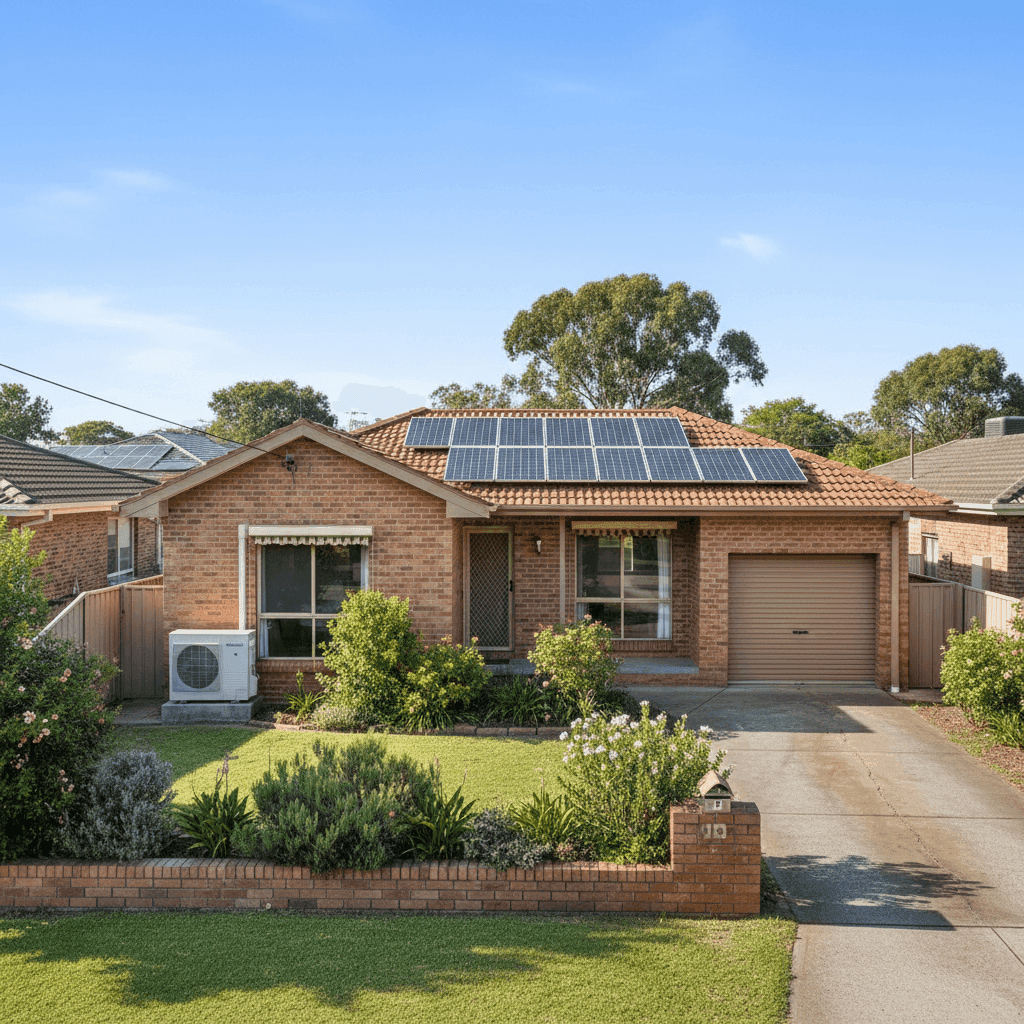
Bass Hill, a well-established suburb in Sydney's south-west, is home to a mix of post-war and mid-century brick homes sitting on generous blocks. For owners of a free standing home in this area, understanding what drives your home insurance premium — and whether you're paying a fair price — can make a real difference to your household budget.
This article breaks down a real home and contents insurance quote for a 3-bedroom, 2-bathroom brick veneer home in Bass Hill (NSW 2197), built in 1986, and compares it against local, state, and national benchmarks to help you make a more informed decision.
---
Is This Quote Fair?
The quote in question comes in at $2,403 per year (or $230/month), covering a building sum insured of $650,000 and contents valued at $150,000, each with a $1,000 excess.
Our price rating for this quote is Expensive — Above Average.
To put that in context, the average home and contents premium for comparable properties in Bass Hill sits at $1,687 per year, with a median of $1,581. This quote lands well above the suburb's 75th percentile of $1,954, meaning it's more expensive than at least three-quarters of quotes collected in the area.
That said, "expensive" doesn't automatically mean "wrong." A higher building sum insured of $650,000 will naturally push premiums upward — if comparable local quotes are based on lower rebuild values, the difference may be partly justified. Still, a gap of over $700 above the suburb average warrants a closer look and, at minimum, a comparison shop.
---
How Bass Hill Compares
Understanding where Bass Hill sits in the broader insurance landscape is useful context for any homeowner reviewing their policy.
| Benchmark | Average Premium | Median Premium |
|---|---|---|
| Bass Hill (NSW 2197) | $1,687/yr | $1,581/yr |
| Canterbury-Bankstown LGA | $9,344/yr | — |
| NSW State | $9,528/yr | $3,770/yr |
| National | $5,347/yr | $2,764/yr |
A few things stand out here. The LGA-level average for Canterbury-Bankstown ($9,344) and the NSW state average ($9,528) are dramatically higher than the Bass Hill suburb average — a reminder that averages at broader geographic levels can be skewed by high-risk or high-value properties elsewhere in the dataset. The suburb-level data, drawn from Bass Hill-specific quotes on CoverClub, gives a much more relevant picture for this postcode.
At a national level, the median Australian home insurance premium sits at $2,764 — meaning this Bass Hill quote is actually below the national median, despite being above the local suburb average. Compared to the NSW state median of $3,770, it's also well below the state midpoint, which reflects the relatively lower risk profile of Bass Hill compared to many other NSW locations.
The takeaway: this quote is on the pricier side locally, but not outlandish when viewed against the broader NSW and national context.
---
Property Features That Affect Your Premium
Every property has its own risk profile, and several features of this home are worth highlighting when it comes to insurance pricing.
Brick Veneer Construction & Tiled Roof Brick veneer walls combined with a tiled roof are generally viewed favourably by insurers. These materials are durable, fire-resistant, and widely used across Sydney's suburban housing stock. They typically attract lower premiums compared to weatherboard or steel-roofed homes.
Slab Foundation A concrete slab foundation is standard for homes of this era and is generally considered low-risk from a structural standpoint. Unlike homes on stumps or piers, slab homes have fewer vulnerabilities to subsidence or pest-related movement — though they can be more costly to repair if issues do arise.
Timber and Laminate Flooring Timber and laminate floors are a contents consideration as much as a building one. They can be costly to replace following water damage or fire, and insurers may factor the replacement cost into their assessment of both building and contents risk.
Solar Panels This property has rooftop solar panels, which add value but also add complexity. Solar systems are typically covered under building insurance, but it's worth confirming your policy explicitly includes them — and that the sum insured reflects their replacement cost. A 6.6kW system, for example, could cost $5,000–$10,000 to replace.
Ducted Climate Control Ducted air conditioning is a significant fixed asset that forms part of the building sum insured. Systems can cost $10,000–$20,000 or more to replace, so ensuring this is factored into your $650,000 building cover is important.
No Pool, No Cyclone Risk The absence of a swimming pool removes a common liability and maintenance risk that can elevate premiums. Bass Hill also sits outside designated cyclone risk zones, which keeps wind-event loading off the table — a meaningful saving compared to properties in northern Queensland or coastal WA.
1986 Build Year Homes built in the mid-1980s fall into a moderately aged category. They predate some modern building codes but are generally well-constructed. Insurers may apply modest loadings for older properties due to the potential for aging wiring, plumbing, or roofing materials, so keeping up with maintenance is both a safety and a financial consideration.
---
Tips for Homeowners in Bass Hill
1. Review your building sum insured carefully At $650,000, this policy's building cover is on the higher end for the suburb. Make sure this figure reflects the actual cost to rebuild your home from scratch — not its market value. Overcovering can push premiums up unnecessarily, while undercovering leaves you exposed. A quantity surveyor or online rebuild calculator can help you land on the right number.
2. Confirm solar panels are explicitly covered Many standard policies cover solar panels as part of the building, but some have exclusions or sub-limits. Ask your insurer directly whether your system is included and up to what value — especially if your system has been upgraded or expanded since the policy was taken out.
3. Compare at least three quotes before renewing Given this quote sits above the suburb's 75th percentile, it's worth testing the market. Premiums can vary significantly between insurers for identical properties, and loyalty doesn't always pay. Use CoverClub to compare quotes for your Bass Hill address and see what other providers are offering.
4. Consider a higher excess to reduce your premium Both the building and contents excess on this policy are set at $1,000. Opting for a higher voluntary excess — say $2,000 — can meaningfully reduce your annual premium. This strategy works well if you have the financial buffer to cover a larger out-of-pocket cost in the event of a claim.
---
Ready to Find a Better Deal?
Whether you're renewing your policy or shopping for the first time, comparing quotes is the single most effective way to avoid overpaying. CoverClub makes it easy to see how your premium stacks up and find competitive options for your Bass Hill home. Get a home insurance quote today and take the guesswork out of protecting your most valuable asset.