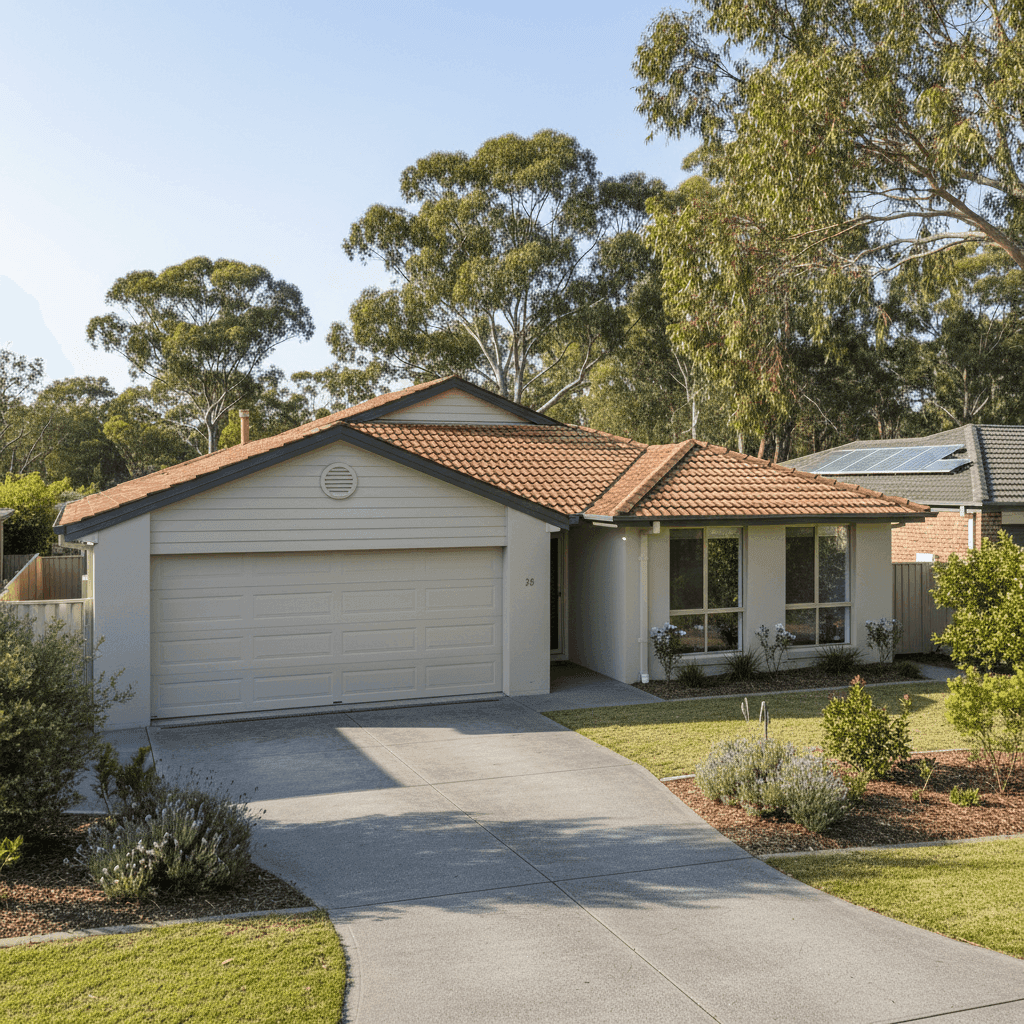
If you own a free standing home in Bateau Bay, NSW 2261, you're probably curious whether the insurance premium you're paying — or being quoted — is actually reasonable. Bateau Bay is a popular coastal suburb on the Central Coast, known for its relaxed lifestyle and proximity to Tuggerah Lake and the Pacific Ocean. Those same geographic charms, however, can influence what insurers charge to protect your home. This article breaks down a real building-only insurance quote for a four-bedroom home in the area, compares it against local, state and national benchmarks, and offers practical advice for homeowners looking to get the best value.
---
Is This Quote Fair?
The quote in question comes in at $2,672 per year (or $274/month) for building-only cover on a four-bedroom, one-bathroom free standing home, with a building excess of $3,000 and a sum insured of $433,000.
Our price rating for this quote is FAIR — Around Average.
That assessment holds up when you look at the numbers. The suburb average premium in Bateau Bay sits at $2,448/year, meaning this quote is running about $224 above the local average — roughly 9% higher. That's not an alarming gap; it's well within the normal range of variation you'd expect based on individual property characteristics, the insurer's own risk appetite, and the specific level of cover selected.
It's also worth noting that the suburb median premium is considerably lower at $1,756/year, which tells us the distribution of premiums in Bateau Bay is skewed — a relatively small number of higher-priced quotes pull the average up. This quote sits comfortably between the suburb median and the 75th percentile ($3,545/year), which means roughly half of Bateau Bay homeowners are paying less, but a significant portion are paying more. In context, a "fair" rating is well justified.
---
How Bateau Bay Compares
One of the most useful ways to evaluate any insurance quote is to zoom out and see how the local market stacks up against broader benchmarks. Here's a snapshot:
| Benchmark | Average Premium | Median Premium |
|---|---|---|
| Bateau Bay (2261) | $2,448/yr | $1,756/yr |
| NSW State | $3,801/yr | $3,410/yr |
| National | $2,965/yr | $2,716/yr |
| Central Coast LGA | $4,203/yr | — |
The figures tell an interesting story. Bateau Bay homeowners are, on average, paying significantly less than the NSW state average and even less than the national average. This is somewhat surprising given that the suburb sits within the Central Coast LGA, where the average premium is a notably high $4,203/year — one of the pricier LGA averages in the state.
Why might Bateau Bay buck the broader Central Coast trend? A few factors likely contribute: the suburb's relatively flat terrain reduces landslip risk, it sits outside designated cyclone risk zones, and the housing stock — much of it built in the 1970s and 1980s on concrete slab foundations — tends to be straightforward for insurers to price.
You can explore the full breakdown of premiums for this postcode at our Bateau Bay suburb stats page, or compare how NSW stacks up against other states on our NSW insurance stats page. For a national perspective, visit our national home insurance stats.
---
Property Features That Affect Your Premium
Every property has a unique risk profile, and insurers price accordingly. Here's how the specific features of this home are likely influencing the premium:
Hardiplank/Hardiflex External Walls Fibre cement cladding like Hardiplank is generally viewed favourably by insurers. It's non-combustible, resistant to rot and termites, and holds up well in coastal environments where salt air can degrade other materials. This is likely a neutral-to-positive factor on the premium.
Tiled Roof Terracotta or concrete tile roofs are considered durable and low-risk compared to corrugated iron or older materials like asbestos cement. A well-maintained tile roof is a tick in the box for most insurers, though older tiles (this home was built in 1978) may attract scrutiny around maintenance and storm damage vulnerability.
Slab Foundation Concrete slab foundations are generally stable and low-risk, particularly in areas without significant soil movement. They're also easier and cheaper to inspect and repair than raised timber stumps, which is reflected positively in the risk assessment.
Construction Year: 1978 Homes built in the late 1970s are a mixed bag for insurers. On one hand, they're solidly constructed — often with thicker walls and more robust framing than some modern builds. On the other, they may have older electrical wiring, plumbing, and roofing materials that haven't been updated, all of which can increase the likelihood of a claim. If you've undertaken any significant renovations or upgrades, it's worth disclosing these to your insurer — they may work in your favour.
Building Size: 143 sqm At 143 square metres, this is a modest footprint for a four-bedroom home. The sum insured of $433,000 translates to roughly $3,028 per square metre to rebuild — a figure that's broadly in line with current construction costs in regional NSW, particularly given rising material and labour costs since 2022.
No Pool, Solar Panels, or Ducted Climate Control The absence of these features keeps the risk profile clean. Pools, solar systems, and ducted HVAC all add complexity (and cost) to a rebuild, so not having them simplifies the insurer's calculations and may contribute to a more competitive premium.
---
Tips for Homeowners in Bateau Bay
Whether you're reviewing an existing policy or shopping around for the first time, here are four practical steps to help you get better value on your home insurance.
- Review your sum insured regularly. Construction costs in NSW have risen sharply in recent years. If your sum insured hasn't kept pace, you could be underinsured — meaning a total loss payout might not cover a full rebuild. Use an independent building cost calculator or speak with a quantity surveyor to confirm your figure is current.
- Consider your excess carefully. This quote carries a $3,000 building excess. A higher excess typically reduces your annual premium, but make sure it's an amount you could genuinely afford to pay out of pocket in the event of a claim. If $3,000 would be a financial stretch, it may be worth paying a slightly higher premium for a lower excess.
- Ask about discounts for home security and maintenance. Some insurers offer reduced premiums for homes with monitored alarm systems, deadbolts, or recently replaced roofing. Given the age of this property, documenting any upgrades — roof, electrical, plumbing — could support a case for a lower premium at renewal.
- Compare quotes at least once a year. Loyalty doesn't always pay in the insurance market. Insurers regularly adjust their pricing models, and a competitor may offer meaningfully better value for the same level of cover. Running a fresh comparison at renewal is one of the simplest ways to avoid overpaying.
---
Compare Your Options with CoverClub
Whether this quote is your current policy or one you're considering, it's always worth seeing what else is available. CoverClub makes it easy to compare building and contents insurance quotes from a range of Australian insurers — all in one place, without the hassle. Get a quote today and find out if you could be paying less for the same protection.