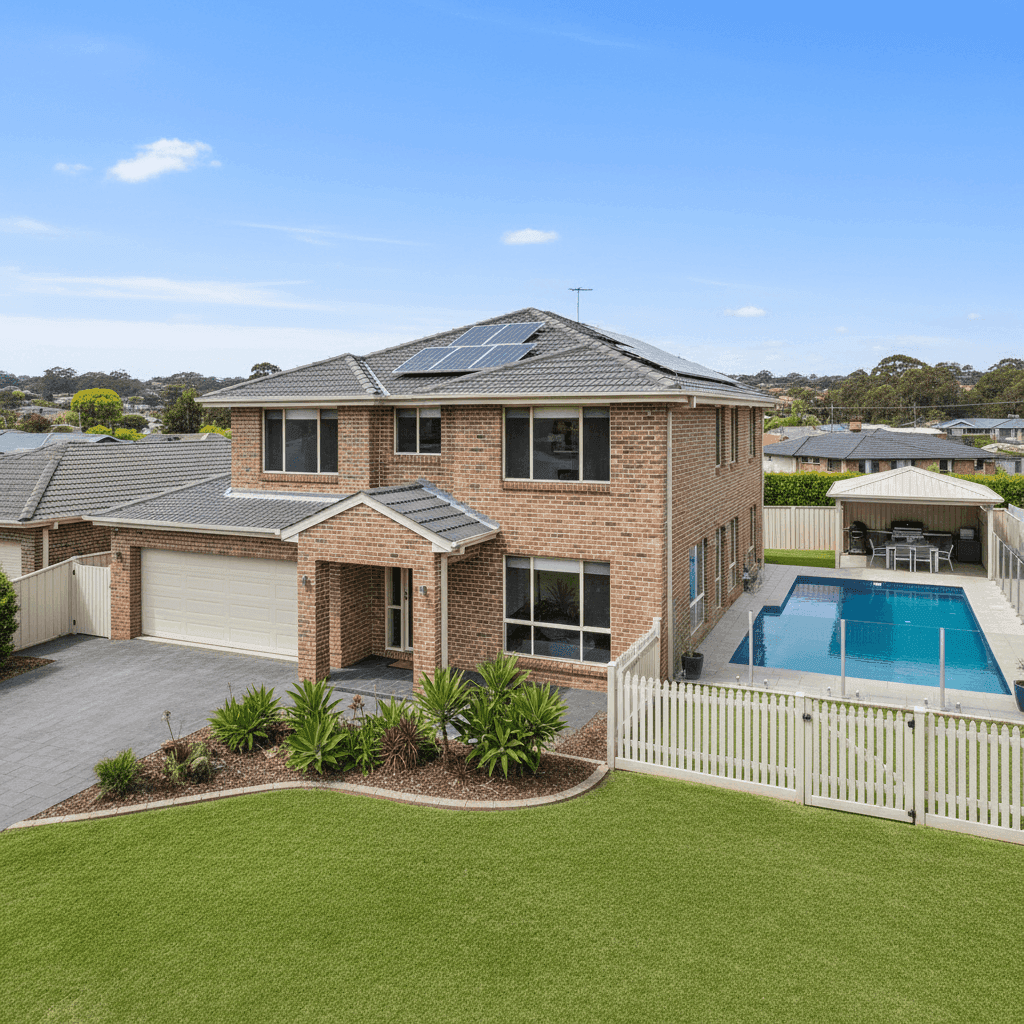
Baulkham Hills is one of Sydney's well-established north-western suburbs — a family-friendly area known for its leafy streets, quality schools, and a strong mix of modern and established homes. If you own a free standing home here, understanding what you should be paying for home and contents insurance is a smart financial move. This article breaks down a real quote for a five-bedroom, three-bathroom property in the 2153 postcode, and puts the numbers into context so you can judge whether your own policy is working hard enough for you.
---
Is This Quote Fair?
The quote in question comes in at $1,343 per year (or about $137 per month) for combined home and contents cover. The building is insured for $435,000 and contents for $240,000, with a $5,000 excess applying to both building and contents claims.
Our price rating for this quote is FAIR — Around Average.
That label is a meaningful one. It doesn't mean the premium is the cheapest available, but it does suggest the policyholder isn't being significantly overcharged relative to what others in the same suburb are paying. For a property of this size and specification — brick veneer construction, tiled roof, slab foundation, above-average fittings, plus a pool and solar panels — a premium sitting near the suburb midpoint is a reasonable outcome.
The $5,000 excess on both building and contents is on the higher side. A higher excess typically reduces the annual premium, so part of the reason this quote looks competitive may be that the policyholder has accepted more out-of-pocket exposure in the event of a claim. It's worth weighing whether that trade-off suits your financial situation.
---
How Baulkham Hills Compares
To properly assess any quote, you need a benchmark. Here's how this premium stacks up across different geographic levels:
| Benchmark | Average Premium | Median Premium |
|---|---|---|
| Baulkham Hills (2153) | $1,959 / yr | $1,835 / yr |
| Parramatta LGA | $2,031 / yr | — |
| NSW | $9,528 / yr | $3,770 / yr |
| National | $5,347 / yr | $2,764 / yr |
(Based on [105 quotes collected for the Baulkham Hills suburb](https://coverclub.com.au/stats/NSW/2153/baulkham-hills). [NSW stats](https://coverclub.com.au/stats/NSW) and [national stats](https://coverclub.com.au/stats/national) reflect a broader dataset.)
At $1,343 per year, this quote sits below the suburb average of $1,959 and also below the suburb median of $1,835. It falls between the 25th percentile ($1,220) and the 75th percentile ($2,456) for Baulkham Hills — which is exactly what "around average" looks like in practice.
One figure worth flagging is the NSW state average of $9,528 per year. That number is heavily skewed by high-risk and high-value properties across the state — coastal flood zones, bushfire-prone regions, and prestige properties all pull the average upward. The NSW median of $3,770 is a more representative figure for typical homeowners, and this quote sits well below even that. Compared to the national median of $2,764, the Baulkham Hills quote looks genuinely competitive.
---
Property Features That Affect Your Premium
Insurance pricing isn't arbitrary — every feature of a home feeds into the risk calculation. Here's how this property's characteristics likely influenced the final number:
Brick Veneer Walls & Tiled Roof Brick veneer is one of the most common and well-regarded construction types in Australian suburban homes. It's considered relatively low risk by insurers compared to timber weatherboard or fibre cement cladding. Combined with a tiled roof, this property sits in a favourable construction category that typically attracts more competitive premiums.
Slab Foundation A concrete slab foundation is standard for a home built in 2014 and is generally viewed positively by underwriters. It reduces the risk of subsidence and pest-related structural damage compared to older raised timber floor systems.
Swimming Pool Pools add complexity to a home insurance policy. They increase the insured value of the property and can introduce liability considerations. Homeowners with pools should confirm their policy explicitly covers pool infrastructure, including pumps, filtration systems, and any associated decking.
Solar Panels Solar panels are an increasingly common feature on Australian rooftops, but they're not always automatically covered under standard building policies. It's essential to verify that your insurer includes solar panels as part of the building sum insured — and that the $435,000 figure here accounts for their replacement value.
Above-Average Fittings The above-average fittings rating — think stone benchtops, quality appliances, and premium fixtures — raises the cost to rebuild or repair, which in turn supports a higher sum insured. Underinsurance is a genuine risk for homes with premium finishes; the rebuild cost can easily exceed expectations if fittings aren't properly accounted for.
Ducted Climate Control Ducted air conditioning is a significant fixed asset within the home. Like solar panels, it's worth confirming whether it's covered under the building or contents section of your policy — and that its replacement value is factored into your sum insured.
No Cyclone Risk Baulkham Hills sits well outside Australia's cyclone-prone regions, which removes one of the more significant premium loading factors that affect properties in Queensland and Western Australia. This is a quiet but meaningful advantage for Sydney homeowners.
---
Tips for Homeowners in Baulkham Hills
1. Review your sum insured annually Construction costs have risen significantly in recent years. A home built in 2014 with above-average fittings, a pool, solar panels, and ducted air conditioning could cost considerably more to rebuild today than it did even two or three years ago. Use a building cost calculator or speak to a quantity surveyor to make sure your $435,000 building sum insured still reflects current rebuild costs — not just the original purchase price.
2. Confirm what's covered under building vs. contents Items like solar panels, ducted air conditioning systems, and pool equipment often sit in a grey area between building and contents cover. Review your Product Disclosure Statement (PDS) carefully to ensure nothing falls through the cracks, particularly for high-value fixed assets.
3. Weigh up your excess carefully A $5,000 excess is a meaningful financial commitment at claim time. While it helps keep premiums lower, it also means smaller claims — a broken window, minor storm damage, or a stolen item — may not be worth claiming at all. Consider whether a lower excess option might offer better value depending on your risk tolerance and cash reserves.
4. Compare quotes before renewal Insurance loyalty rarely pays. Insurers frequently offer better rates to new customers than to existing ones. Before your policy renews, run a fresh comparison at CoverClub to see whether you can achieve a similar or better level of cover at a lower premium. Even a saving of $200–$300 per year compounds significantly over time.
---
Ready to Compare?
Whether you're reviewing an existing policy or shopping for cover on a new property, CoverClub makes it easy to see what the market looks like for your specific home. Get a quote today at CoverClub and find out whether you're paying a fair price — or whether there's a better deal waiting for you.