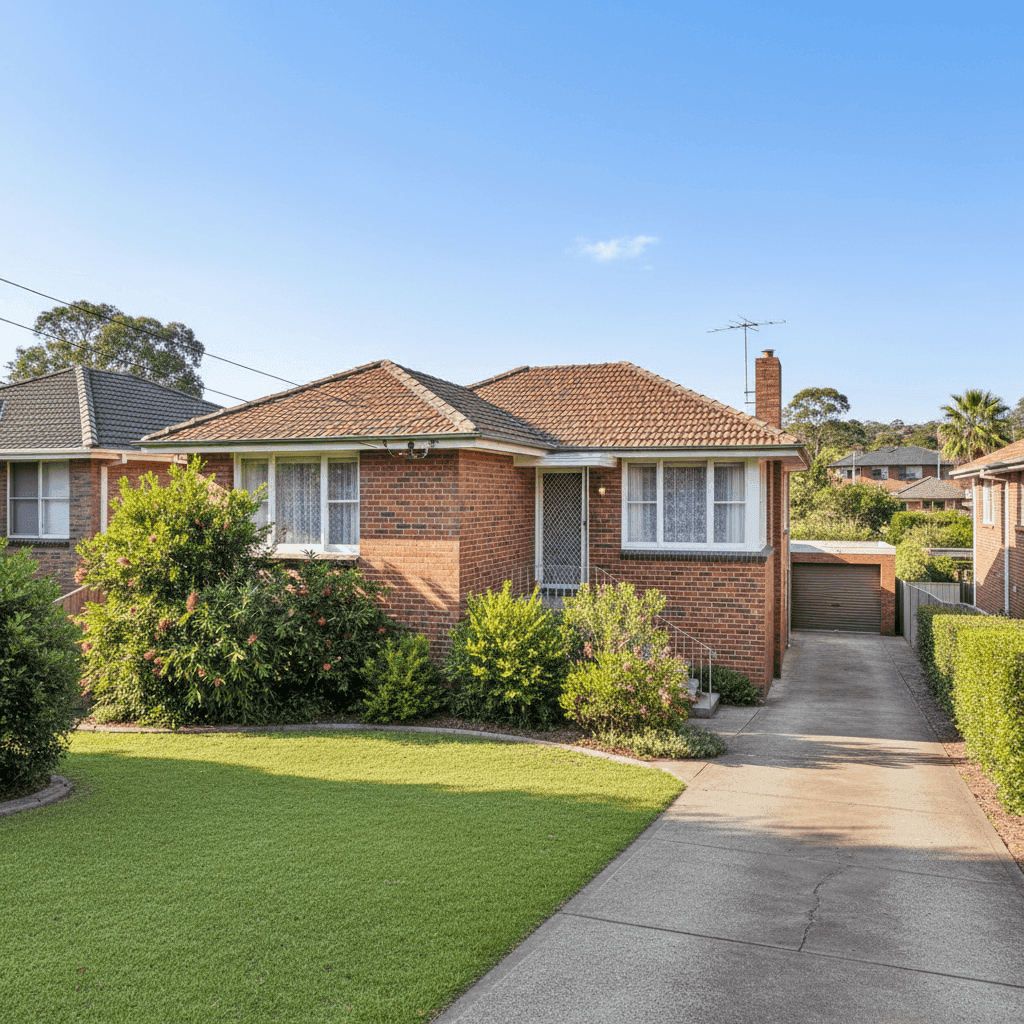
Baulkham Hills is one of Sydney's most established suburban pockets — a leafy, family-friendly corridor in the Hills District where brick homes from the 1960s and 70s still dominate the streetscape. If you own a free standing home in postcode 2153, understanding what a fair home insurance premium looks like can save you hundreds of dollars a year. This article breaks down a real quote for a 3-bedroom, 2-bathroom property in the area and puts it in context against local, state, and national benchmarks.
---
Is This Quote Fair?
The quote in question comes in at $1,254 per year (or $118 per month) for combined Home and Contents cover, with a building sum insured of $494,000 and contents covered up to $100,000. The building excess sits at $2,000 and the contents excess at $1,000.
Our pricing model rates this quote as CHEAP — below average for the area. That's a meaningful finding. In a suburb where the average annual premium runs at $2,252 and the median sits at $2,285, this quote lands roughly 44% below what most Baulkham Hills homeowners are paying. It also falls well beneath the suburb's 25th percentile of $1,415 — meaning it's cheaper than at least three-quarters of the 42 quotes we sampled in this postcode.
In plain terms: if this policy offers comparable coverage to what's available in the market, it represents genuinely strong value. That said, a low premium should always prompt a careful read of the Product Disclosure Statement (PDS). Cheaper policies can sometimes carry higher excesses, narrower event definitions, or sublimits on specific contents items. In this case, the $2,000 building excess is on the higher side, which partly explains the reduced premium — but for homeowners who rarely make claims, that trade-off is often worth it.
---
How Baulkham Hills Compares
To appreciate just how competitive this quote is, it helps to zoom out and look at the broader picture.
| Benchmark | Annual Premium |
|---|---|
| This Quote | $1,254 |
| Baulkham Hills 25th Percentile | $1,415 |
| Baulkham Hills Suburb Average | $2,252 |
| Baulkham Hills Median | $2,285 |
| Baulkham Hills 75th Percentile | $3,099 |
| LGA (Parramatta) Average | $2,048 |
| NSW State Average | $3,801 |
| NSW State Median | $3,410 |
| National Average | $2,965 |
| National Median | $2,716 |
What stands out immediately is the gap between Baulkham Hills premiums and the NSW state average. At $3,801, the average NSW home insurance premium is nearly 70% higher than what Baulkham Hills homeowners typically pay. This reflects the outsized impact of high-risk postcodes — coastal flood zones, bushfire-prone regions, and cyclone corridors in northern NSW — on the state-wide average.
Baulkham Hills itself sits in a relatively low-risk zone. It's not in a designated cyclone area, faces limited flood exposure compared to many Western Sydney suburbs closer to river systems, and while parts of the Hills District have some bushfire risk, the suburb's established urban density generally keeps premiums moderate.
The LGA-level figure is also worth noting. The Parramatta LGA average of $2,048 per year is lower than the broader suburb average for Baulkham Hills — a reminder that averages can shift depending on how boundaries are drawn and which property types are included in the sample.
---
Property Features That Affect Your Premium
Every home is unique, and insurers price risk based on a detailed picture of your property's construction, age, and features. Here's how this particular home's characteristics are likely influencing its premium:
Brick Veneer Walls Brick veneer is one of the most common external wall types across Sydney's mid-century suburbs, and insurers generally view it favourably. It's more fire-resistant than timber weatherboard and less susceptible to storm damage than some lightweight cladding options — both factors that can nudge premiums downward.
Tiled Roof Terracotta or concrete tiles are a standard, durable roofing choice. They perform well in hail events (compared to corrugated iron, which can dent) and are a known quantity for insurers. This is a neutral-to-positive rating factor.
Stump Foundation The home is built on stumps and elevated by less than one metre. This sub-floor configuration is common in older Sydney homes and can be a double-edged sword. On the positive side, slight elevation can reduce flood inundation risk. On the other hand, stumped homes can be more vulnerable to subfloor moisture, pest damage, and movement — factors some insurers assess more carefully at claim time.
Timber and Laminate Flooring Timber floors are a premium feature in the eyes of most buyers, but from an insurance perspective, they can be more costly to replace than ceramic tiles or carpet. This may have a marginal upward effect on the contents or building sum insured.
Construction Year: 1970 Homes built in 1970 are now over 50 years old. Older properties can attract slightly higher premiums due to the potential for ageing wiring, plumbing, and structural components. However, a well-maintained 1970s brick home in an established suburb is typically well-understood by insurers.
Ducted Climate Control The presence of ducted air conditioning adds to the replacement value of the home's fixtures and fittings. It's a meaningful inclusion in the building sum insured calculation and a feature worth confirming is explicitly covered in your policy.
No Pool, No Solar Panels The absence of a pool removes a significant liability and maintenance risk factor. Solar panels, while increasingly common, can complicate roof claims — so their absence here keeps things straightforward.
---
Tips for Homeowners in Baulkham Hills
1. Review your sum insured annually Building costs in Greater Sydney have risen sharply over the past few years. A sum insured of $494,000 for a 214 sqm home works out to roughly $2,308 per square metre — which is within a reasonable range, but worth validating against current construction cost data. Being underinsured is one of the most common and costly mistakes homeowners make.
2. Don't let your policy auto-renew without shopping around The spread between the cheapest and most expensive quotes in Baulkham Hills is enormous — from $1,415 at the 25th percentile to $3,099 at the 75th. That's a $1,684 annual difference for broadly similar cover. Loyalty rarely pays in insurance; comparing at renewal is one of the simplest ways to keep costs down.
3. Check your stump and subfloor condition For homes on stump foundations, regular inspections of the subfloor space can prevent costly claims and ensure your insurer can't dispute a claim on the basis of pre-existing damage or lack of maintenance. Pest inspections every 1–2 years are also advisable.
4. Understand your excess trade-off This policy carries a $2,000 building excess. Before accepting a high-excess policy purely for the premium saving, consider your financial position. If a sudden claim — say, storm damage to the roof — would put you under pressure to find $2,000 quickly, a slightly higher premium with a lower excess might be the smarter choice.
---
Compare Your Own Quote
Whether you're renewing an existing policy or buying cover for the first time, it pays to see what the market is offering. CoverClub makes it easy to compare home and contents insurance quotes for properties across Baulkham Hills and the rest of Australia — so you can see exactly where your premium sits relative to your neighbours. Get a quote today and find out if you're overpaying.