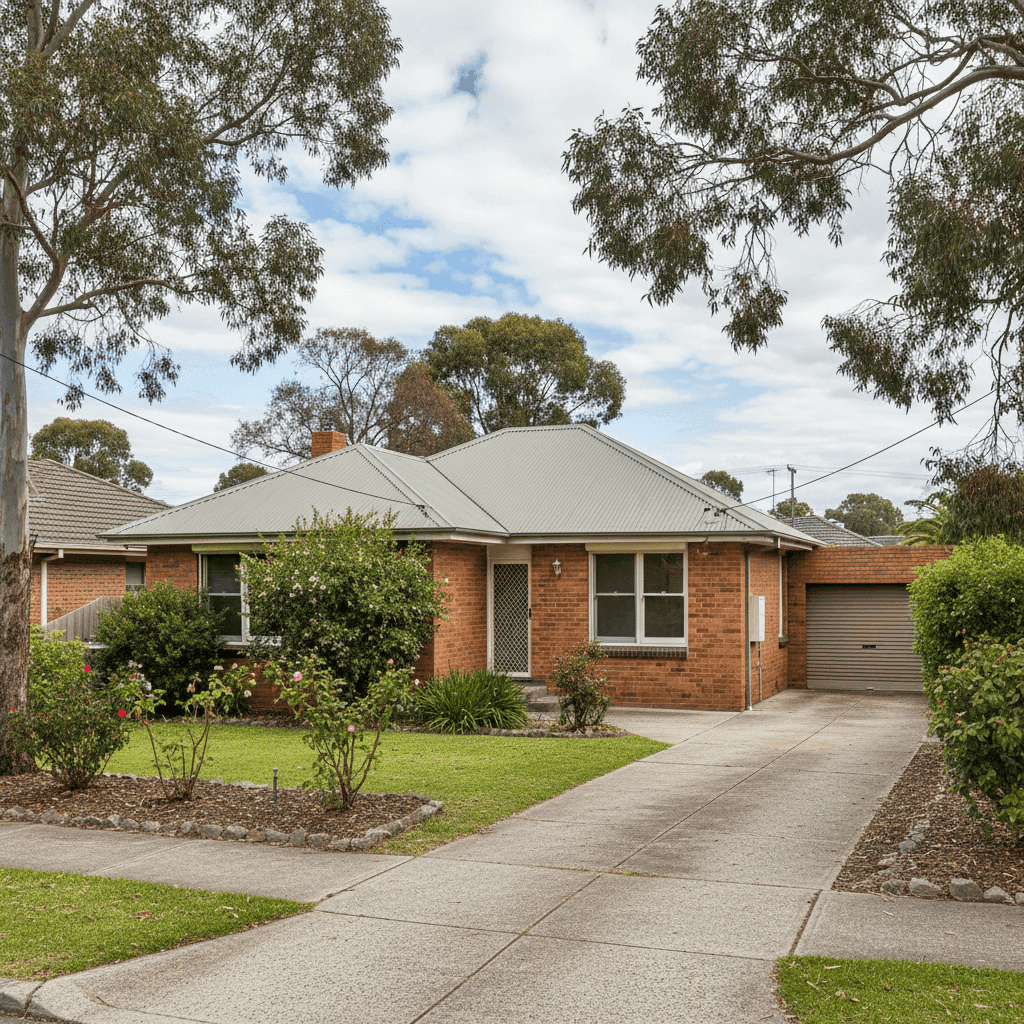
Bayswater, nestled in Melbourne's eastern suburbs within the City of Maroondah, is a well-established residential area known for its leafy streets and solid family homes. If you own a free standing home here, understanding what you should be paying for building insurance — and why — can make a real difference to your household budget. This article breaks down a recent building-only insurance quote for a three-bedroom, two-bathroom home in Bayswater (postcode 3153) and puts the numbers into context.
---
Is This Quote Fair?
The quote in question comes in at $1,688 per year (or $175 per month) for building-only cover on a free standing home with a sum insured of $620,000 and a building excess of $3,000.
Our rating for this quote is FAIR — Around Average, and the data backs that up. Based on 70 quotes collected for Bayswater, the suburb average sits at $1,550/yr and the median at $1,555/yr. At $1,688, this quote lands above the midpoint but comfortably within the suburb's 75th percentile of $1,820/yr — meaning roughly three-quarters of comparable quotes in the area are cheaper, but a quarter are more expensive.
In practical terms, this homeowner is paying about $138 more per year than the suburb average — not an alarming gap, but enough to warrant a comparison shop before renewing. The quote is not overpriced, but there is room to potentially do better.
---
How Bayswater Compares
One of the most reassuring things about insuring a home in Bayswater is just how affordable it is relative to broader benchmarks.
| Benchmark | Average Premium |
|---|---|
| Bayswater (suburb) | $1,550/yr |
| Maroondah LGA | $2,133/yr |
| Victoria (state) | $3,000/yr |
| Australia (national) | $5,347/yr |
Bayswater homeowners are paying, on average, less than half the Victorian state average and a fraction of the national average. Even accounting for the difference between averages and medians — the Victorian median sits at $2,718/yr and the national median at $2,764/yr — Bayswater remains a relatively low-cost suburb to insure.
This affordability is largely a reflection of the suburb's risk profile. Bayswater is not in a cyclone-prone zone, does not face the extreme bushfire exposure of some outer-eastern suburbs, and benefits from established infrastructure and emergency services. For homeowners, this translates directly into more competitive premiums.
The Maroondah LGA average of $2,133/yr is worth noting — it sits significantly above the Bayswater suburb average, suggesting that other parts of the local government area may carry higher risk profiles or different property characteristics that push premiums up.
---
Property Features That Affect Your Premium
Every insurer prices a policy based on the specific characteristics of the property. Here's how the features of this particular home are likely influencing the premium:
Brick Veneer Walls Brick veneer is one of the most common external wall types in Melbourne's eastern suburbs, and insurers generally view it favourably. It offers solid fire resistance and structural durability compared to weatherboard or lightweight cladding, which can help keep premiums competitive.
Steel/Colorbond Roof Colorbond roofing is a popular choice across Australian suburbs and is well-regarded by insurers. It's lightweight, resistant to corrosion, and performs well in high-wind events. Unlike older tile roofs, it doesn't crack or break, reducing the likelihood of storm-related claims.
Slab Foundation A concrete slab foundation is generally considered low-risk by insurers. It provides a stable base and reduces the risk of subsidence or pest-related structural damage that can affect homes on older timber stumps.
Construction Year: 1965 At around 60 years old, this home is well past its original build era. Older homes can attract slightly higher premiums due to ageing plumbing, wiring, and structural components that may be more prone to failure. However, the combination of brick veneer construction and a modern Colorbond roof suggests the property has been updated over the years, which helps mitigate this risk.
Ducted Climate Control The presence of ducted heating and cooling is factored into the sum insured calculation. These systems add meaningful value to the building and can be costly to replace, which is reflected in both the coverage amount and the premium.
214 sqm Building Size At 214 square metres, this is a mid-sized family home. The $620,000 sum insured works out to roughly $2,897 per square metre — a figure broadly in line with current rebuild cost estimates for brick veneer homes in metropolitan Melbourne, particularly when accounting for ducted systems and quality fittings.
No Pool, No Solar The absence of a pool and solar panels simplifies the risk profile and removes two common sources of additional premium loading. Pools introduce liability considerations, while solar panels can complicate roof-related claims.
---
Tips for Homeowners in Bayswater
1. Review your sum insured regularly Construction costs in Melbourne have risen sharply in recent years. If your sum insured hasn't been updated to reflect current rebuild costs, you could be underinsured — meaning a total loss payout may not cover the full cost of rebuilding. Use a building cost calculator or speak with a quantity surveyor to validate your figure.
2. Compare quotes before renewing Even a "fair" quote can be beaten. With premiums varying by hundreds of dollars across insurers for the same property, taking 15 minutes to compare quotes on CoverClub before your renewal date could save you meaningfully over the life of your policy.
3. Consider your excess carefully This quote carries a $3,000 building excess. A higher excess typically reduces your annual premium, but it means more out-of-pocket cost when you do make a claim. Think about what you could comfortably afford to pay in the event of storm damage or a burst pipe, and choose an excess that reflects that comfort level.
4. Keep records of any home improvements If you've renovated a kitchen, added a bathroom, or upgraded your ducted system since you last updated your policy, your sum insured may no longer reflect the true value of your home. Keeping receipts and photos of improvements makes it easier to ensure you're adequately covered — and to support any future claim.
---
Ready to See What You Could Be Paying?
Whether you're a first-time buyer in Bayswater or a long-time homeowner coming up for renewal, it pays to know your options. CoverClub makes it easy to compare building insurance quotes side by side so you can be confident you're getting value for money. Get a quote today and see how your current premium stacks up against the market — you might be surprised at what's available.
For more suburb-level data on Bayswater, visit our Bayswater insurance stats page, or explore Victoria-wide insurance trends to see the bigger picture.