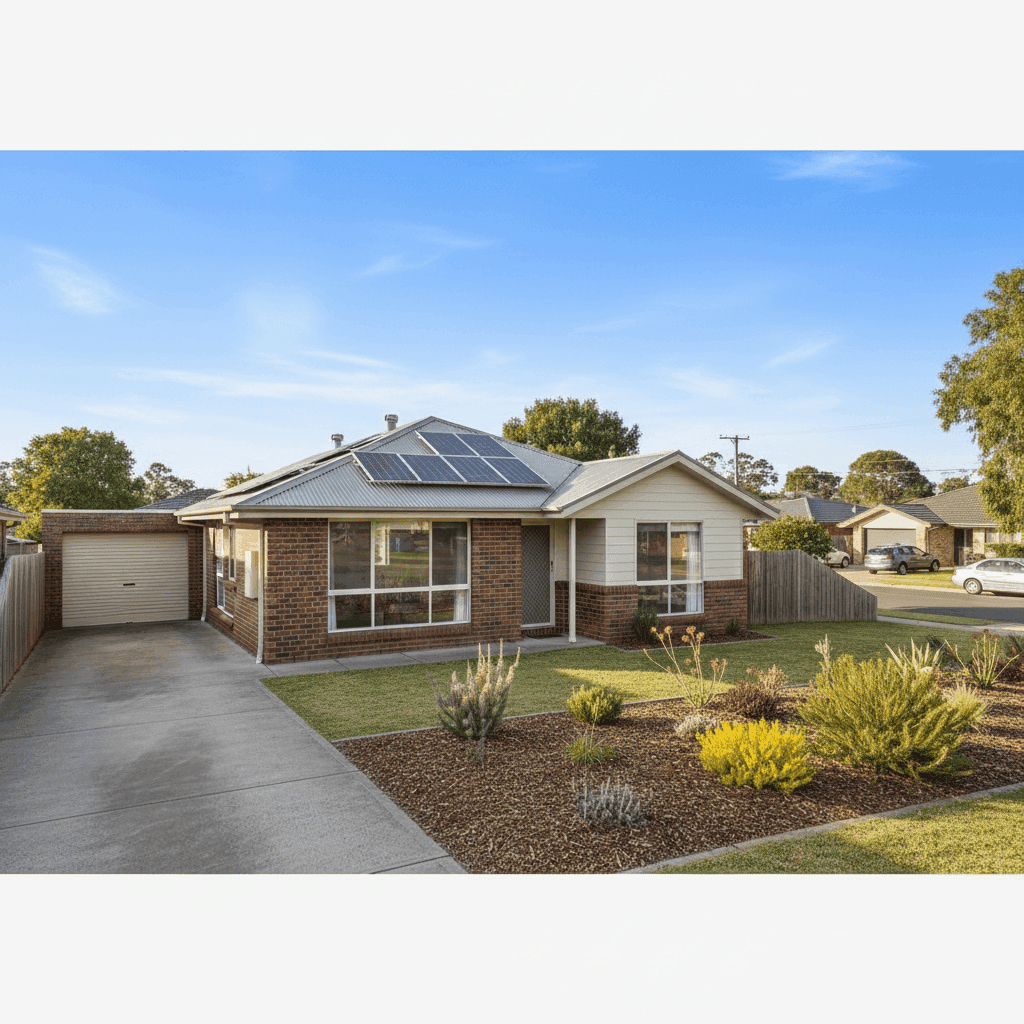
If you own a four-bedroom free standing home in Bayswater, VIC 3153, you're probably curious about whether you're paying a fair price for home and contents insurance. Bayswater is a well-established suburb in Melbourne's eastern corridor, home to plenty of solid brick veneer homes built across the mid-twentieth century — properties that come with their own unique insurance considerations. This article breaks down a real quote of $1,217 per year for a property in this postcode, compares it against local, state, and national benchmarks, and offers practical advice for homeowners looking to get the best value on their cover.
---
Is This Quote Fair?
The short answer: yes, broadly speaking. This quote has been rated Fair (Around Average) — and when you dig into the data, that assessment holds up well.
At $1,217 per year (or around $119 per month), this quote sits comfortably within the typical range for Bayswater. It covers the building for $620,000 and contents for $50,000, with a building excess of $3,000 and a contents excess of $1,000. The higher building excess in particular is likely pulling the annual premium down compared to policies with lower excess thresholds — a common trade-off worth keeping in mind.
"Fair" doesn't mean you can't do better, but it does mean you're not being significantly overcharged. You're not in the cheapest quarter of the market, but you're well clear of the most expensive policies being written for similar homes in the area.
---
How Bayswater Compares
To understand where this quote sits, it helps to look at the broader pricing landscape. Based on 123 quotes collected for Bayswater (postcode 3153):
| Benchmark | Premium |
|---|---|
| Suburb 25th percentile | $853/yr |
| Suburb median | $1,119/yr |
| This quote | $1,217/yr |
| Suburb average | $1,302/yr |
| Suburb 75th percentile | $1,758/yr |
| LGA (Maroondah) average | $1,920/yr |
This quote lands just above the suburb median of $1,119 and meaningfully below both the suburb average ($1,302) and the Maroondah LGA average ($1,920). That's a reasonable outcome for a property of this size and age.
The contrast with state and national figures is striking. The Victorian state average sits at $2,921 per year, with a median of $2,694. The national average is even higher at $2,965, with a median of $2,716. Bayswater homeowners are paying roughly half what the typical Victorian or Australian homeowner pays — a reflection of the suburb's relatively low exposure to extreme weather events such as cyclones, floods, or severe bushfire risk compared to many other parts of the country.
It's worth noting that averages across Victoria are heavily influenced by high-risk regional areas and inner-city properties with very high rebuild costs, so a direct comparison requires some nuance. Still, Bayswater's pricing environment is genuinely favourable.
---
Property Features That Affect Your Premium
Several characteristics of this particular property will have influenced how insurers priced this quote:
Brick veneer construction and Colorbond roof Brick veneer is one of the most common wall types in Melbourne's eastern suburbs, and insurers generally view it favourably. It offers solid fire resistance compared to timber-framed or weatherboard exteriors. The steel Colorbond roof is similarly well-regarded — it's durable, low-maintenance, and performs well in storms. Together, these materials typically attract more competitive premiums than alternatives like asbestos sheeting or ageing terracotta tiles.
Stump foundation Built in 1965, this home sits on stumps — a common foundation type for homes of that era in Victoria. While stumps can be a flag for some insurers (particularly if they're original timber stumps that may need re-stumping), this doesn't necessarily push premiums up dramatically. It is, however, worth ensuring your policy covers any gradual movement or subsidence issues, as not all policies do.
Timber and laminate flooring The flooring type can influence contents cover pricing and also plays into the rebuild cost calculation. Timber and laminate floors are a popular choice in homes of this vintage and are generally straightforward for insurers to assess.
Solar panels The presence of solar panels adds a modest layer of complexity to a home insurance policy. Panels are typically covered under building insurance as a fixed structure, but it's important to confirm this with your insurer. Damage from storms, hail, or fire should be included, but check whether your policy covers electrical or mechanical breakdown separately.
Ducted climate control Ducted systems are a significant fixed asset and are generally covered under building insurance. Their presence contributes to the overall sum insured, which at $620,000 for a 214 sqm home reflects a reasonable per-square-metre rebuild cost for the area.
No pool, no cyclone risk The absence of a pool removes one common source of liability claims and premium loading. And unlike parts of Queensland or northern WA, Bayswater carries no cyclone risk — a meaningful factor in keeping premiums well below the national average.
---
Tips for Homeowners in Bayswater
1. Review your sum insured regularly Construction costs have risen significantly in recent years. At $620,000 for a 214 sqm home, the sum insured works out to roughly $2,900 per sqm — which is within a reasonable range for Melbourne's east, but worth verifying with a building cost calculator or a quantity surveyor if you haven't reviewed it recently. Being underinsured at claim time can be costly.
2. Consider your excess carefully This quote carries a $3,000 building excess, which is on the higher side. While it reduces your annual premium, it means you'll need to cover the first $3,000 of any building claim yourself. If you'd prefer a lower out-of-pocket cost in an emergency, it may be worth requesting quotes with a lower excess to compare the premium difference.
3. Confirm solar panel coverage With solar panels on the roof, double-check the policy wording around what's covered. Some insurers include panels automatically under building cover; others may require you to list them separately or may exclude certain types of damage. A quick call to your insurer can save a nasty surprise at claim time.
4. Shop around at renewal Even a "fair" quote isn't necessarily the best available. Insurance pricing can vary significantly between providers for identical properties. Using a comparison platform at renewal — rather than simply auto-renewing — is one of the easiest ways to ensure you're not paying more than you need to.
---
Ready to Compare?
Whether you're reviewing your current policy or shopping for cover on a new property, comparing quotes is the smartest first step. Get a home and contents insurance quote at CoverClub and see how your premium stacks up against real data from your suburb. With transparent pricing benchmarks and quotes from multiple insurers, CoverClub makes it easy to know whether you're getting a genuinely good deal — not just a fair one.