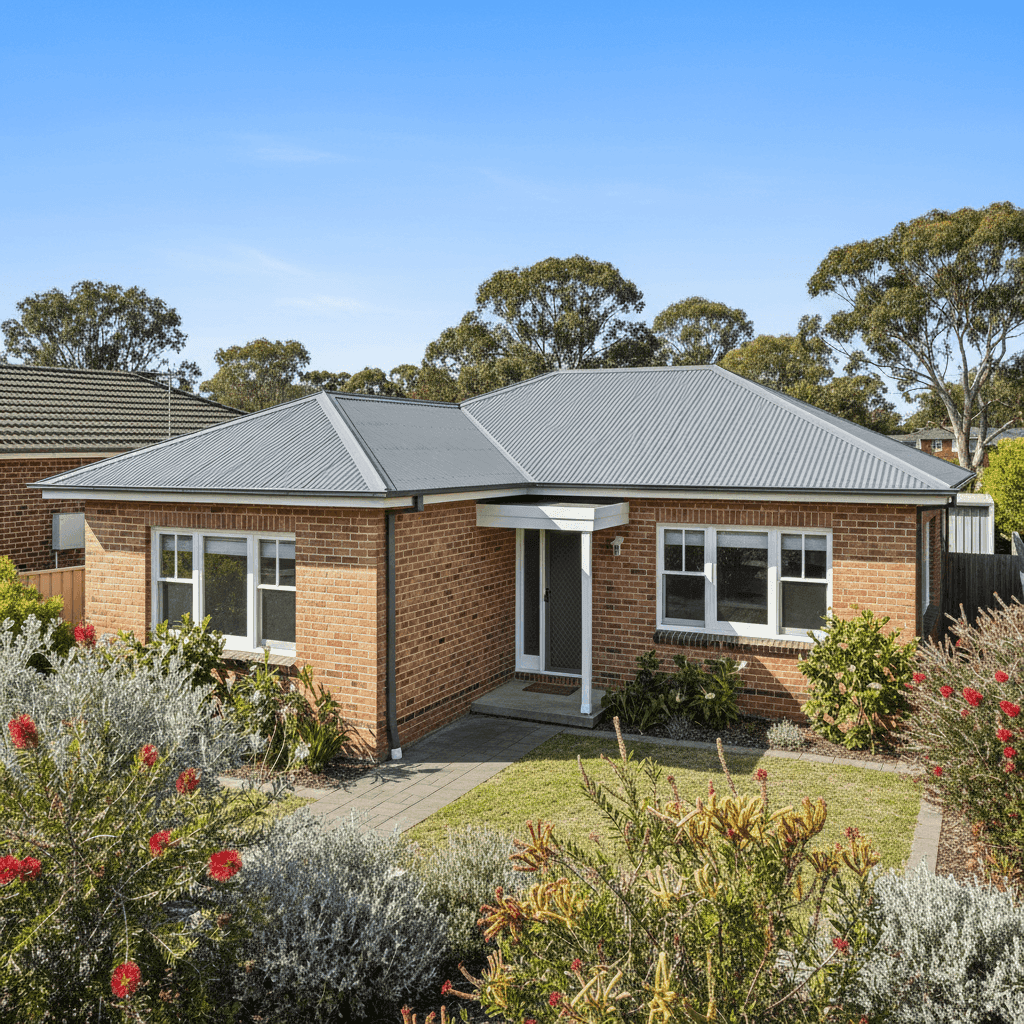
If you own a free standing home in Bayswater, VIC 3153, you've probably wondered whether the premium you're paying is reasonable — or whether you're leaving money on the table. This article breaks down a real building insurance quote for a three-bedroom, two-bathroom brick veneer home in the suburb, and puts the numbers in context using suburb, state, and national benchmarks.
---
Is This Quote Fair?
The quote in question comes in at $1,740 per year (or $167 per month) for building-only cover on a home with a sum insured of $621,000 and a standard $1,000 excess. Our pricing analysis rates this quote as FAIR — around average for the area.
That rating holds up when you look at the local data. The suburb average premium for Bayswater sits at $1,550 per year, with a median of $1,555 — meaning this quote lands about $190 above the midpoint. It's within the interquartile range (25th percentile: $1,165 / 75th percentile: $1,820), so it's not an outlier by any stretch. In fact, it sits comfortably in the upper half of what comparable homes in the postcode are paying, but still below the 75th percentile threshold.
In plain terms: you're not being overcharged, but there's a reasonable chance you could find a more competitive rate if you shopped around — particularly given that cheaper quotes exist in the same suburb.
---
How Bayswater Compares
One of the most telling aspects of this quote is just how favourably Bayswater stacks up against broader benchmarks. Check out suburb-level insurance stats for Bayswater (3153) to see the full picture.
| Benchmark | Average Premium |
|---|---|
| Bayswater (3153) | $1,550/yr |
| LGA — Maroondah | $2,133/yr |
| Victoria | $3,000/yr |
| National | $5,347/yr |
The contrast is striking. At the Victorian state average of $3,000 per year, Bayswater homeowners are paying roughly half what their counterparts elsewhere in the state are forking out. And compared to the national average of $5,347 — heavily influenced by high-risk regions in Queensland and Northern Australia — Bayswater looks like an exceptionally affordable place to insure a home.
Even within the Maroondah LGA, where the average sits at $2,133, Bayswater performs well below the local government area norm. This suggests the suburb benefits from relatively low risk factors — no cyclone exposure, lower flood or bushfire classifications compared to some other parts of Victoria, and a well-established residential character.
The state median of $2,718 and national median of $2,764 further reinforce the point: Bayswater is genuinely one of the more affordable suburbs to insure in Australia, and a quote of $1,740 — while slightly above the local average — is still well within a sensible range.
---
Property Features That Affect Your Premium
Every home is different, and insurers price risk based on the specific characteristics of the property. Here's how the features of this particular home are likely influencing the premium:
Brick veneer construction is generally viewed favourably by insurers. It offers solid fire resistance and durability, which typically translates to lower premiums compared to timber-framed or clad homes.
Steel/Colorbond roofing is another positive. Colorbond is lightweight, durable, and performs well in wind and rain events. It's also less susceptible to hail damage than some tile alternatives, and insurers tend to price this accordingly.
Slab foundation is standard for the era and region, and doesn't carry the same subsidence or movement risk associated with older pier-and-beam or strip footings — a reassuring factor for underwriters.
Construction year of 1965 is worth noting. Homes from this era can attract slightly higher premiums due to older electrical wiring, plumbing, and structural components that may require more costly repairs or replacement. However, brick veneer construction from this period is generally robust.
Ducted climate control adds to the replacement value of the home and is factored into the sum insured. It's a meaningful inclusion that justifies a higher building sum insured compared to a home without it.
No pool and no solar panels simplify the risk profile. Pools introduce liability considerations, and solar panels add to rebuild costs — their absence keeps things straightforward.
At 214 sqm, this is a mid-sized family home, and the $621,000 sum insured works out to roughly $2,902 per sqm — a reasonable figure for a well-appointed brick veneer home in metropolitan Melbourne's eastern suburbs.
---
Tips for Homeowners in Bayswater
Whether you're reviewing your current policy or shopping for the first time, here are a few practical steps to make sure you're getting the best value:
- Review your sum insured regularly. Construction costs in Victoria have risen sharply in recent years. Make sure your sum insured reflects what it would actually cost to rebuild your home today — not what you paid for it, and not a figure set several years ago. Underinsurance is one of the most common (and costly) mistakes homeowners make.
- Compare quotes across multiple insurers. The $655 gap between the 25th and 75th percentile premiums in Bayswater shows there's real variation in the market. Using a comparison tool like CoverClub makes it easy to see multiple quotes side by side without the legwork.
- Consider your excess carefully. A $1,000 excess is standard, but opting for a higher excess (say, $2,500) can meaningfully reduce your annual premium. If you're unlikely to make small claims, this trade-off often makes financial sense.
- Ask about discounts for security features. Deadbolts, monitored alarms, and security screens can attract premium discounts with some insurers. If you've upgraded your home's security, make sure your insurer knows about it.
---
Ready to Compare?
Whether this quote looks right for your situation or you're keen to see what else is out there, CoverClub makes it simple to compare home insurance options tailored to your property. Get a quote today at CoverClub and find out whether you could be paying less — or getting more cover for the same price.