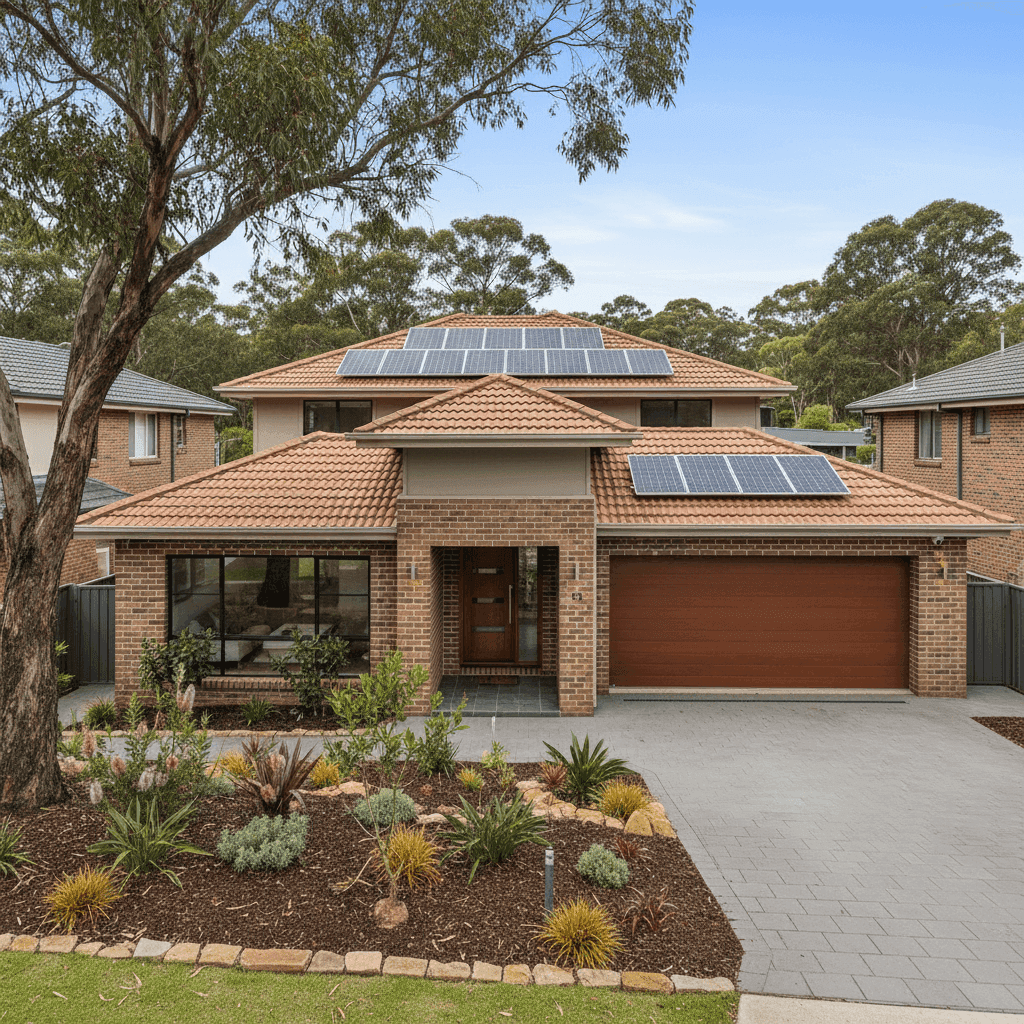
Beacon Hill is a well-established suburb on Sydney's Northern Beaches, known for its leafy streets, family-friendly atmosphere, and proximity to both bushland and coastline. If you own a free standing home here, you're sitting on a significant asset — and making sure it's properly protected is essential. In this article, we break down a real home and contents insurance quote for a large six-bedroom property in Beacon Hill (NSW 2100), assess whether the price stacks up, and offer practical tips for homeowners looking to get better value on their cover.
---
Is This Quote Fair?
The quote in question comes in at $5,088 per year (or $488/month) for a combined home and contents policy, covering a building sum insured of $2,008,000 and $100,000 in contents. Both the building and contents excesses are set at $1,000.
Our price rating for this quote is Expensive (Above Average) — and the data backs that up.
The suburb average for Beacon Hill sits at just $3,079/year, with a median of $3,004/year. That means this quote is running roughly 65% above the local average and more than $2,000/year above the suburb median. Even compared to the 75th percentile of quotes in the area ($3,618/year), this premium still comes in significantly higher.
That said, context matters enormously in insurance pricing. This is a large, high-value property — 462 sqm of living space, six bedrooms, three bathrooms, above-average fittings, and a building replacement value of over $2 million. Larger, more expensive homes naturally attract higher premiums, and a direct comparison to smaller or more modestly valued properties in the same postcode may not be entirely apples-to-apples.
Still, even accounting for the property's size and quality, this quote warrants a closer look. It's always worth shopping around to ensure you're not paying a loyalty tax or simply landing with a higher-priced insurer.
---
How Beacon Hill Compares
Understanding where your suburb sits in the broader insurance landscape can help you gauge whether your premium is reasonable.
| Benchmark | Annual Premium |
|---|---|
| This quote | $5,088 |
| Beacon Hill suburb average | $3,079 |
| Beacon Hill suburb median | $3,004 |
| Northern Beaches LGA average | $3,266 |
| NSW average | $9,528 |
| NSW median | $3,770 |
| National average | $5,347 |
| National median | $2,764 |
A few things stand out here. The NSW state average of $9,528/year is heavily skewed by high-risk properties — think flood-prone areas, cyclone zones, and high-value coastal homes — so the median of $3,770 is a more reliable benchmark for typical NSW homeowners. Beacon Hill's median of $3,004 is actually comfortably below the state median, suggesting it's a relatively affordable area to insure overall.
At the national level, the average premium of $5,347/year is actually close to this quote — meaning that while it's expensive for Beacon Hill specifically, it's broadly in line with what Australians pay nationally for comprehensive cover. The national median of $2,764 again reflects that averages are pulled upward by outlier-risk properties.
For a property of this size and value, the quote is high for the suburb but not wildly out of step with national norms. Nonetheless, there is clear room to explore more competitive options.
---
Property Features That Affect Your Premium
Several characteristics of this property directly influence how insurers calculate risk and, ultimately, what they charge.
Brick veneer construction and tiled roof are generally viewed favourably by insurers. Both materials are durable, fire-resistant, and widely used across Australian suburbs. Compared to timber-framed or steel-clad homes, brick veneer tends to attract lower premiums — a plus for this property.
Stump foundations are common in older homes but less so in newer builds. This property, constructed in 2011, sits on stumps, which can raise questions for insurers around subsidence and movement risk — particularly given the Northern Beaches' varied terrain. Some insurers may price this slightly higher than a slab-on-ground foundation.
Timber and laminate flooring is a feature that can work both ways. While aesthetically appealing, timber flooring can be costly to repair or replace after water damage or flooding events, which some insurers factor into their contents and building assessments.
Solar panels add value to a property but also add complexity to insurance. Panels and their associated inverters and wiring need to be covered under the building policy, and not all insurers include them automatically. It's worth confirming your policy explicitly covers solar system damage — including storm, hail, and electrical surge events.
Ducted climate control is another above-average feature that increases the replacement value of the home. Systems like these are expensive to install and repair, and they contribute meaningfully to the $2,008,000 building sum insured on this policy.
Above-average fittings quality — think high-end kitchen appliances, premium bathroom fixtures, and quality joinery — also pushes the sum insured higher and signals to insurers that this is a premium property requiring more comprehensive cover.
---
Tips for Homeowners in Beacon Hill
1. Review your sum insured carefully With a building sum insured of $2,008,000 for a 462 sqm home, it's important to ensure this figure accurately reflects the cost to rebuild — not the market value. Overinsuring means you're paying more than necessary; underinsuring can leave you seriously out of pocket after a claim. Use a professional building cost estimator or ask your insurer how they've calculated this figure.
2. Shop around — especially for large, high-value homes Insurers price risk differently, and for a property of this size and specification, premium variance between providers can be substantial. Based on Beacon Hill's suburb data, there are clearly more competitive options available in this postcode. Getting at least two or three comparable quotes is one of the simplest ways to save hundreds — or even thousands — per year.
3. Confirm your solar panels are fully covered Solar systems are a growing source of insurance disputes in Australia. Check your policy's product disclosure statement (PDS) to confirm your panels, inverter, and associated wiring are covered for storm damage, hail, fire, and electrical faults. If they're not explicitly mentioned, ask your insurer to clarify or consider a policy that includes them.
4. Consider your excess strategically This policy carries a $1,000 excess on both building and contents. Opting for a higher excess — say, $1,500 or $2,000 — can meaningfully reduce your annual premium. If you have the financial buffer to cover a larger out-of-pocket cost in the event of a claim, a higher excess is often a smart trade-off for a lower ongoing premium.
---
Find a Better Deal with CoverClub
Whether you're a long-time Beacon Hill resident or new to the area, it pays to regularly review your home insurance. The market changes, your property changes, and so do the risks insurers are pricing. CoverClub makes it easy to compare home and contents quotes tailored to your specific property — so you can see exactly where your current premium sits and whether there's a better option available.
Get a home insurance quote today at CoverClub and find out if you're getting the cover you deserve at a price that makes sense.