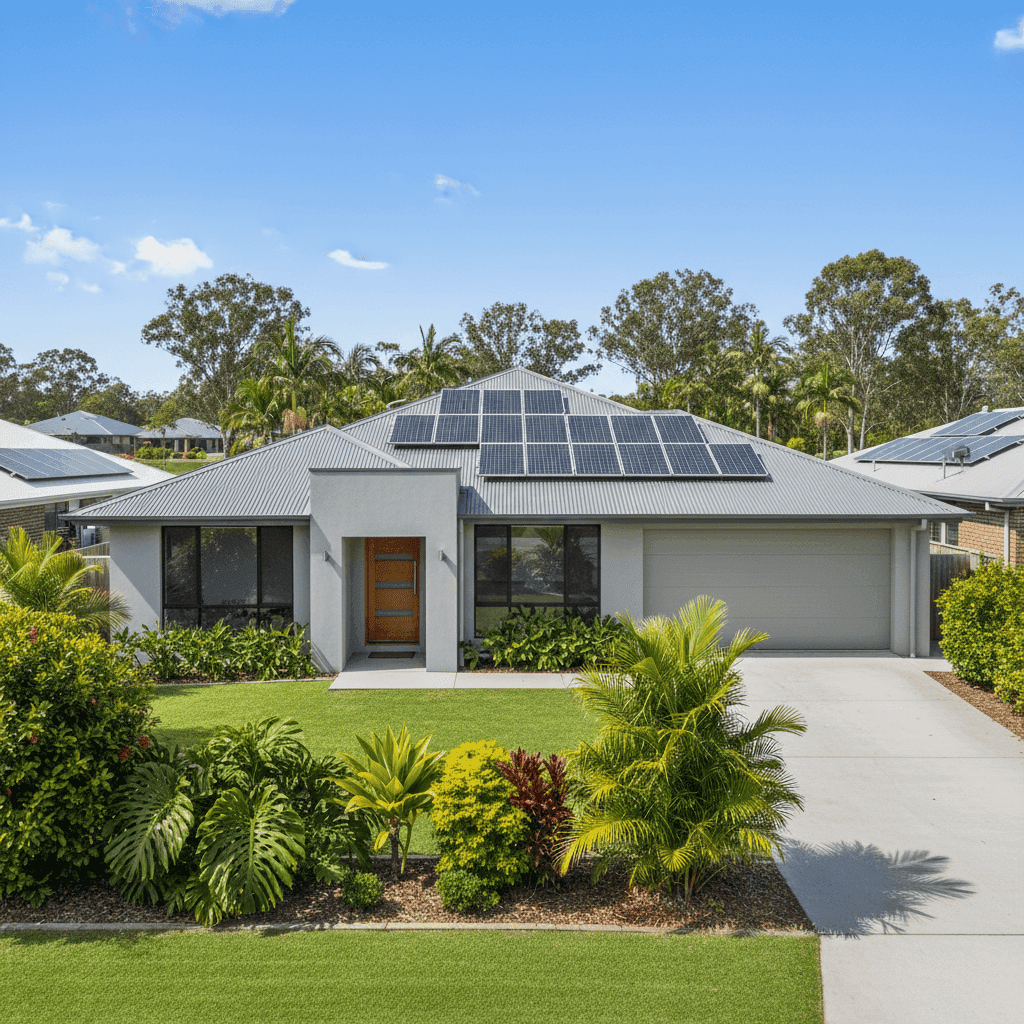
Beaconsfield is a residential suburb in the Mackay region of Queensland, and like much of coastal and tropical Queensland, it sits in an area where home insurance can carry a significant price tag. This article takes a close look at a real home and contents insurance quote for a newly built, free-standing home in Beaconsfield (postcode 4740) — breaking down what's driving the cost, how it stacks up against local and national benchmarks, and what homeowners can do to make sure they're getting value for money.
---
Is This Quote Fair?
The quote in question comes in at $6,159 per year (or around $590 per month) for combined home and contents cover, with a building sum insured of $559,000 and contents valued at $78,000. Both the building and contents excess sit at $1,000.
Our price rating for this quote is Expensive (Above Average) — and the data backs that up. The suburb median premium for Beaconsfield sits at $4,094 per year, meaning this quote is roughly 50% above the midpoint of what other homeowners in the area are paying. It also sits above the suburb's 75th percentile of $4,805, placing it firmly in the upper tier of local premiums.
That said, context matters. Beaconsfield falls within a cyclone risk zone, which is one of the single biggest factors pushing premiums higher across northern Queensland. Insurers price cyclone exposure heavily, and a brand-new concrete home with a Colorbond roof — while built to modern standards — still carries that geographic risk. The $6,159 figure isn't unreasonable given the full picture, but it's worth shopping around to ensure you're not overpaying.
---
How Beaconsfield Compares
To understand whether this quote is competitive, it helps to zoom out and look at the broader pricing landscape. Here's how Beaconsfield stacks up against state and national figures:
| Benchmark | Average Premium | Median Premium |
|---|---|---|
| Beaconsfield (suburb) | $30,644/yr | $4,094/yr |
| Queensland (state) | $9,129/yr | $3,903/yr |
| Australia (national) | $5,347/yr | $2,764/yr |
| Mackay LGA | $8,458/yr | — |
> Based on 27 quotes sampled for the Beaconsfield area.
A few things stand out here. The suburb average of $30,644 is extraordinarily high — almost certainly skewed by a small number of very expensive quotes at the top end of the sample (only 27 quotes were recorded). The median of $4,094 is a far more reliable indicator of what most Beaconsfield homeowners are actually paying.
At $6,159, this quote is above both the suburb median and the Queensland median ($3,903), but it's not wildly out of step with the Mackay LGA average of $8,458. Compared to the national median of $2,764, Queensland premiums broadly — and Beaconsfield specifically — are elevated, largely due to the state's exposure to cyclones, flooding, and severe storm events.
You can explore full suburb-level data on the Beaconsfield insurance stats page, compare it against Queensland-wide figures, or see how it measures up against national averages.
---
Property Features That Affect Your Premium
Several characteristics of this particular property have a direct bearing on what insurers charge. Here's a breakdown of the key factors at play:
🌀 Cyclone Risk Area
This is the dominant pricing factor for any home in Beaconsfield. The suburb falls within a designated cyclone risk zone, and insurers apply significant loadings to cover the potential cost of wind, storm surge, and structural damage. This alone can push premiums well above what you'd pay for a comparable home in southern Queensland or interstate.
🏗️ New Construction (2025)
A home built in 2025 is subject to the latest Australian building codes, which include substantially improved cyclone-resistance requirements — particularly relevant in Queensland. Modern construction standards mean the home is less likely to suffer catastrophic damage in a severe weather event, which can work in the homeowner's favour when negotiating premiums.
🧱 Concrete Walls & Colorbond Roof
Concrete external walls are among the most resilient construction materials available, offering strong resistance to both wind and fire. Combined with a steel Colorbond roof — which is lightweight, durable, and designed to perform well in high-wind environments — this home's construction profile is genuinely favourable from an insurer's perspective.
🏠 Slab Foundation & Vinyl Flooring
A concrete slab foundation is standard for modern Queensland homes and is generally viewed positively by insurers. Vinyl flooring is cost-effective to replace and doesn't carry the same moisture-related risks as timber, which can be a minor positive factor in premium calculations.
☀️ Solar Panels
The property includes solar panels, which add value to the home but also represent an additional insurable asset. Some insurers include solar panels under building cover automatically; others may require a specific endorsement. It's worth confirming with your insurer that your panels — including inverters and mounting hardware — are fully covered under the building sum insured.
✨ Above-Average Fittings
With above-average quality fittings throughout, the $559,000 building sum insured reflects a higher-than-standard rebuild cost. Premium fittings mean higher replacement costs, and insurers price accordingly.
---
Tips for Homeowners in Beaconsfield
Living in a cyclone-prone region doesn't mean you're stuck paying top dollar for insurance. Here are four practical steps to help manage your premium:
- Compare multiple insurers annually. The spread of premiums in Beaconsfield is wide — the gap between the 25th percentile ($3,177) and this quote ($6,159) is nearly $3,000 per year. Different insurers assess cyclone risk differently, and shopping around at renewal time can yield meaningful savings.
- Review your sum insured carefully. Over-insuring your building is a common and costly mistake. Use a professional building replacement cost estimator or speak with a quantity surveyor to confirm your rebuild figure is accurate — not inflated. The same applies to contents: a detailed home inventory can help you avoid paying to insure items you no longer own.
- Ask about cyclone mitigation discounts. Some insurers offer reduced premiums for homes with verified cyclone-resistant features — such as impact-resistant glazing, reinforced garage doors, or roof-to-wall tie-down systems. Given this home was built in 2025 to current code, it may already qualify for such discounts.
- Consider a higher excess. Both the building and contents excess on this policy sit at $1,000. Opting for a higher voluntary excess (say, $2,000 or $2,500) can reduce your annual premium noticeably — just make sure the amount is something you could comfortably cover out of pocket if you needed to make a claim.
---
Ready to Compare?
Whether you're renewing your policy or insuring a new home, it pays to see what's available in the market before committing. CoverClub makes it easy to compare home and contents insurance quotes for properties across Queensland and Australia. Get a quote today and find out whether you could be paying less for the same level of cover.