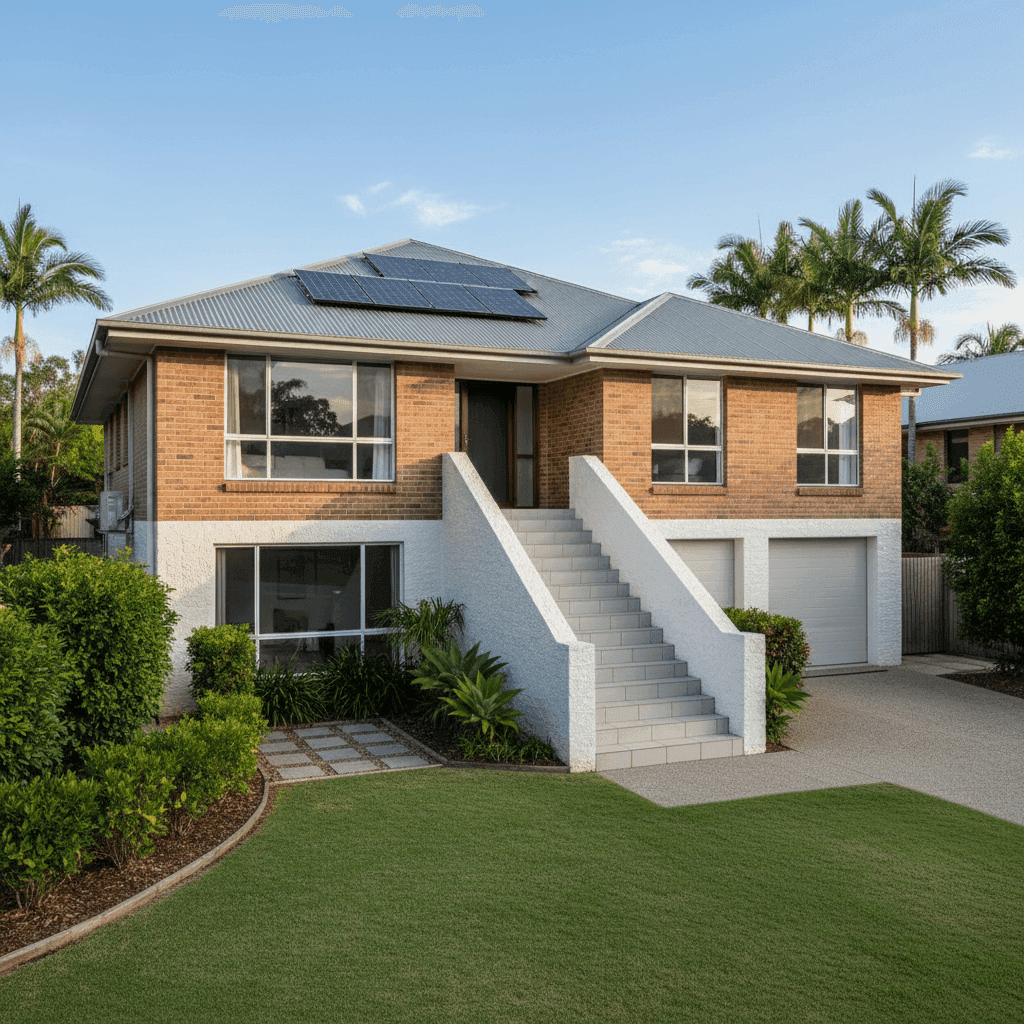
Beaconsfield is a residential suburb in the Mackay region of Queensland — and like much of coastal and inland QLD, it sits in a part of Australia where home insurance premiums can carry a significant price tag. If you own a free standing home here, understanding what drives your insurance costs is just as important as finding the right level of cover. This article breaks down a real building insurance quote for a 3-bedroom, 2-bathroom brick veneer home in Beaconsfield (postcode 4740), and puts the numbers into context using suburb, state, and national data.
---
Is This Quote Fair?
The quote in question comes in at $3,966 per year (or $397/month) for building-only cover on a free standing home insured for $550,000, with a building excess of $3,000.
Our price rating for this quote is FAIR — Around Average, and the data backs that up. Based on 64 quotes collected for Beaconsfield, the suburb average sits at $4,167/yr and the median at $3,804/yr. This quote lands comfortably between those two figures — slightly above the median but meaningfully below the average, which is often pulled upward by higher-risk or higher-value properties in the area.
To put it another way: roughly half of homeowners in Beaconsfield are paying less than $3,804/yr, and half are paying more. At $3,966, this quote is in the middle of the pack — not a bargain, but not overpriced either.
The suburb's interquartile range tells a fuller story. The 25th percentile sits at $3,051/yr and the 75th at $4,981/yr, meaning this premium falls solidly within the typical range for the area. Homeowners paying above $4,981 are likely dealing with higher rebuild costs, older construction, elevated flood or cyclone risk ratings, or lower excesses.
---
How Beaconsfield Compares
Zooming out beyond the suburb reveals just how much location influences insurance pricing in Queensland.
| Benchmark | Average Premium | Median Premium |
|---|---|---|
| Beaconsfield (4740) | $4,167/yr | $3,804/yr |
| LGA (Mackay) | $5,218/yr | — |
| Queensland | $4,547/yr | $3,931/yr |
| National | $2,965/yr | $2,716/yr |
A few things stand out here. First, Queensland premiums are significantly higher than the national average — Queensland homeowners pay roughly 53% more on average than the typical Australian homeowner. This reflects the state's elevated exposure to cyclones, flooding, and severe storm events.
Second, Beaconsfield actually comes in below the broader Mackay LGA average of $5,218/yr and below the Queensland state average of $4,547/yr. This suggests that while the suburb is priced in line with the region's risk profile, it may benefit from slightly more favourable localised risk factors compared to other parts of the Mackay LGA.
For context, the national median of $2,716/yr highlights just how much of a premium Queensland residents pay simply for living in a high-risk climate zone. That gap isn't a reflection of insurer opportunism — it's driven by the very real and increasing cost of weather-related claims across the state.
---
Property Features That Affect Your Premium
Several characteristics of this particular home have a direct bearing on what insurers charge. Here's how they stack up:
Cyclone Risk Area This is arguably the single biggest factor. Beaconsfield falls within a designated cyclone risk zone, which significantly increases the likelihood of a major claim. Insurers price this risk accordingly, and it's one of the primary reasons premiums across the Mackay region exceed the national norm.
Elevated Foundation (At Least 1 Metre) The home is elevated by at least one metre — a feature that can actually work in your favour. Elevation reduces exposure to surface flooding and storm surge, which insurers recognise. In flood-prone parts of Queensland, this can meaningfully reduce premiums compared to slab-on-ground homes.
Brick Veneer Walls & Colorbond Roof Brick veneer is a widely accepted construction type that offers solid wind resistance and is generally viewed favourably by insurers. The steel Colorbond roof is similarly well-regarded — it's durable, resistant to corrosion, and performs well in high-wind events. Together, these materials suggest a resilient build that shouldn't attract loading for substandard construction.
Built in 2013 A relatively modern construction year is a positive signal. Homes built after Queensland's updated building codes (which were progressively strengthened following Cyclone Larry and Yasi) are generally required to meet higher wind resistance standards. A 2013 build should comply with current cyclone-rated construction requirements.
Solar Panels The presence of solar panels adds a modest layer of complexity to building insurance. Panels are typically covered as part of the building sum insured, but they do represent an additional replacement cost in the event of storm or hail damage. It's worth confirming with your insurer that solar panels are explicitly included in your policy and that the $550,000 sum insured accounts for their replacement value.
Slab Foundation & Tile Flooring A concrete slab foundation is standard for the region and doesn't typically attract any loading. Tile flooring is similarly neutral from an insurance perspective — durable and straightforward to replace.
No Pool, No Ducted Climate Control The absence of a pool removes a common source of liability and property claims. No ducted climate control also means one fewer high-value fixed asset to insure, which keeps the sum insured more contained.
---
Tips for Homeowners in Beaconsfield
1. Review your sum insured annually Construction costs in Queensland have risen sharply in recent years. A $550,000 sum insured may have been accurate at policy inception, but it's worth checking against current rebuild cost estimates each renewal. Underinsurance is a genuine risk — if your home costs more to rebuild than your policy covers, you'll be out of pocket for the difference.
2. Consider your excess carefully This quote carries a $3,000 building excess. A higher excess typically lowers your annual premium, but it also means a larger out-of-pocket cost when you make a claim. For cyclone-prone areas, some insurers apply a separate cyclone excess — make sure you understand exactly what applies before a weather event, not after.
3. Confirm solar panel coverage As mentioned above, solar panels should be explicitly covered under your building policy. Check whether your insurer covers them for storm damage, hail, and accidental breakage, and whether the current sum insured reflects their full replacement value.
4. Compare at renewal, not just at inception The insurance market shifts year to year, and loyalty doesn't always pay. At renewal time, it's worth getting at least two or three competing quotes. Even a "fair" premium can often be improved with a targeted comparison — especially if your property details or risk profile have changed.
---
Ready to Compare?
Whether you're reviewing your current policy or shopping for cover for the first time, comparing quotes is the fastest way to find out if you're getting a fair deal. Get a home insurance quote at CoverClub and see how your premium stacks up against the market in seconds. No jargon, no pressure — just clear, data-backed comparisons tailored to your property.