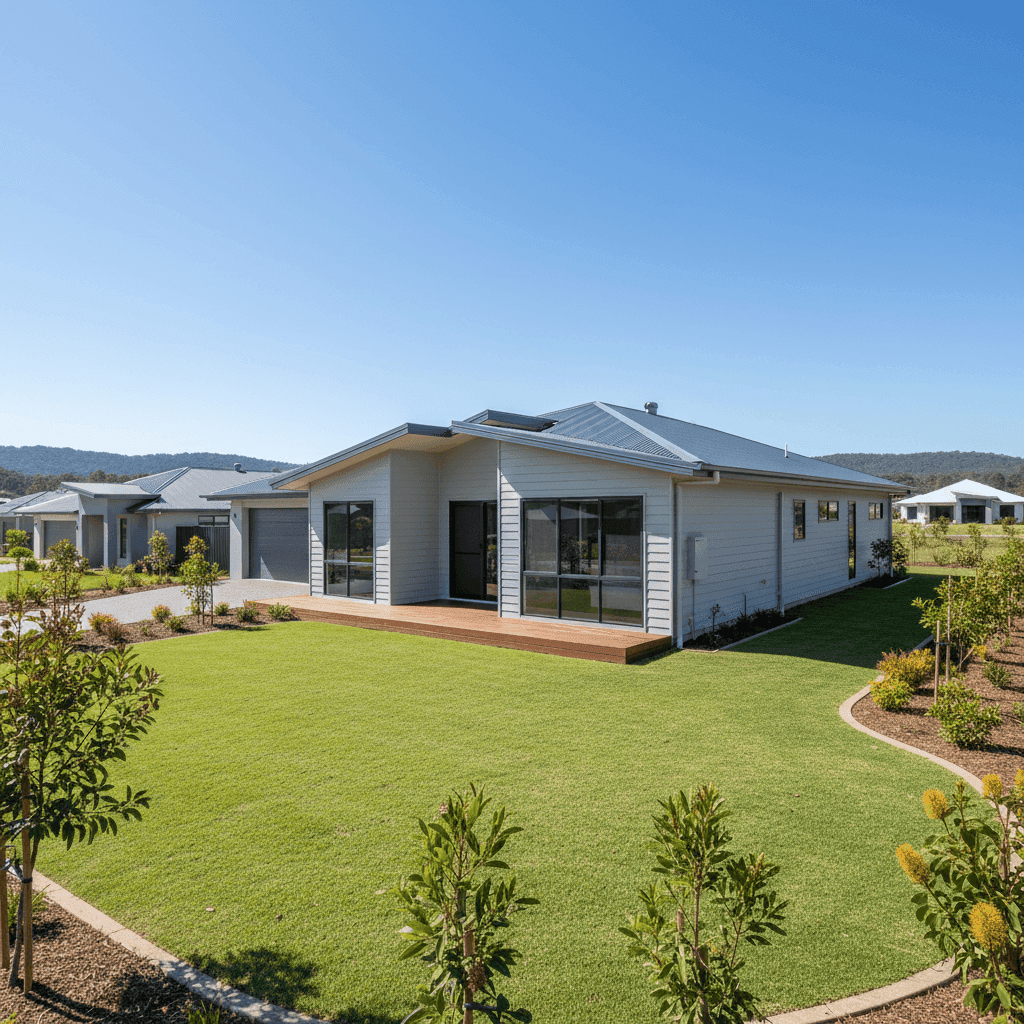
Beaudesert is a growing regional hub in South East Queensland, sitting at the heart of the Scenic Rim. As new housing developments continue to attract families and first-home buyers to the area, understanding the true cost of home and contents insurance in postcode 4285 has never been more important. This article breaks down a real insurance quote for a modern free standing home in Beaudesert — and puts the numbers into context so you can make a more informed decision.
---
Is This Quote Fair?
The quote in question comes to $2,129 per year (or $204/month) for a combined home and contents policy, covering a building sum insured of $500,000 and contents valued at $85,000. Both the building and contents excess sit at $500.
Our analysis rates this quote as FAIR — Around Average, and the data backs that up. Based on 58 quotes collected for Beaudesert (4285), the suburb average premium sits at $2,550/year and the median at $2,409/year. At $2,129, this quote comes in below both the suburb average and median, which is a positive sign for the homeowner.
It's worth noting that premiums in the suburb vary quite significantly. The 25th percentile sits at $1,610/year — meaning roughly a quarter of comparable properties are quoted below that figure — while the 75th percentile reaches $3,386/year. This wide spread reflects how much individual property characteristics, insurer appetite, and coverage levels can influence pricing. Sitting closer to the lower half of that range is a reasonable outcome, particularly for a newly built home with above-average fittings.
---
How Beaudesert Compares
To truly appreciate this quote, it helps to zoom out and look at the broader picture.
| Benchmark | Average Premium | Median Premium |
|---|---|---|
| Beaudesert (4285) | $2,550/yr | $2,409/yr |
| Logan LGA | $4,617/yr | — |
| Queensland | $9,129/yr | $3,903/yr |
| National | $5,347/yr | $2,764/yr |
The figures for Queensland as a whole are striking. The state average of $9,129/year is heavily skewed by high-risk coastal and cyclone-prone areas in Far North Queensland, where premiums can be eye-watering. The state median of $3,903/year is a more representative figure, and even against that benchmark, Beaudesert homeowners are faring well.
Compared to the national average of $5,347/year and a national median of $2,764/year, Beaudesert sits in a relatively affordable bracket. The Logan LGA average of $4,617/year is also notably higher than what this Beaudesert property is quoted — suggesting that location within the broader LGA plays a meaningful role in pricing.
Beaudesert's more inland position, away from the coast and outside designated cyclone risk zones, is a significant factor in keeping premiums more manageable compared to many other Queensland postcodes.
---
Property Features That Affect Your Premium
Several characteristics of this particular property are likely working in the homeowner's favour when it comes to insurance pricing.
Brand new construction (2024): A home built in 2024 will have been constructed to modern Australian building codes, which typically means better structural integrity, updated electrical and plumbing systems, and improved resistance to weather events. Insurers generally view newer homes as lower risk, which can translate to more competitive premiums.
Hardiplank/Hardiflex external walls: Fibre cement cladding such as Hardiplank is well regarded in the insurance industry. It's non-combustible, resistant to moisture and rot, and holds up well in adverse weather — all factors that reduce the likelihood of a claim.
Steel/Colorbond roof: Colorbond steel roofing is a popular choice across Australia for good reason. It's lightweight, durable, and performs well in both heat and heavy rainfall. From an insurance perspective, it's a low-maintenance material that's unlikely to deteriorate quickly or sustain significant storm damage compared to older roofing types.
Concrete slab foundation: Slab foundations are generally considered stable and low-risk, particularly in non-flood-prone areas. They're less susceptible to subsidence or pest damage compared to suspended timber floors.
Ducted climate control: While this is a premium feature that contributes to the overall replacement cost of the home, it's a standard inclusion in modern builds and doesn't significantly inflate risk from an insurer's perspective.
Above-average fittings: Higher-quality fixtures and finishes mean a higher cost to repair or replace, which is reflected in the $500,000 building sum insured. It's important that this figure genuinely represents the full cost to rebuild — not the market value of the property.
No pool, no solar panels: Both of these features can add complexity and cost to a policy. The absence of a pool removes a common liability concern, and no solar panels means no additional coverage considerations for rooftop equipment.
---
Tips for Homeowners in Beaudesert
1. Make sure your sum insured reflects rebuild costs, not market value. One of the most common mistakes homeowners make is confusing the market value of their property with the cost to rebuild it. These figures can differ substantially. Use a building cost calculator or speak with a quantity surveyor to ensure your $500,000 building sum insured is accurate — being underinsured can have serious consequences at claim time.
2. Review your contents value annually. $85,000 in contents cover is a reasonable starting point, but it's easy for this figure to become outdated as you accumulate new furniture, appliances, and valuables. Take stock of your belongings each year — particularly after major purchases — and adjust your policy accordingly.
3. Compare quotes before renewal. Insurers don't always reward loyalty. Premiums can shift significantly from year to year, and a quote that was competitive 12 months ago may no longer be the best available. Use a comparison tool like CoverClub to benchmark your renewal offer against the current market.
4. Ask about discounts for security features. Modern homes are often eligible for discounts when fitted with monitored alarm systems, deadbolts, or security cameras. If your new build includes any of these features, make sure your insurer is aware — it could shave a meaningful amount off your annual premium.
---
Ready to Compare Your Options?
Whether you're a new homeowner in Beaudesert or approaching your next renewal, it pays to know where your premium stands in the market. CoverClub makes it easy to see how your quote stacks up against real data from your suburb, your state, and across Australia. Get a home insurance quote today and find out if you're getting the cover you deserve at a price that makes sense.