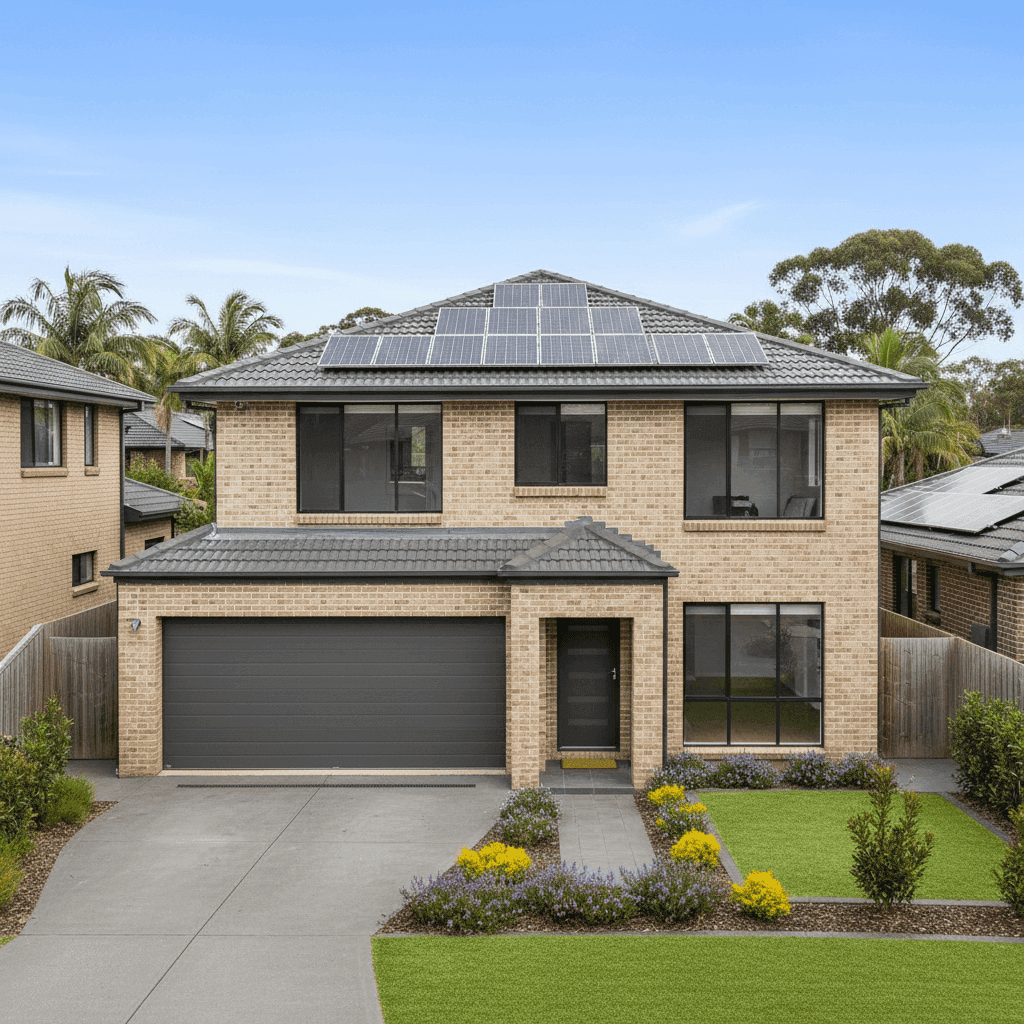
Home insurance costs can vary dramatically depending on where you live, what your property is made of, and how much cover you're carrying. In this article, we break down a real home and contents insurance quote for a four-bedroom, free standing home in Beaumont Hills, NSW 2155 — a well-established suburb in Sydney's north-west — and put the numbers into context using suburb, state, and national benchmarks.
---
Is This Quote Fair?
The quote in question comes in at $4,580 per year (or $439 per month) for combined home and contents cover, with a building sum insured of $874,000 and contents valued at $399,000. Both the building and contents excess are set at $1,000.
Our price rating for this quote is Expensive (Above Average).
To understand why, it helps to look at what other homeowners in Beaumont Hills are paying. Based on suburb data for Beaumont Hills (NSW 2155), the average annual premium sits at just $2,101, with a median of $2,115. Even at the 75th percentile — meaning three-quarters of quotes in the area are cheaper — the figure is only $2,543 per year.
At $4,580, this quote is more than double the suburb average and sits well above the 75th percentile. That's a significant gap, and it warrants a closer look at what's driving the cost.
It's worth noting that the high sum insured values are likely a major factor here. A building insured for $874,000 and contents valued at $399,000 represent a total coverage package of $1.27 million — which is on the higher end for the suburb. Higher sums insured naturally attract higher premiums, so part of the price difference reflects the level of protection being purchased rather than the insurer simply charging more for the same thing.
---
How Beaumont Hills Compares
To put this quote in broader perspective, here's how Beaumont Hills stacks up against NSW state averages and national benchmarks:
| Benchmark | Average Premium | Median Premium |
|---|---|---|
| Beaumont Hills (2155) | $2,101/yr | $2,115/yr |
| Blacktown LGA | $2,242/yr | — |
| NSW State | $9,528/yr | $3,770/yr |
| National | $5,347/yr | $2,764/yr |
A few things stand out here. First, Beaumont Hills is actually a relatively affordable suburb to insure compared to both the NSW average and the national average. The suburb's median of $2,115 is well below the national median of $2,764, which reflects its low flood risk, no cyclone exposure, and the general stability of north-west Sydney's housing stock.
Second, the NSW state average of $9,528 is heavily skewed by high-risk and high-value properties elsewhere in the state — coastal areas, flood-prone regions, and prestige suburbs all pull that figure up. The NSW median of $3,770 is a more useful comparison point, and even against that, Beaumont Hills comes out looking affordable.
The quote analysed here ($4,580) does exceed the national average of $5,347 when adjusted for coverage level, but given the total sum insured of $1.27 million, it's not out of step with what you'd expect to pay for that level of protection.
---
Property Features That Affect Your Premium
Several characteristics of this property play a role in shaping the insurance cost — some working in the homeowner's favour, others adding to the premium.
Brick veneer construction and tile roof are generally well-regarded by insurers. Brick veneer walls offer solid fire resistance and durability, while tiled roofs are considered lower risk than metal or Colorbond in many scenarios. Together, these features typically attract more favourable pricing compared to timber-framed or clad homes.
Slab foundation is standard for homes of this era in Western Sydney and doesn't typically attract any loading on premiums. It's a neutral factor.
Timber and laminate flooring can increase the contents replacement cost if damaged by water or fire, and insurers may factor this into their pricing. It's worth ensuring your contents sum insured accurately reflects the cost of replacing floor coverings throughout the home.
Solar panels are an increasingly common feature and one that many homeowners overlook when calculating their building sum insured. Solar systems can cost $8,000–$20,000 or more to replace, and they should be included in your building cover. Their presence may add a small loading to the premium, but the protection they afford is worth it.
Ducted climate control is another high-value fixed installation that needs to be captured in the building sum insured. Ducted systems can run to $10,000–$20,000 for a home of this size, and underinsuring this asset is a common mistake.
The property was built in 2005, which means it's modern enough to comply with post-2000 building codes but old enough that some components — roofing, HVAC, plumbing — may be approaching the end of their service life. Insurers may price this in, particularly for older roof tiles.
---
Tips for Homeowners in Beaumont Hills
1. Review your sum insured carefully The building sum insured of $874,000 is significant. Make sure this figure reflects the true cost of rebuilding your home from scratch — including demolition, council fees, architect costs, and the replacement of fixed assets like solar panels and ducted air conditioning. Underinsurance is one of the most common and costly mistakes homeowners make.
2. Shop around and compare quotes A premium of $4,580 is above the suburb average, but it may reflect the higher coverage amounts. That said, insurers price risk very differently, and there can be hundreds of dollars in variation between providers for the same level of cover. Use a comparison tool like CoverClub to see what multiple insurers would charge for your specific property.
3. Consider your excess level Both the building and contents excess are set at $1,000. Opting for a higher voluntary excess — say $2,000 or $2,500 — can meaningfully reduce your annual premium. If you have a good claims history and sufficient savings to cover a higher out-of-pocket cost, this can be a smart trade-off.
4. Don't forget to update your contents value annually With $399,000 in contents cover, it's important to revisit this figure each year. The cost of replacing furniture, appliances, clothing, and electronics rises with inflation, and a figure that was accurate two years ago may leave you underinsured today. Take 20 minutes once a year to walk through your home and reassess.
---
Compare Your Quote with CoverClub
Whether you're renewing your policy or shopping for the first time, it pays to know where your quote stands. CoverClub makes it easy to benchmark your premium against real data from your suburb, your state, and across Australia. Get a home insurance quote today and find out if you're getting a fair deal — or paying more than you should be.