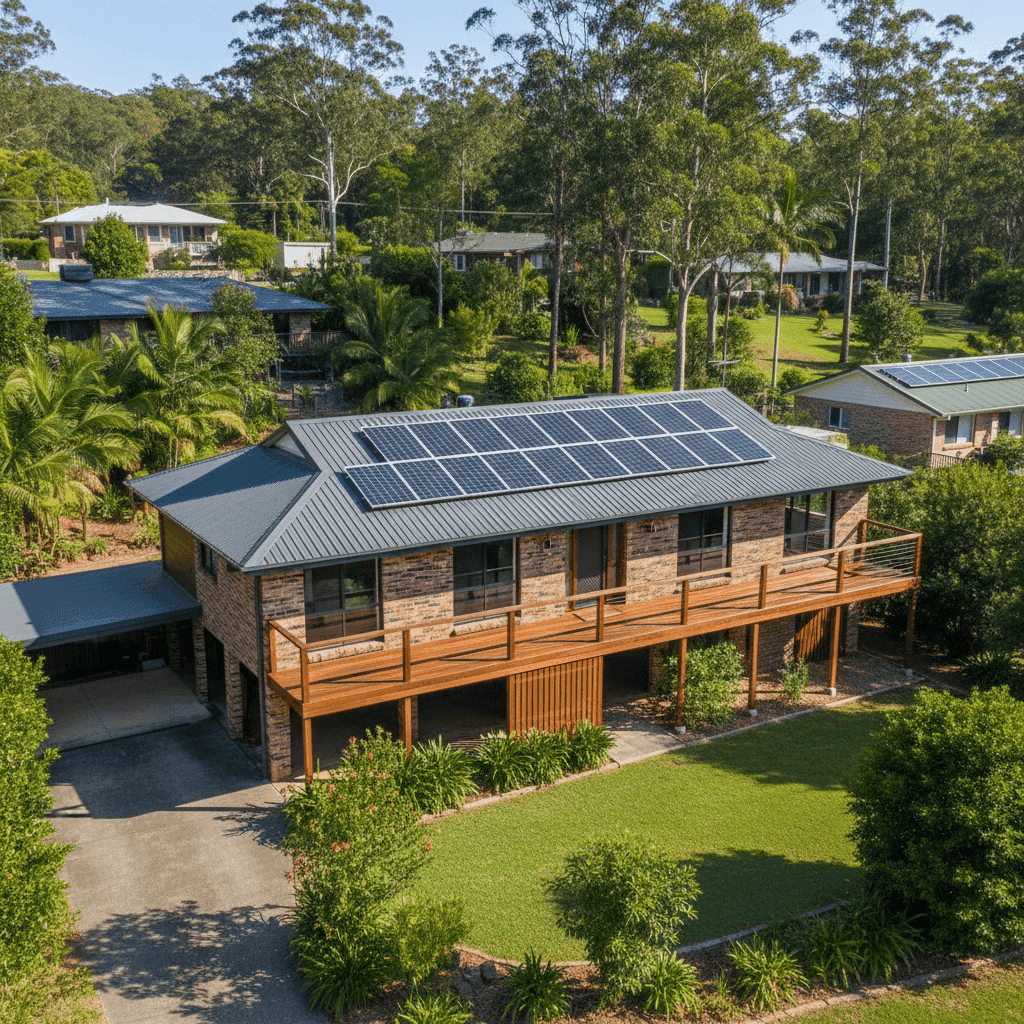
Nestled in the hinterland of the Gold Coast, Beechmont (QLD 4211) is a scenic, semi-rural community that offers a quieter lifestyle without straying too far from the coast. For homeowners in the area, protecting a free standing home with the right insurance cover is essential — and understanding whether you're getting a fair deal on your premium can save you hundreds of dollars a year.
This article takes a close look at a recent Home and Contents insurance quote for a 3-bedroom, 2-bathroom free standing home in Beechmont, breaking down what was quoted, how it compares to local and national benchmarks, and what property features are likely driving the price.
---
Is This Quote Fair?
The quote in question came in at $1,969 per year (or $193/month) for combined Home and Contents cover, with a building sum insured of $470,000 and contents valued at $100,000. The building excess sits at $3,000, with a separate contents excess of $600.
Our pricing analysis rates this quote as CHEAP — below average for the area. That's a meaningful result for Beechmont, where premiums tend to run higher than the national norm due to the region's elevated risk profile.
To put it in perspective: the suburb average for Beechmont sits at $2,916/year, and the median is $2,844/year. This quote comes in nearly $900 below the suburb average — a saving of roughly 32%. For homeowners paying close attention to their household budget, that's a significant difference.
It's worth noting that the sample size for Beechmont-specific data is relatively small (5 quotes), so individual results can vary. That said, the direction is clear: this is a competitively priced policy for the postcode.
---
How Beechmont Compares
When you zoom out and look at broader pricing data, the value of this quote becomes even clearer.
| Benchmark | Annual Premium |
|---|---|
| This Quote | $1,969 |
| Beechmont Suburb Average | $2,916 |
| Beechmont Suburb Median | $2,844 |
| Scenic Rim LGA Average | $4,020 |
| QLD State Average | $4,547 |
| QLD State Median | $3,931 |
| National Average | $2,965 |
| National Median | $2,716 |
Queensland is one of the most expensive states in the country for home insurance, with a state average of $4,547/year — well above the national average of $2,965/year. Much of this is driven by the state's exposure to cyclones, floods, and severe storms, particularly in coastal and low-lying areas.
Beechmont, sitting in the Scenic Rim LGA, has its own risk considerations — but at a local level, this quote tracks well below both the LGA average ($4,020) and the state average. You can explore more localised data on the Beechmont suburb stats page.
For context, even against the national median of $2,716, this quote is still notably cheaper — which suggests the insurer has assessed this particular property favourably.
---
Property Features That Affect Your Premium
Several characteristics of this home are likely influencing the premium — both positively and negatively. Here's a breakdown of the key factors:
🏠 Brick Veneer Walls & Colorbond Roof
Brick veneer is generally regarded as a solid, fire-resistant construction material, and insurers tend to price it more favourably than timber or cladded exteriors. Paired with a steel/Colorbond roof, which is durable and performs well in high-wind conditions, this combination signals lower rebuild risk to underwriters.
🏗️ Elevated on Stumps
The home is elevated by at least 1 metre on stumps — a classic Queensland construction style. While elevation can provide some protection from surface flooding, stump foundations can introduce their own complexities, including the cost of relevelling or repairing subfloor structures after storm events. Insurers weigh this carefully.
🌲 Hinterland Location
Beechmont's hinterland setting means the property is away from direct coastal storm surge, which is a positive. However, properties in elevated, semi-rural areas can face risks from bushfire, falling trees, and steep terrain. These factors are typically assessed during underwriting.
☀️ Solar Panels
This home has solar panels installed. It's important to confirm with your insurer whether solar panels are included under the building sum insured, as they are a fixed fixture. Some policies cover them automatically; others may require a specific endorsement. With panels becoming increasingly common — and increasingly valuable — this is worth clarifying at renewal time.
📐 Building Size & Age
At 139 sqm and built in 1991, this is a mid-sized home of moderate age. Homes built in the early 1990s generally predate some modern building codes, which can affect rebuild costs. The $470,000 building sum insured appears reasonable for a home of this size and construction in the current Queensland market.
🛋️ Standard Fittings & Timber Flooring
Standard fittings keep the contents and rebuild costs more predictable. Timber and laminate flooring is a common feature in Queensland homes and is factored into the contents and building valuations accordingly.
---
Tips for Homeowners in Beechmont
Whether you're reviewing your existing policy or shopping for new cover, here are some practical steps to make sure you're getting the best outcome:
- Confirm your solar panels are covered. Ask your insurer explicitly whether rooftop solar panels are included under your building sum insured or if they need to be listed separately. Given the replacement cost of a modern solar system, this is not a detail to overlook.
- Review your building sum insured annually. Construction costs in Queensland have risen significantly in recent years. A sum insured that was adequate two years ago may no longer reflect the true cost to rebuild. Use a building cost calculator or speak to a local builder to sense-check your coverage.
- Understand your excess structure. This policy carries a $3,000 building excess — which is on the higher end. A higher excess typically reduces your premium, but it means you'll absorb more of the cost in the event of a claim. Make sure this trade-off suits your financial position.
- Compare quotes at renewal, not just when you first sign up. The insurance market shifts regularly, and loyalty doesn't always pay. Even if you're happy with your current insurer, running a comparison at renewal can confirm you're still getting fair value — or reveal a better deal.
---
Ready to Compare Your Own Quote?
If you own a home in Beechmont or elsewhere in Queensland, it pays to know where your premium sits relative to the market. CoverClub makes it easy to compare home and contents insurance quotes from a range of Australian insurers — all in one place.
Get a quote today at CoverClub and find out whether your current policy is working as hard as it should be.