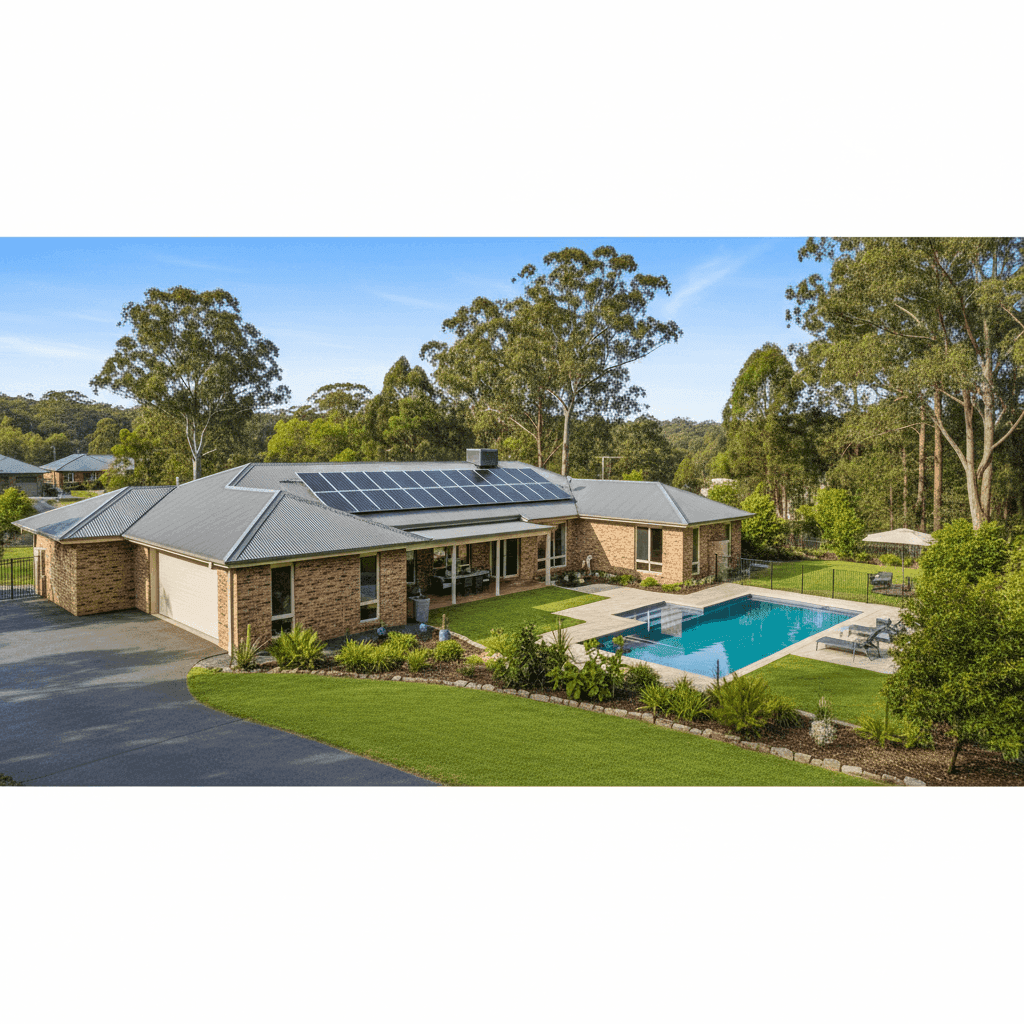
Belgrave South, nestled in the leafy Yarra Ranges on Melbourne's outer east, is a sought-after suburb known for its bushland character and spacious properties. But that semi-rural charm comes with its own insurance considerations. This article breaks down a real home and contents insurance quote for a five-bedroom free standing home in Belgrave South (VIC 3160), rated Fair (Around Average), and puts it in context against local, state, and national benchmarks.
---
Is This Quote Fair?
The annual premium for this property came in at $4,265 per year (or $413/month), covering a building sum insured of $1,180,000 and $150,000 in contents, each with a $1,000 excess.
The price rating of Fair (Around Average) is an accurate reflection of where this quote sits in the market. It's below the suburb average of $5,269/yr and the suburb median of $5,323/yr — meaning this homeowner is paying less than most of their neighbours for comparable cover. At the same time, it sits comfortably above the suburb's 25th percentile of $3,400/yr, so there's still room to potentially find a cheaper policy with the right insurer.
In short: this isn't a bargain, but it's not overpriced either. For a large home with a pool, solar panels, and ducted climate control in a bushfire-adjacent region, landing below the local average is a reasonable outcome.
---
How Belgrave South Compares
Understanding where a premium sits relative to broader benchmarks is key to knowing whether you're getting value. Here's how this quote stacks up:
| Benchmark | Premium |
|---|---|
| This Quote | $4,265/yr |
| Suburb Average (Belgrave South) | $5,269/yr |
| Suburb Median | $5,323/yr |
| Suburb 25th Percentile | $3,400/yr |
| Suburb 75th Percentile | $6,703/yr |
| LGA Average (Yarra Ranges) | $5,600/yr |
| VIC State Average | $3,000/yr |
| VIC State Median | $2,718/yr |
| National Average | $5,347/yr |
| National Median | $2,764/yr |
A few things stand out here. First, Belgrave South premiums are notably higher than the Victorian state average of $3,000/yr — nearly double the state median of $2,718/yr. This reflects the elevated risk profile of properties in the Yarra Ranges, particularly bushfire exposure and the higher rebuild costs associated with larger, rural-fringe homes.
Second, the national average of $5,347/yr is actually higher than this quote — which might seem surprising, but national figures are heavily influenced by high-risk coastal and cyclone-prone regions in Queensland and Western Australia. Belgrave South, while not without risk, doesn't carry cyclone exposure.
For a deeper look at how premiums trend across the postcode, visit the Belgrave South insurance stats page.
---
Property Features That Affect Your Premium
Several characteristics of this property have a meaningful impact on what insurers charge. Here's a breakdown of the key factors at play:
Size and Sum Insured
At 277 sqm, this is a substantial home. Combined with a building sum insured of $1,180,000, the rebuild cost is the single largest driver of the premium. Larger homes cost more to reconstruct, and insurers price accordingly.
Brick Veneer Walls and Colorbond Roof
Brick veneer construction is generally viewed favourably by insurers — it offers solid fire resistance and structural durability. The steel Colorbond roof is similarly well-regarded: it's lightweight, long-lasting, and performs well in both heat and heavy rainfall. These materials can contribute to a more competitive premium compared to weatherboard or older tile roofs.
Stump Foundation and Timber Flooring
The property sits on stumps, which is common in older Victorian homes and hilly terrain like Belgrave South. While stumps allow for good subfloor ventilation, they can introduce some additional risk around subsidence or pest ingress — factors some insurers weigh in their assessments. Timber and laminate flooring, while beautiful, can be more costly to replace than concrete or tiles, which nudges contents and building replacement costs upward.
Swimming Pool
Pools add value to a home but also increase liability exposure and the overall cost to rebuild or repair. Most insurers factor pool infrastructure into building cover, which can lift the base premium.
Solar Panels
With solar panels installed, the building sum insured needs to account for panel replacement — a cost that has risen in recent years. Some insurers include solar panels automatically under building cover; others require explicit declaration. It's worth confirming your policy covers panels for both storm damage and electrical faults.
Ducted Climate Control
Ducted heating and cooling systems are expensive to repair or replace. Their inclusion in the building's insured value is appropriate and reflects the real cost of a full system replacement.
No Cyclone Risk
Belgrave South is not in a cyclone-risk area, which removes one of the more significant premium loading factors seen in northern Australia. This works in the homeowner's favour.
---
Tips for Homeowners in Belgrave South
1. Review Your Building Sum Insured Annually
Construction costs in Victoria have risen significantly over recent years. A sum insured of $1,180,000 may be appropriate today, but it's worth reassessing each year — ideally using a quantity surveyor estimate or an online rebuild calculator — to avoid being underinsured after a major event.
2. Check Your Bushfire Preparedness Discounts
Many insurers offer discounts or more favourable terms for homes that meet Bushfire Attack Level (BAL) standards or have documented fire mitigation measures. Given Belgrave South's proximity to bushland, taking steps like clearing gutters, installing ember guards, and maintaining defensible space around the property can make a real difference — both to safety and potentially to your premium.
3. Confirm Solar Panel and Pool Cover
Don't assume these features are automatically included or fully covered. Read your Product Disclosure Statement (PDS) carefully to confirm how solar panels, pool equipment, and pool fencing are treated under your building policy. Gaps here can be costly.
4. Compare Quotes Before Renewal
This quote is rated Fair, but the spread between the suburb's 25th percentile ($3,400/yr) and 75th percentile ($6,703/yr) is wide — over $3,300 per year. That gap shows just how much variation exists between insurers for the same property. Shopping around at renewal time is one of the simplest ways to avoid drifting into the upper end of that range.
---
Ready to Compare?
Whether you're reviewing your current policy or insuring a new home, comparing quotes is the best way to make sure you're not overpaying. Get a home insurance quote at CoverClub and see how your premium stacks up against the market — it only takes a few minutes.