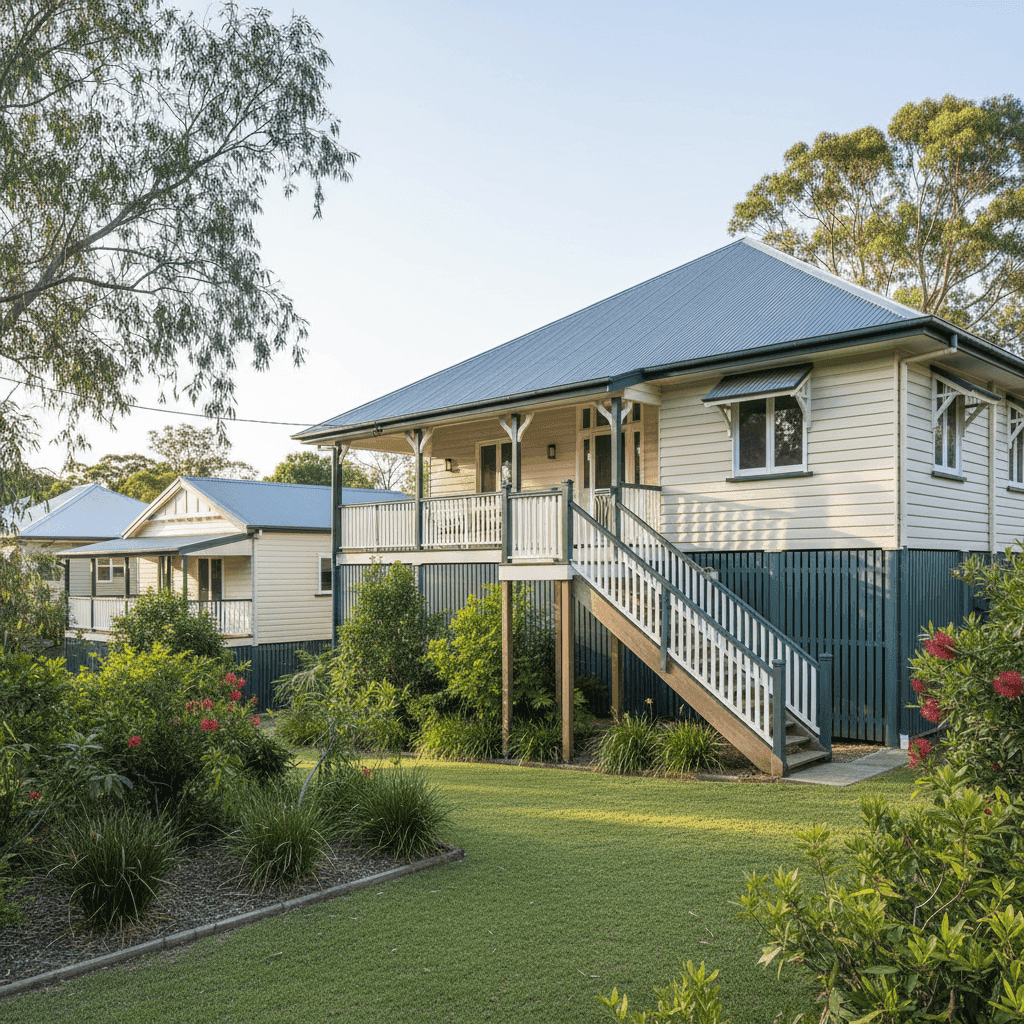
If you own a free standing home in Bella Creek, QLD 4570, you've probably noticed that home insurance isn't cheap. This article breaks down a real home and contents insurance quote for a four-bedroom, two-bathroom property in the suburb — and puts it in context against local, state, and national benchmarks — so you can decide whether your own premium is reasonable or worth shopping around.
---
Is This Quote Fair?
The quote in question comes in at $5,048 per year (or $477 per month) for combined home and contents cover. The building is insured for $911,000 and contents for $220,000, with a $1,000 excess on each.
Our price rating for this quote is Expensive — Above Average.
To understand why, it helps to look at the numbers in context. The suburb average for Bella Creek sits at just $3,490 per year, meaning this quote is running roughly $1,558 — or about 45% — above what most locals are paying. That's a significant gap, and it's not one that should be dismissed without investigation.
It's worth noting that the suburb sample size is small (six quotes), so the local averages should be interpreted with some caution. That said, even when compared to the broader Queensland state average of $4,547/yr, this quote still sits above the mark. Against the national average of $2,965/yr, the premium is nearly 70% higher — a stark contrast that underscores just how much property characteristics and location can drive up the cost of cover.
---
How Bella Creek Compares
Here's a quick snapshot of how this quote stacks up across different benchmarks:
| Benchmark | Annual Premium |
|---|---|
| This Quote | $5,048 |
| Bella Creek Suburb Average | $3,490 |
| Bella Creek Suburb Median | $3,489 |
| Fraser Coast LGA Average | $3,385 |
| QLD State Average | $4,547 |
| QLD State Median | $3,931 |
| National Average | $2,965 |
| National Median | $2,716 |
Bella Creek sits within the Fraser Coast Local Government Area, where the average premium is $3,385 per year — actually slightly below the suburb average, suggesting that some properties in the wider region attract more competitive pricing. This quote exceeds every single benchmark in the table, which strongly suggests that specific property features are pushing the premium upward rather than location alone.
Queensland as a whole tends to attract higher premiums than the national average — largely due to elevated weather risk across much of the state — but even within that context, this quote is on the steeper end.
---
Property Features That Affect Your Premium
Several characteristics of this property are likely contributing to its above-average premium. Let's unpack the key ones:
Weatherboard Timber Walls
Weatherboard construction is common in older Queensland homes and has a certain charm, but insurers view it as higher risk than brick or rendered block. Timber is more susceptible to fire, termite damage, and general wear — all factors that can push premiums higher.
Age of Construction (1960)
A home built in 1960 is over 60 years old. Older properties often have ageing electrical wiring, plumbing, and structural components that increase the likelihood of a claim. Insurers price this risk accordingly.
Elevated on Stumps
This home is elevated by at least one metre on stumps — a classic Queenslander design. While elevation can actually reduce flood risk (a genuine benefit in parts of QLD), it also introduces structural complexity. Stump foundations can deteriorate over time and may require costly repairs, which insurers factor into their risk assessments.
Timber and Laminate Flooring
Timber flooring adds to the overall replacement cost of the home. It's also more vulnerable to water damage than, say, ceramic tiles, which can influence how insurers assess contents and building risk.
Granny Flat
The presence of a granny flat increases the total insurable area and replacement cost of the property. Whether it's used for family, rented out, or sits empty, its existence adds complexity to a policy and typically increases the premium.
High Sum Insured
A building sum insured of $911,000 is substantial. The higher the replacement cost, the higher the premium — it's a straightforward relationship. Homeowners should ensure their sum insured accurately reflects what it would cost to rebuild the home (not its market value), as over-insuring can unnecessarily inflate premiums.
---
Tips for Homeowners in Bella Creek
If your premium is coming in above the local average, here are some practical steps to consider:
1. Review Your Sum Insured
Make sure your building sum insured reflects the actual cost to rebuild, not the market value of the property. These figures can differ significantly, especially in regional Queensland. An independent building valuation can help you get this right — and avoid both over- and under-insuring.
2. Increase Your Excess
Opting for a higher excess (say, $2,000 instead of $1,000) can meaningfully reduce your annual premium. Just make sure you're comfortable covering that amount out of pocket if you ever need to make a claim.
3. Bundle Your Policies
Some insurers offer discounts when you combine home and contents insurance under a single policy, or when you hold multiple policies (such as car insurance) with the same provider. It's worth asking.
4. Compare the Market Regularly
Insurance premiums can shift significantly from year to year, and loyalty doesn't always pay. Shopping around at renewal time — or even mid-policy if your circumstances change — is one of the most effective ways to ensure you're not overpaying. Use a comparison tool like CoverClub to see multiple quotes side by side without the legwork.
---
Get a Better Deal on Your Home Insurance
Whether you're a long-time Bella Creek resident or new to the area, it pays to know what others are paying. CoverClub makes it easy to compare home and contents insurance quotes from a range of Australian insurers — all in one place, with transparent pricing and no hidden catches.
👉 Compare home insurance quotes now at CoverClub and find out if you could be paying less.