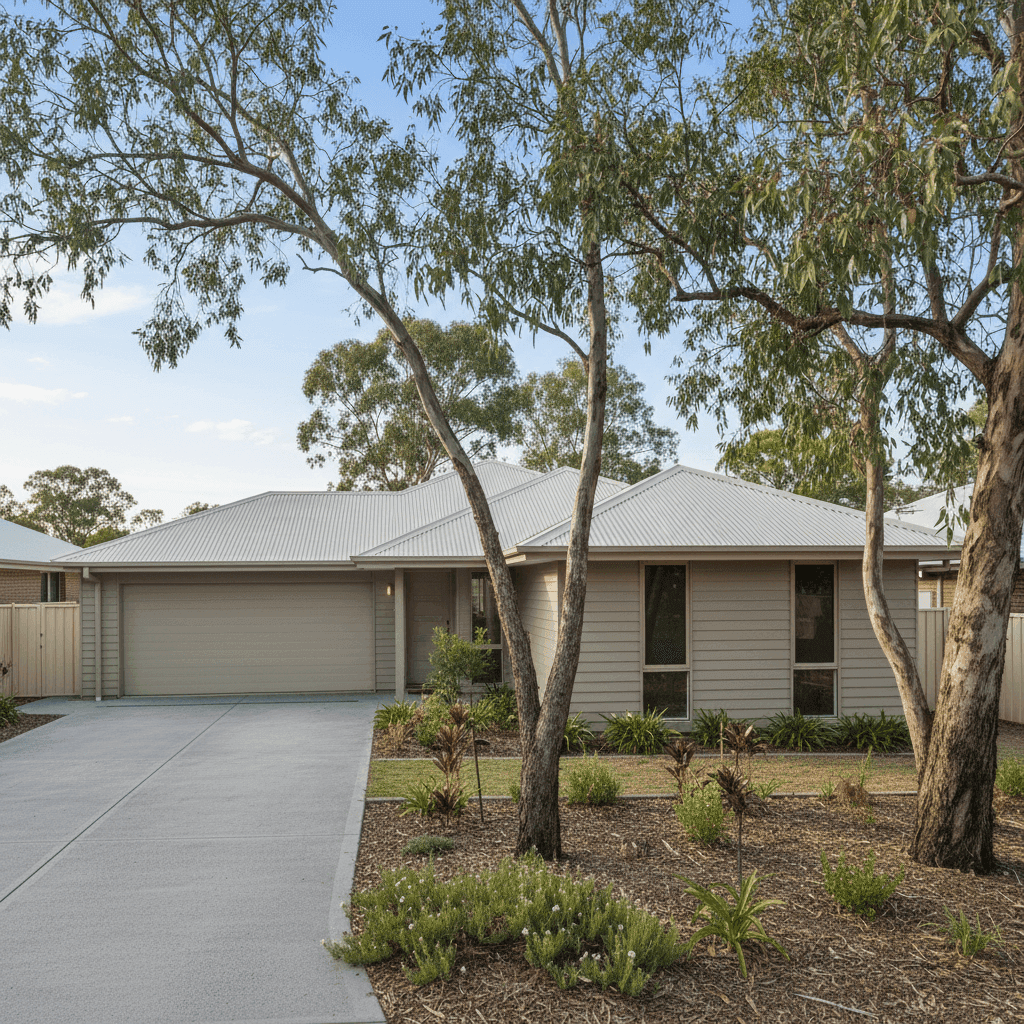
If you own a free standing home in Bellbird Park, QLD 4300, you've probably wondered whether you're paying too much — or too little — for building insurance. This article breaks down a real building-only insurance quote for a four-bedroom, two-bathroom weatherboard home in the suburb, and benchmarks it against local, state, and national data so you can make a more informed decision at renewal time.
---
Is This Quote Fair?
The quote in question comes in at $1,425 per year (or roughly $139 per month) for building-only cover on a free standing home with a sum insured of $311,000 and a $1,000 excess. Our price rating for this quote is CHEAP — below the suburb average — which is genuinely good news for the homeowner.
To put that in context: the suburb average premium for Bellbird Park sits at $2,198 per year, based on a sample of 44 quotes. This quote comes in $773 below that average — a saving of around 35%. Even measured against the suburb's 25th percentile (the cheapest quarter of quotes) of $1,641 per year, this quote still undercuts it by more than $200.
So yes — by any local measure, this is a competitive result. Whether it reflects smart shopping, a low-risk property profile, or a combination of both, the homeowner is in a strong position compared to their neighbours.
---
How Bellbird Park Compares
Bellbird Park sits within the City of Ipswich, a local government area that carries a notably high average premium of $8,901 per year — heavily skewed by high-risk flood-prone and weather-exposed properties elsewhere in the LGA. That figure underscores just how much variation exists within a single council area, and why suburb-level data is far more meaningful when assessing your own premium.
Zooming out further, the picture becomes even more striking:
| Benchmark | Average Premium | Median Premium |
|---|---|---|
| Bellbird Park (suburb) | $2,198/yr | $2,076/yr |
| Queensland (state) | $9,129/yr | $3,903/yr |
| Australia (national) | $5,347/yr | $2,764/yr |
Queensland's average premium of $9,129 per year is among the highest in the country, largely driven by extreme weather events — cyclones in the north, flooding across the south-east, and severe storms throughout. The Queensland state average is pulled sharply upward by high-risk postcodes, which is why the median ($3,903) is a more reliable indicator of what most Queenslanders actually pay.
Even against the national median of $2,764, this Bellbird Park quote of $1,425 is well below the midpoint — a solid outcome by any measure.
---
Property Features That Affect Your Premium
Several characteristics of this property work in the homeowner's favour when it comes to pricing.
Weatherboard timber walls are generally viewed as a moderate-to-higher risk material by insurers due to their susceptibility to fire and moisture damage compared to brick veneer or full brick construction. However, this is often offset by other low-risk factors — and clearly hasn't pushed the premium into expensive territory here.
Steel/Colorbond roofing is typically well regarded by insurers. It's durable, low-maintenance, and performs reliably in storms and heavy rain — all relevant considerations in South-East Queensland. This is likely contributing positively to the premium outcome.
Slab foundation is generally considered stable and low-risk, particularly when paired with standard construction. It avoids the complications that can arise with older stumped or suspended floor systems, which may require more frequent maintenance.
Timber and laminate flooring is a standard feature in many Queensland homes of this era and doesn't significantly alter the risk profile from an insurer's perspective.
The home was built in 1986, placing it in a cohort of properties that are old enough to have some wear and tear, but not so old as to attract the heavy loadings sometimes applied to pre-1970s homes. At 139 sqm, it's a modest footprint, which also helps keep the sum insured — and therefore the premium — at a manageable level.
Ducted climate control is present, which can add slightly to rebuild costs and therefore the sum insured, but the overall sum of $311,000 appears well-calibrated for a home of this size and construction type.
Notably, there's no pool and no solar panels — both of which can add complexity (and cost) to a policy when present.
---
Tips for Homeowners in Bellbird Park
1. Review your sum insured annually Construction costs have risen significantly in recent years. A sum insured of $311,000 for a 139 sqm weatherboard home in South-East Queensland may be appropriate today, but it's worth recalculating your rebuild cost each year — especially as labour and materials costs fluctuate. Underinsurance is one of the most common and costly mistakes homeowners make.
2. Don't assume your current insurer is still competitive Even if your premium is currently below the suburb average, insurers regularly reprice their books at renewal. A quote that's cheap today can become average or expensive within a year or two without any changes to your property. Set a reminder to compare at least 60 days before your renewal date.
3. Consider whether building-only cover is sufficient This policy covers the structure of the home but not the contents inside. If you have valuable furniture, appliances, or personal belongings, a combined building and contents policy may offer better overall value — and bundling is often cheaper than holding two separate policies.
4. Maintain your weatherboard exterior From an insurer's perspective — and your own — keeping weatherboard walls in good condition matters. Cracked, rotting, or poorly painted timber can increase the risk of moisture ingress and structural damage. Regular maintenance not only protects your home but can also support a smoother claims process if something does go wrong.
---
Compare Your Own Quote
Whether you're renewing soon or just curious about what others are paying in your area, CoverClub makes it easy to benchmark your premium against real data. Get a building insurance quote in minutes and see exactly how your price stacks up against your neighbours, your state, and the national average. No jargon, no pressure — just clear, transparent comparisons to help you make a smarter call.