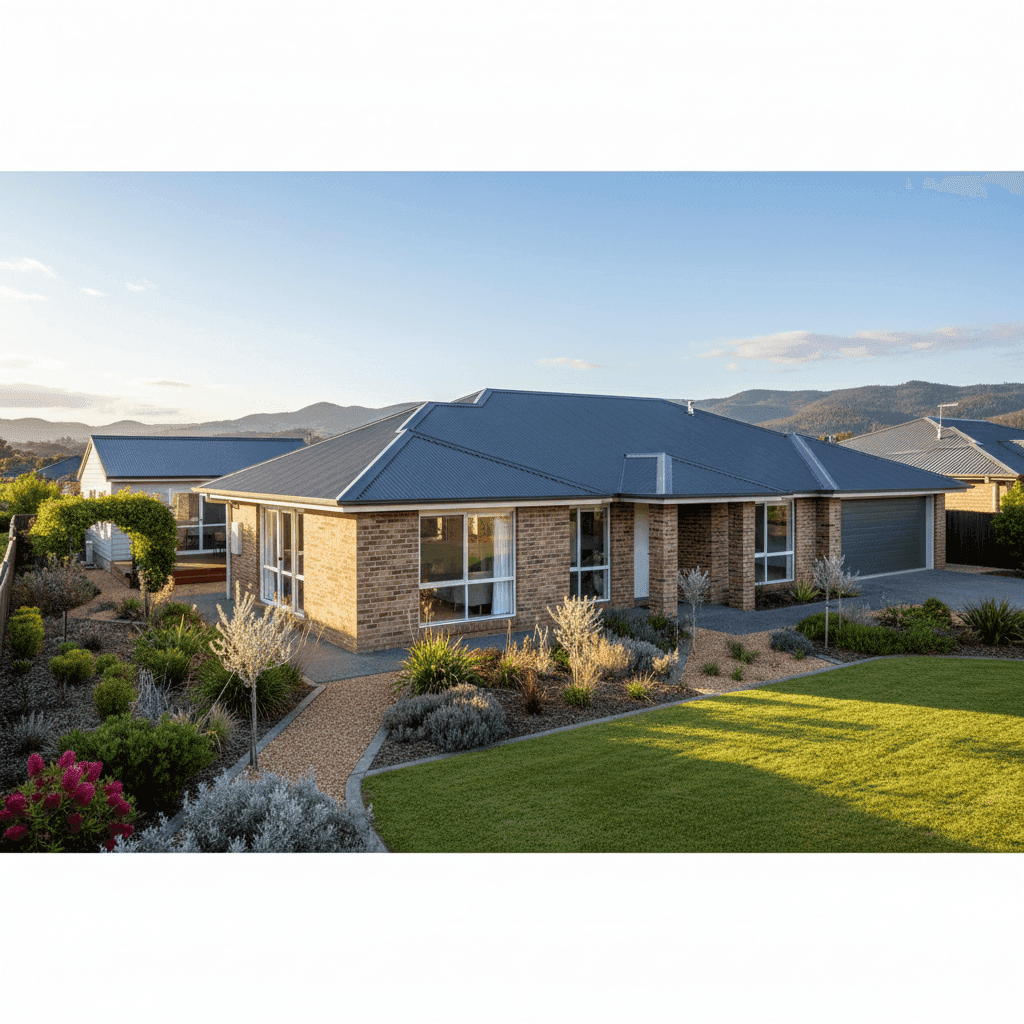
Bellerive is one of Hobart's most sought-after eastern shore suburbs — a leafy, riverside community offering a relaxed lifestyle just minutes from the CBD. For homeowners here, protecting a property is a serious financial consideration, and understanding what you should be paying for home and contents insurance is the first step to making sure you're not overpaying. In this article, we break down a real insurance quote for a four-bedroom, free-standing brick veneer home in Bellerive (postcode 7018) and place it in context against local, state, and national benchmarks.
---
Is This Quote Fair?
The quote in question sits at $2,214 per year (or roughly $217 per month) for combined home and contents cover, with a building sum insured of $1,250,000 and contents valued at $75,000. Both the building and contents excesses are set at $1,000.
Our price rating for this quote is FAIR — Around Average, and the data backs that up. At $2,214 annually, this premium lands almost exactly at the suburb's 25th percentile of $2,211, meaning roughly three-quarters of similar quotes in Bellerive come in higher. That's actually a reasonably competitive result — the homeowner is paying less than the majority of their neighbours for comparable cover.
It's worth noting that a "Fair" rating doesn't mean there's no room for improvement. It simply means the quote is in the expected range for this type of property and location. Whether it's the right price for your situation depends on the specifics of your cover, your insurer's claims reputation, and whether you've shopped around recently.
---
How Bellerive Compares
Understanding where your premium sits relative to broader benchmarks helps you gauge value. Here's how this quote stacks up:
| Benchmark | Premium |
|---|---|
| This Quote | $2,214/yr |
| Bellerive Suburb Average | $2,742/yr |
| Bellerive Suburb Median | $2,696/yr |
| Bellerive 25th Percentile | $2,211/yr |
| Bellerive 75th Percentile | $3,225/yr |
| Clarence LGA Average | $2,049/yr |
| Tasmania State Average | $2,814/yr |
| Tasmania State Median | $2,326/yr |
| National Average | $5,347/yr |
| National Median | $2,764/yr |
(Based on [Bellerive suburb data](https://coverclub.com.au/stats/TAS/7018/bellerive) and [TAS state data](https://coverclub.com.au/stats/TAS). Sample size: 19 quotes in the Bellerive area.)
A few things stand out here. First, this quote is $528 below the Bellerive suburb average and $600 below the Tasmanian state average — both meaningful savings. Second, when you zoom out to the national picture, Bellerive homeowners are paying significantly less than the Australian average of $5,347 per year, which is heavily influenced by high-risk areas in Queensland and Northern Australia where cyclones and flooding drive premiums sky-high.
Interestingly, the Clarence LGA average of $2,049 per year is slightly below this quote, which suggests there may be some variation in property types and risk profiles across the broader local government area. Bellerive's proximity to the Derwent River estuary and its mix of older and newer housing stock can influence individual premiums.
It's also worth noting that the sample size here is 19 quotes — a reasonable but not enormous dataset for a suburb of Bellerive's size. As more data flows in, these averages will sharpen.
---
Property Features That Affect Your Premium
Every home is different, and insurers price risk based on a detailed assessment of your property's characteristics. Here's how the features of this particular home likely influence its premium:
Brick Veneer Walls Brick veneer is generally viewed favourably by insurers. It offers solid fire resistance and structural durability compared to timber weatherboard, which can reduce the perceived rebuild risk. This likely contributes to a more competitive premium.
Steel/Colorbond Roof Colorbond roofing is another tick in the box. It's highly durable, resistant to fire embers, and performs well in wind events. Compared to older terracotta or asbestos cement roofing common in 1970s homes, a steel roof signals lower maintenance risk and better resilience.
Construction Year: 1975 A home built in 1975 is now over 50 years old. While the brick veneer and Colorbond roof suggest the property has been well maintained or updated, older homes can carry higher rebuild costs due to the need to meet current building codes during reconstruction. This is a key reason why the building sum insured of $1,250,000 is set relatively high for a 116 sqm home — ensuring full replacement value, not just market value, is critical.
Slab Foundation A concrete slab foundation is standard for homes of this era in Tasmania and carries no particular risk premium. It's a neutral factor for most insurers.
Ducted Climate Control The presence of ducted climate control is a minor but notable factor. These systems represent a meaningful replacement cost if damaged, and their inclusion supports the overall contents and building valuation.
Granny Flat The property includes a granny flat, which adds complexity to the insurance picture. Depending on the policy, a granny flat may be covered under the main building sum insured or may require separate disclosure. It's essential to confirm with your insurer that the granny flat's structure and any contents within it are explicitly covered under your policy terms.
No Pool, No Solar Panels The absence of a pool removes a common liability risk factor, and the lack of solar panels means there's no need to factor in panel replacement costs — both of which can nudge premiums upward when present.
---
Tips for Homeowners in Bellerive
1. Review your building sum insured regularly With a 116 sqm home insured for $1,250,000, the sum insured appears to account for full rebuild costs including the granny flat, site clearance, and compliance with current building standards. However, construction costs in Tasmania have risen significantly in recent years. Use a building cost calculator annually to make sure your sum insured keeps pace — being underinsured at claim time can be a costly mistake.
2. Confirm granny flat coverage with your insurer Not all standard home insurance policies automatically extend full cover to a granny flat on the same title. Ask your insurer directly whether the granny flat's structure, fixtures, and any contents are included — and get it in writing. If a tenant occupies the flat, you may also need landlord liability cover.
3. Shop around at renewal time This quote rates as Fair — Around Average, which means savings are potentially available. Even a modest reduction of $300–$500 per year adds up over time. Use a comparison platform like CoverClub to benchmark your renewal quote before accepting it automatically.
4. Consider your excess strategically Both the building and contents excesses on this policy are set at $1,000. Opting for a higher excess (say, $2,000 or $2,500) can meaningfully reduce your annual premium if you're comfortable covering smaller claims out of pocket. This strategy works best for homeowners with a solid emergency fund.
---
Compare Your Home Insurance Quote Today
Whether you're a long-time Bellerive local or new to the eastern shore, it pays to know what the market looks like before you commit to a policy. CoverClub makes it easy to see how your quote stacks up against real data from your suburb and beyond. Get a quote today and find out if you're paying a fair price — or if there's a better deal waiting for you.