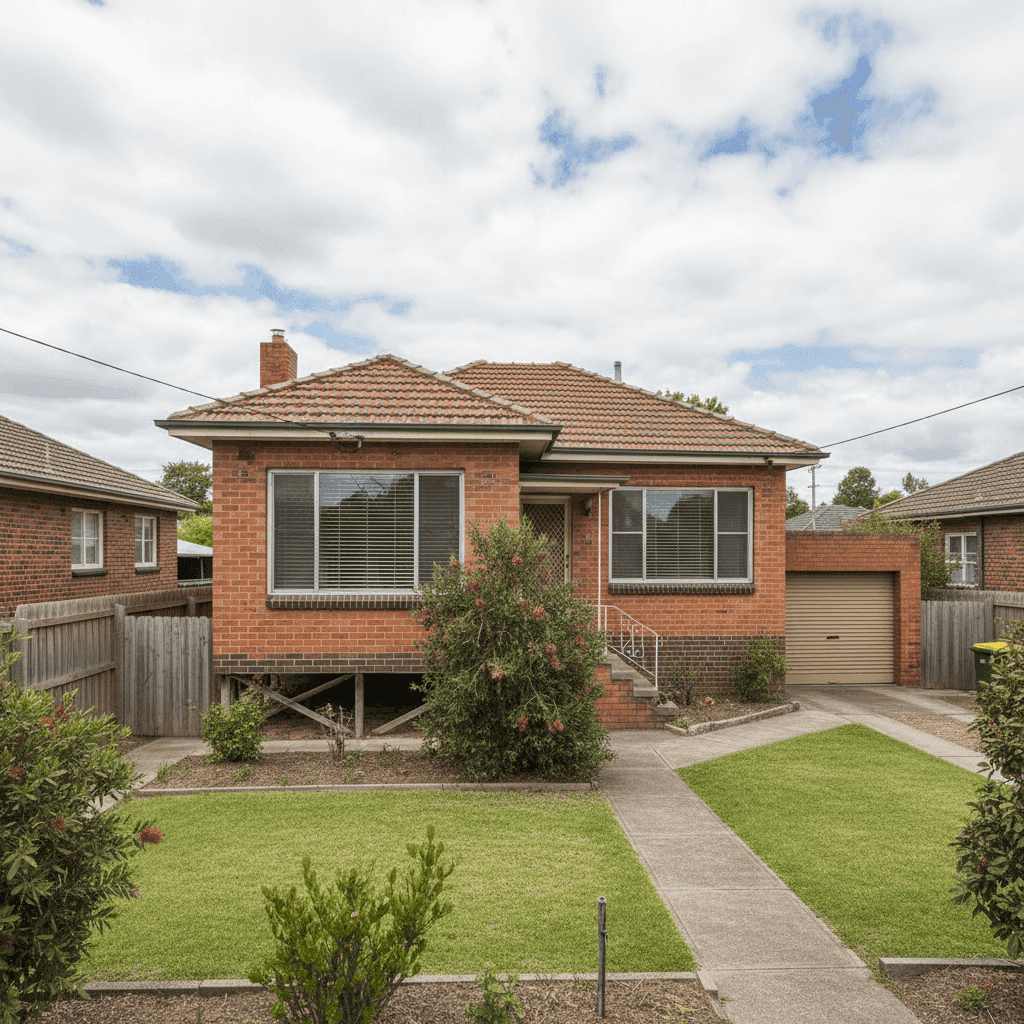
If you own a free standing home in Bellfield, VIC 3081, you've probably noticed that home insurance quotes can vary wildly — and not always in your favour. This article takes a close look at a real home and contents insurance quote for a 3-bedroom, 2-bathroom brick veneer home in Bellfield, breaking down whether the price stacks up and what's likely driving the premium.
---
Is This Quote Fair?
The quote in question comes in at $1,572 per year (or $155/month) for combined home and contents cover, with a $500,000 building sum insured and $90,000 in contents cover. Both the building and contents excess are set at $1,000.
Based on our pricing data, this quote is rated Expensive — above average for the Bellfield area.
To put that in perspective:
- The suburb average for Bellfield is $1,143/yr
- The suburb median sits at $1,148/yr
- This quote is approximately $424 more per year than the suburb average — that's a 37% premium over what most Bellfield homeowners are paying
While it's not wildly out of the ballpark compared to broader Victorian or national figures, it does sit noticeably above what comparable properties in the same postcode are attracting. For a homeowner on a tight budget, that gap is meaningful — nearly $35 extra per month compared to the suburb median.
That said, "expensive" doesn't necessarily mean "wrong." The sum insured and contents value are on the higher end, and several property-specific features (discussed below) can legitimately push a premium upward. The key question is whether you're getting commensurate value — or simply overpaying for the same level of cover you could find elsewhere.
---
How Bellfield Compares
Understanding where Bellfield sits in the broader insurance landscape helps put this quote in context. You can explore the full data on the Bellfield suburb stats page.
| Benchmark | Annual Premium |
|---|---|
| This Quote | $1,572 |
| Bellfield Suburb Average | $1,143 |
| Bellfield Suburb Median | $1,148 |
| Bellfield 25th Percentile | $918 |
| Bellfield 75th Percentile | $1,309 |
| Banyule LGA Average | $2,085 |
| VIC State Average | $3,000 |
| VIC State Median | $2,718 |
| National Average | $5,347 |
| National Median | $2,764 |
One thing immediately stands out: Bellfield is a relatively affordable suburb to insure compared to the rest of Victoria and the country. The Victorian state average of $3,000/yr and the national average of $5,347/yr dwarf what most Bellfield homeowners are paying — a reflection of the suburb's lower exposure to extreme weather events like floods, cyclones, and bushfires compared to many other Australian postcodes.
Even the quote under review, despite being above the local average, is still well below the Victorian and national benchmarks. For homeowners moving from interstate or comparing against national figures, Bellfield remains a relatively cost-effective place to insure a home.
The Banyule LGA average of $2,085/yr is also worth noting — it suggests that while Bellfield is among the more affordable pockets within the local government area, other suburbs in Banyule may carry higher risk profiles that pull the LGA average up.
---
Property Features That Affect Your Premium
Several characteristics of this particular property are worth examining, as they each play a role in how insurers calculate risk and set premiums.
Brick Veneer Construction (1960s Build)
The external walls are brick veneer — a common construction method in Melbourne's inner-north suburbs built during the post-war housing boom. While brick veneer is generally viewed favourably by insurers for its fire resistance, homes built in 1960 are now over 60 years old. Older properties can attract higher premiums due to the increased likelihood of aging wiring, plumbing, and structural wear that may not be immediately visible.
Concrete Tile Roof
A concrete tile roof is considered a durable and relatively low-risk roofing material. It performs well in hail and wind events, which works in the homeowner's favour from a risk-assessment standpoint. However, concrete tiles are heavy and can be expensive to replace if damaged, which may influence the building sum insured.
Stump Foundation
The property sits on stumps — a traditional foundation type common in older Melbourne homes. Stump foundations can be a double-edged sword for insurers: they allow for good underfloor ventilation and can reduce flood risk, but they're also susceptible to subsidence, termite activity, and deterioration over time. Some insurers price this risk into the premium.
Elevated by at Least 1 Metre
The home is elevated by at least one metre, which is a notable feature. While elevation can reduce the risk of inundation from surface water flooding, it also means the property may be more exposed to wind uplift and could face higher repair costs if structural elements beneath the home are damaged.
Timber and Laminate Flooring
Timber and laminate flooring throughout the home adds to the contents and building replacement value. These materials can be costly to repair or replace after water damage or fire, which insurers factor into both the building and contents components of a policy.
Ducted Climate Control
The presence of ducted climate control adds to the insurable value of the home. Ducted systems are expensive to install and replace, and their inclusion in the building sum insured is appropriate — though it does contribute to a higher overall premium.
---
Tips for Homeowners in Bellfield
If you're looking to get better value on your home and contents insurance without sacrificing cover, here are four practical steps worth considering.
1. Shop around — seriously. The spread between the 25th percentile ($918/yr) and this quote ($1,572/yr) in Bellfield is over $650 per year. That's a significant gap, and it exists because insurers price the same property very differently. Using a comparison platform like CoverClub makes it easy to see multiple quotes side by side without hours of manual research.
2. Review your sum insured carefully. A $500,000 building sum insured is the rebuild cost — not the market value of the property. It's worth getting a professional building replacement cost estimate to make sure you're not over-insured (which inflates your premium) or under-insured (which can leave you exposed at claim time). Many homeowners in older suburbs like Bellfield inadvertently over-insure.
3. Consider your excess strategically. Both excesses on this policy are set at $1,000. Opting for a higher voluntary excess — say $1,500 or $2,000 — can meaningfully reduce your annual premium. If you have emergency savings available, this is often a smart trade-off.
4. Check what's included in your contents cover. At $90,000, the contents sum insured is substantial. Take the time to do a proper home contents inventory. Many people overestimate the value of their contents, and reducing this figure to an accurate amount can bring the premium down without leaving you exposed.
---
Compare Your Options with CoverClub
Whether this quote is right for you depends on your individual circumstances — but the data suggests there may be room to do better. CoverClub makes it simple to compare home and contents insurance quotes from multiple insurers, all in one place. Get a quote today and see how much you could save on your Bellfield home.