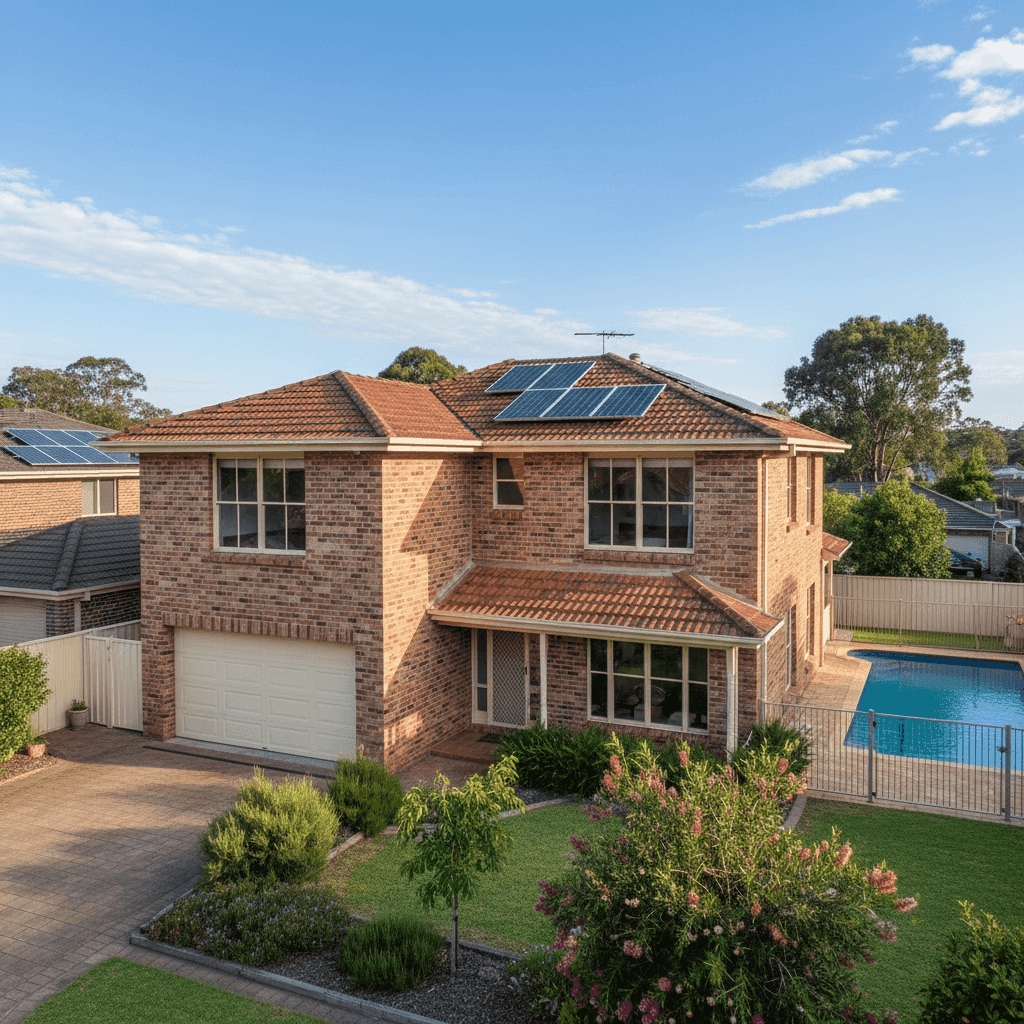
Belmont North is a relaxed lakeside suburb on the western shore of Lake Macquarie, sitting within the Lake Macquarie local government area in New South Wales. It's a popular spot for families drawn to its quiet streets, proximity to the lake, and easy access to Newcastle. For homeowners here, getting the right level of home and contents insurance is an important financial decision — and understanding whether a quote represents genuine value takes a little digging into the numbers.
This article breaks down a recent home and contents insurance quote for a four-bedroom, free-standing home in Belmont North (postcode 2280), comparing it against local, state, and national benchmarks to help you make a more informed decision.
---
Is This Quote Fair?
The quote in question comes in at $3,105 per year (or $304 per month), covering a building sum insured of $765,000 and contents valued at $150,000. The building excess is set at $2,000 and the contents excess at $1,000.
Our price rating for this quote is FAIR — Around Average. That's a reasonable outcome for a property of this size and specification, but "average" doesn't necessarily mean you can't do better. Let's unpack what that rating actually means in context.
Compared to the Belmont North suburb average of $3,852 per year, this quote is roughly 19% cheaper — a meaningful saving. Against the NSW state average of $3,801/yr, it's again sitting comfortably below, by about 18%. Relative to the national average of $2,965/yr, however, this quote is slightly above — around 5% higher. So while it's beating local and state norms, there is a gap versus what Australian homeowners pay on average across the country.
The "Fair" rating reflects this nuanced position: it's not a standout bargain, but it's also not overpriced for what's on offer in this market.
---
How Belmont North Compares
To give you a fuller picture, here's how premiums in Belmont North sit relative to broader benchmarks, based on 65 quotes collected in the suburb:
| Benchmark | Annual Premium |
|---|---|
| Suburb 25th Percentile | $1,957 |
| Suburb Median | $2,630 |
| This Quote | $3,105 |
| National Average | $2,965 |
| National Median | $2,716 |
| Suburb Average | $3,852 |
| NSW State Average | $3,801 |
| NSW State Median | $3,410 |
| Lake Macquarie LGA Average | $3,862 |
| Suburb 75th Percentile | $6,502 |
A few things stand out here. First, the suburb average ($3,852) is pulled well above the median ($2,630) — a sign that a handful of high-premium properties are skewing the mean upward. This is common in areas with diverse housing stock, where some homes carry significantly higher risk profiles or replacement values.
Second, this quote sits between the suburb median and the suburb average, which is consistent with a "Fair" rating. It's not in the cheapest quartile, but it's well clear of the expensive end of the market (the 75th percentile sits at a steep $6,502/yr).
The Lake Macquarie LGA average of $3,862/yr closely mirrors the suburb average, suggesting Belmont North is fairly representative of the broader LGA in terms of insurance pricing. You can explore more local data on the Belmont North suburb stats page or compare across all of NSW here.
---
Property Features That Affect Your Premium
Several characteristics of this property have a direct influence on how insurers price the risk. Here's what matters most:
Double Brick Construction Double brick walls are generally viewed favourably by insurers. They're durable, fire-resistant, and less susceptible to storm damage than lightweight cladding. This construction type can contribute to a more competitive premium compared to timber-framed homes.
Tiled Roof A tiled roof is a standard, well-regarded roofing material in Australia. It performs well in most weather conditions and is typically associated with lower premiums than more vulnerable materials like corrugated iron on older homes or certain types of flat roofing.
Slab Foundation A concrete slab foundation is generally considered stable and low-risk, particularly in areas without significant soil movement or flooding concerns. It removes the risk of subfloor damage that can affect homes on stumps or piers.
Swimming Pool Pools add value to a property but also introduce additional liability and maintenance considerations. Insurers factor in the cost of pool repairs or replacement, which contributes to a higher sum insured and, by extension, a higher premium.
Solar Panels Solar panels are increasingly common in Australian homes, but they do add to the replacement cost of a property. Insurers need to account for panel replacement and any associated roof or electrical damage, which can nudge premiums upward slightly.
Ducted Climate Control Ducted air conditioning systems are a significant fixed asset. Their inclusion in the building sum insured means the overall replacement cost is higher, which flows through to the premium.
Age of Construction (1975) At roughly 50 years old, this home sits in a bracket where insurers may apply some loading for older wiring, plumbing, or structural components that could be more costly to repair or replace. That said, double brick construction from this era is often considered very solid.
Building Size (226 sqm) At 226 square metres, this is a substantial home. A larger floor area generally means a higher rebuild cost, which is reflected in the $765,000 sum insured and the resulting premium.
---
Tips for Homeowners in Belmont North
1. Review Your Sum Insured Regularly Construction costs in NSW have risen sharply in recent years. Make sure your $765,000 building sum insured accurately reflects what it would cost to rebuild your home today — not what it was worth when you first took out the policy. Underinsurance is one of the most common and costly mistakes Australian homeowners make.
2. Consider Adjusting Your Excess This policy carries a $2,000 building excess and a $1,000 contents excess. Opting for a higher voluntary excess can meaningfully reduce your annual premium. Just make sure the excess amount is something you could comfortably cover out of pocket in the event of a claim.
3. Bundle Your Building and Contents Cover This quote already combines building and contents insurance, which is a smart move. Many insurers offer discounts for bundling, and managing a single policy is far simpler at claim time. If you're currently holding separate policies, it's worth comparing a combined quote.
4. Shop Around at Renewal Time Loyalty doesn't always pay in insurance. Premiums can creep up at renewal without a corresponding change in your risk profile. Use a comparison platform like CoverClub to benchmark your renewal quote against the market each year — it only takes a few minutes and could save you hundreds.
---
Compare Your Own Quote
Whether you're a first-time buyer in Belmont North or a long-time homeowner reassessing your cover, it pays to know where your premium sits relative to the market. CoverClub makes it easy to compare home and contents insurance quotes from multiple insurers in one place. Get a quote today and see how much you could save.