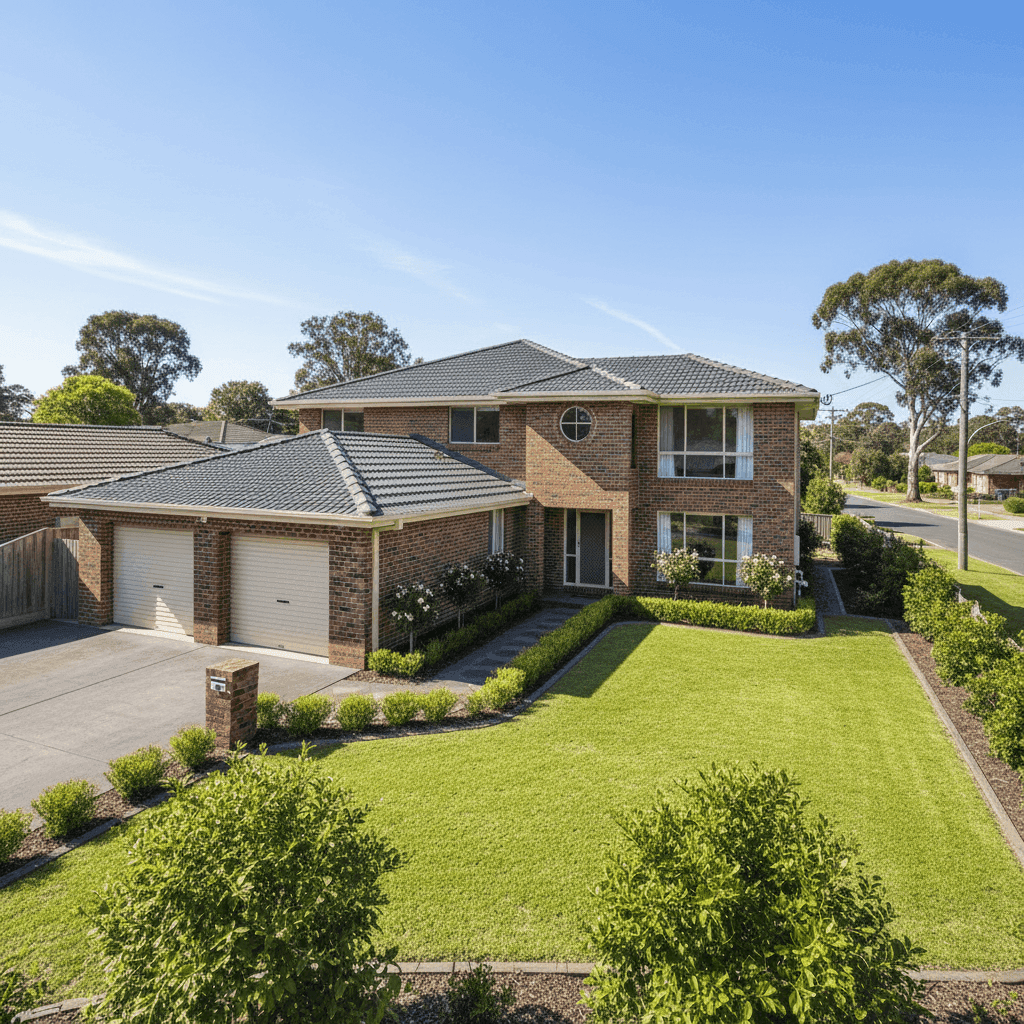
If you own a free standing home in Belmont North, NSW 2280, you're probably wondering whether you're paying a fair price for home and contents insurance. Situated on the shores of Lake Macquarie, Belmont North is a popular residential suburb that blends lifestyle appeal with the practical realities of insuring a larger family home. In this article, we break down a real insurance quote for a five-bedroom, three-bathroom brick veneer home in the area — and help you understand exactly where it sits in the broader market.
---
Is This Quote Fair?
The quote in question comes in at $4,369 per year (or $435 per month) for combined home and contents cover, with a building sum insured of $1,496,000 and contents valued at $50,000. The building excess is $3,000, and the contents excess is $1,000.
Our pricing analysis rates this quote as FAIR — around average. That's a meaningful finding. It doesn't mean the price is the lowest available, but it does suggest the quote is broadly in line with what other homeowners in similar circumstances are paying. Given the size of this property — 367 sqm of living space across five bedrooms — a premium in this range is not surprising.
It's worth noting that "fair" doesn't necessarily mean "optimal." There may be room to reduce the premium by adjusting cover settings, shopping around, or bundling policies, but you wouldn't be overpaying dramatically at this price point.
---
How Belmont North Compares
To put this quote in context, here's how it stacks up against suburb, state, and national benchmarks:
| Benchmark | Average Premium | Median Premium |
|---|---|---|
| Belmont North (NSW 2280) | $3,852/yr | $2,630/yr |
| NSW State | $3,801/yr | $3,410/yr |
| National | $2,965/yr | $2,716/yr |
| Lake Macquarie LGA | $11,064/yr | — |
Based on 65 quotes collected for the Belmont North postcode, the suburb's 25th percentile sits at $1,957/yr and the 75th percentile at $6,502/yr. At $4,369/yr, this quote lands comfortably between the median and the 75th percentile — meaning it's higher than roughly half of quotes in the area, but well within the upper range.
Compared to the NSW state average of $3,801/yr, this quote is slightly above par, which makes sense given the property's size and the higher-than-average building sum insured. Nationally, the average sits at $2,965/yr — but that figure encompasses a wide variety of property types, sizes, and risk profiles across the country, so direct comparison has its limits.
One figure that stands out is the Lake Macquarie LGA average of $11,064/yr. This is significantly higher than both the suburb and state figures, likely driven by higher-value properties and elevated risk profiles elsewhere within the LGA. By that measure, this quote looks quite competitive.
---
Property Features That Affect Your Premium
Several characteristics of this property have a direct bearing on what insurers charge:
Size and value: At 367 sqm with five bedrooms and three bathrooms, this is a substantial home. The building sum insured of $1,496,000 reflects the cost to fully rebuild — a figure that naturally pushes the premium higher than what you'd expect for a smaller dwelling.
Brick veneer construction: Brick veneer walls are generally viewed favourably by insurers. They offer solid fire resistance and structural durability compared to timber or weatherboard, which can translate into more competitive premiums.
Tiled roof: A tiled roof is another positive signal for underwriters. Tiles are long-lasting, weather-resistant, and less susceptible to storm damage than some alternatives — all factors that can keep your premium in check.
Concrete slab foundation: Slab foundations are common in NSW and are generally considered stable and low-risk, particularly in non-flood-prone areas.
Ducted climate control: The presence of ducted air conditioning is factored into the building's replacement value. It's a significant fixed asset that adds to the overall sum insured and, consequently, the premium.
No pool or solar panels: The absence of a swimming pool and solar panels simplifies the risk profile slightly. Both can add to the cost of cover, so their absence is a modest premium-friendly factor.
Construction year (1990): Homes built in 1990 are well past the era of modern building codes but are generally considered structurally sound. Insurers may factor in the age of plumbing, electrical systems, and roofing materials when pricing cover for homes of this vintage.
---
Tips for Homeowners in Belmont North
1. Review your building sum insured regularly With a sum insured of $1,496,000, it's essential that this figure accurately reflects the current cost to rebuild — not the market value of the property. Construction costs have risen sharply in recent years, so an outdated sum insured could leave you underinsured when it matters most. Use a qualified quantity surveyor or your insurer's rebuild cost calculator to verify the figure annually.
2. Consider raising your excess to reduce your premium The current building excess of $3,000 is on the higher side, which typically helps reduce the annual premium. If you haven't already explored this lever, check whether a higher contents excess (currently $1,000) might bring further savings — provided you're comfortable covering smaller claims out of pocket.
3. Shop around at renewal time Even a "fair" quote can be beaten. Insurers regularly adjust their pricing models, and loyalty doesn't always pay. Use a comparison platform like CoverClub to benchmark your renewal quote against the broader market before you commit.
4. Secure your home to unlock discounts Many insurers offer premium discounts for homes with deadbolts, monitored alarm systems, or security cameras. In a suburb like Belmont North, where homes tend to be well-maintained, a small investment in home security could yield ongoing savings on your annual premium.
---
Compare Your Quote with CoverClub
Whether you're reviewing an existing policy or shopping for cover for the first time, CoverClub makes it easy to see how your quote stacks up. Our platform aggregates real insurance data from homeowners across Australia, so you can compare your premium against suburb, state, and national benchmarks in seconds. Get a quote today at CoverClub and make sure you're getting the cover you need at a price that makes sense.