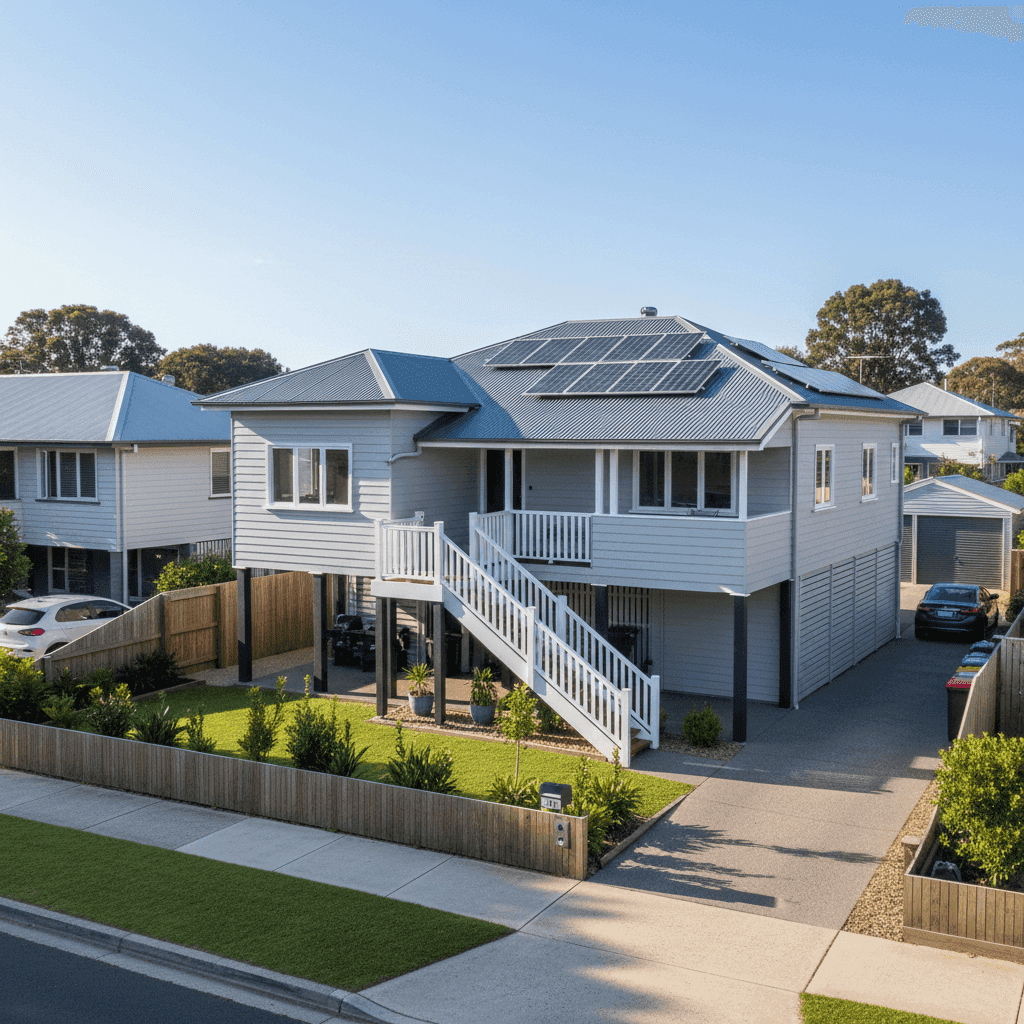
Belmont North is a relaxed lakeside suburb sitting on the western shore of Lake Macquarie, roughly 20 kilometres south of Newcastle. It's a popular spot for families and downsizers alike, with a strong mix of older character homes and more recently renovated properties. If you own a free standing home here, understanding what you should expect to pay for home and contents insurance — and why — can save you a meaningful amount of money each year.
This article breaks down a real insurance quote for a four-bedroom, one-bathroom free standing home in Belmont North (postcode 2280), compares it against local, state, and national benchmarks, and offers practical advice for homeowners in the area.
---
Is This Quote Fair?
The quote in question comes in at $2,727 per year (or $270 per month) for combined home and contents cover, with a building sum insured of $631,000 and contents valued at $109,000. The building excess is $3,000, and the contents excess is $1,000.
Our price rating for this quote is FAIR — Around Average, which is a solid result for a property of this type and age.
To put that in context: the suburb median premium for Belmont North sits at $2,630 per year, meaning this quote is just $97 above the midpoint of what locals are paying. That's a negligible difference, and well within the range you'd expect given the specific features of this property. The suburb average, meanwhile, is considerably higher at $3,852 per year — a figure pulled upward by some of the more expensive quotes in the area (the 75th percentile hits $6,502/yr, suggesting some properties in Belmont North attract significantly elevated premiums).
At $2,727, this quote sits comfortably between the suburb median and average, which is exactly where a well-maintained, mid-complexity property should land.
---
How Belmont North Compares
It's worth zooming out to understand how Belmont North sits relative to broader benchmarks. Here's a snapshot based on data from 65 quotes collected in the suburb:
| Benchmark | Premium |
|---|---|
| Belmont North — 25th percentile | $1,957/yr |
| Belmont North — Median | $2,630/yr |
| This Quote | $2,727/yr |
| Belmont North — Average | $3,852/yr |
| Lake Macquarie LGA — Average | $3,593/yr |
| NSW — Median | $3,410/yr |
| NSW — Average | $3,801/yr |
| National — Median | $2,716/yr |
| National — Average | $2,965/yr |
A few things stand out here. First, Belmont North's average premium ($3,852) is notably higher than both the NSW state average ($3,801) and the national average ($2,965). This suggests the suburb carries some elevated risk factors — likely a combination of proximity to Lake Macquarie (flood and storm considerations), the prevalence of older housing stock, and the wide spread of property values in the area.
Second, the quote analysed here actually tracks closely with the national median ($2,716), which is a reassuring sign. It's performing well not just locally but by Australian standards more broadly.
The wide gap between the 25th percentile ($1,957) and the 75th percentile ($6,502) tells an important story: premiums in Belmont North vary enormously depending on individual property characteristics. That spread underscores why it's so important to compare quotes rather than assume you're getting a fair deal.
---
Property Features That Affect Your Premium
Several characteristics of this particular home have a direct bearing on the premium calculated.
Hardiplank/Hardiflex external walls are a fibre cement cladding product that insurers generally view favourably. It's non-combustible, resistant to rot and termites, and holds up well in coastal environments — all of which contribute to a lower risk profile compared to, say, weatherboard or brick veneer in certain conditions.
Steel/Colorbond roofing is similarly well-regarded. Colorbond is durable, low-maintenance, and performs strongly in high-wind events and hail — a genuine consideration for a Lake Macquarie property exposed to east-coast storms. This is a positive factor for your premium.
Stump foundations (also called stumped or raised foundations) are common in older Australian homes and can introduce some complexity for insurers. While stumps allow for ventilation and can reduce flood inundation risk in some scenarios, they also require ongoing maintenance and can be costly to repair or replace if they deteriorate. The fact that this home is elevated by less than one metre keeps it in a relatively standard risk category.
Timber and laminate flooring is generally straightforward from an insurance perspective, though it's worth noting that timber floors in a stumped home can be vulnerable to moisture if subfloor ventilation isn't maintained.
Solar panels are an increasingly common feature and are typically covered under a standard home insurance policy as a fixed structure. However, it's always worth confirming with your insurer exactly what's covered — particularly for damage to the panels themselves, inverter failure, or liability if a panel falls.
Above-average fittings quality pushes the sum insured higher, as it should. Better-quality kitchens, bathrooms, and fixtures cost more to replace, and underinsuring a home with premium fittings is a common and costly mistake.
Construction year of 1970 means this home is over 50 years old. Older properties can attract higher premiums due to the age of plumbing, wiring, and structural components. That said, a well-maintained 1970s home with modern cladding and roofing — as is the case here — can still achieve competitive premiums.
---
Tips for Homeowners in Belmont North
1. Review your sum insured annually Building costs have risen sharply across Australia in recent years. A sum insured of $631,000 for a 214 sqm home in Belmont North is worth stress-testing against current construction cost estimates. Underinsurance is one of the most common — and avoidable — problems homeowners face after a major claim.
2. Check your flood and storm cover carefully Belmont North's proximity to Lake Macquarie means storm surge, flash flooding, and heavy rainfall events are genuine risks. Not all policies treat "flood" and "storm water" the same way. Read the Product Disclosure Statement (PDS) closely, and ask your insurer specifically about flood cover definitions before you sign.
3. Maintain your stumps and subfloor Insurance won't cover gradual deterioration — it's designed for sudden, unforeseen events. Keeping your stumps in good condition through regular inspections is not only good for the structure of your home, but it also reduces the chance of a claim being disputed on the grounds of lack of maintenance.
4. Compare quotes at renewal time The wide premium spread in Belmont North (from under $2,000 to over $6,500 per year) shows that different insurers price this suburb very differently. Loyalty doesn't always pay — shopping around at renewal can yield significant savings without sacrificing cover quality.
---
Ready to Compare?
Whether you're renewing your policy or insuring a property for the first time, it pays to see what's available. Get a home insurance quote through CoverClub and compare options side by side — it takes just a few minutes and could save you hundreds of dollars a year. You can also explore detailed premium data for Belmont North and the broader NSW market to benchmark any quote you receive.