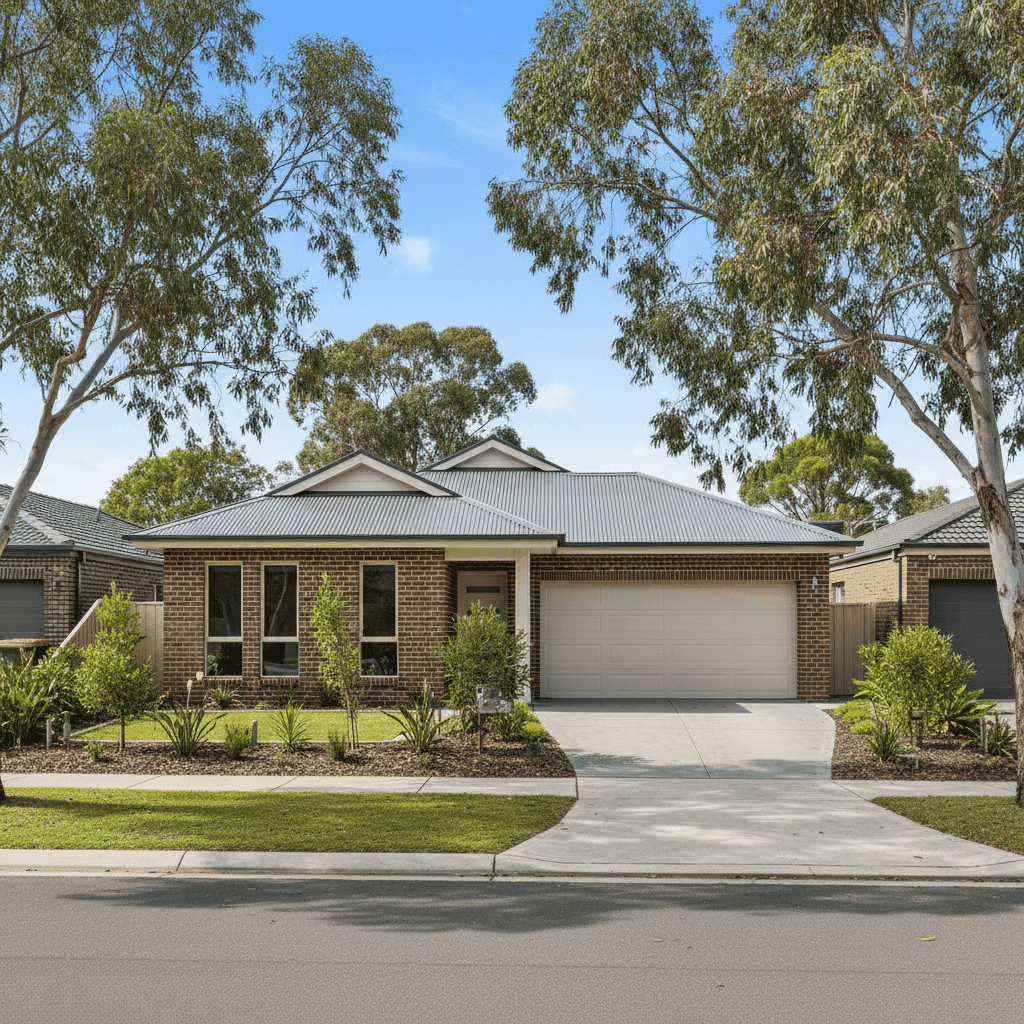
If you own a free standing home in Belmont, NSW 2280, you already know it's one of the more relaxed corners of the Lake Macquarie region — close to the water, well-established, and full of character homes. But relaxed living doesn't always mean relaxed insurance premiums. This article breaks down a real building insurance quote for a three-bedroom, two-bathroom home in the suburb, puts it in context against local and national benchmarks, and offers practical advice for keeping your costs in check.
---
Is This Quote Fair?
The quote in question comes in at $3,861 per year (or $363/month) for building-only cover, with a $1,000 building excess and a sum insured of $751,000. Our analysis rates this as Expensive — above average for the area.
To put that into perspective:
- The suburb average for Belmont is $3,315/yr
- The suburb median sits at $2,587/yr
- The 75th percentile — meaning only 25% of quotes are higher — is $3,812/yr
At $3,861, this quote sits above the 75th percentile, meaning it's more expensive than roughly three-quarters of comparable quotes in the postcode. That's a meaningful signal that there may be room to shop around.
It's worth noting that our Belmont dataset draws from 49 quotes, which gives a reasonably reliable picture of the local market. A quote above the 75th percentile isn't automatically wrong — some properties genuinely attract higher premiums based on their characteristics — but it's absolutely worth questioning.
---
How Belmont Compares
Zooming out beyond the suburb gives useful context. Here's how this quote stacks up at different geographic levels:
| Benchmark | Average | Median |
|---|---|---|
| Belmont (2280) | $3,315/yr | $2,587/yr |
| Lake Macquarie LGA | $3,593/yr | — |
| NSW | $3,801/yr | $3,410/yr |
| National | $2,965/yr | $2,716/yr |
You can explore the full NSW insurance data and national averages on CoverClub.
A few things stand out here. First, the NSW average ($3,801/yr) is actually quite close to this quote — so from a state-wide perspective, $3,861 isn't wildly out of line. New South Wales tends to attract higher premiums than most other states, driven by flood exposure, storm risk, and high rebuilding costs in many regions.
Second, the national median of $2,716/yr is considerably lower than what Belmont homeowners typically pay. This reflects the reality that coastal and near-coastal NSW properties often carry elevated risk profiles compared to, say, inland Queensland or suburban Victoria.
Third, the Lake Macquarie LGA average of $3,593/yr sits between the suburb average and the NSW state average — suggesting that while Belmont is broadly in line with its local government area, this particular quote is on the higher end even within that context.
---
Property Features That Affect Your Premium
Insurance underwriters assess risk at the individual property level, and several features of this home are worth understanding in terms of how they influence pricing.
Brick veneer construction is generally viewed favourably by insurers. It offers solid fire resistance and structural durability compared to weatherboard or fibre cement, which can translate to lower premiums. However, it's not a guarantee of the cheapest quote.
Steel/Colorbond roofing is another positive. Colorbond is highly regarded for its resistance to fire, wind, and corrosion — all relevant risks in coastal NSW. Compared to terracotta tiles (which can crack under hail) or older corrugated iron, a Colorbond roof is typically seen as lower risk.
Stump foundations are worth noting. Homes built on stumps — common in older Australian builds, particularly those constructed around 1960 — can be more susceptible to subsidence, moisture ingress, and termite activity than slab-on-ground construction. Insurers may factor this in, particularly for a home of this age.
Timber and laminate flooring doesn't directly affect building premiums significantly, but it's worth being aware that timber floors can be vulnerable to water damage claims, which may influence your insurer's view of overall risk.
Ducted climate control adds to the insured value of the home. Systems like this are expensive to repair or replace, and their inclusion in the building sum insured of $751,000 is appropriate — but it does contribute to a higher premium.
The 1960 construction year is also relevant. Older homes can carry higher rebuild complexity costs due to non-standard materials, updated compliance requirements, and the need to match period features. This can push rebuilding estimates — and therefore sum insured figures — higher than you might expect for a modest-sized home.
---
Tips for Homeowners in Belmont
1. Get multiple quotes before renewing The spread between the 25th percentile ($1,370/yr) and the 75th percentile ($3,812/yr) in Belmont is enormous. That gap exists because different insurers price risk very differently. If you're sitting above the 75th percentile, there's a strong case for comparing quotes before your next renewal.
2. Review your sum insured carefully At $751,000 for a 160 sqm home, the sum insured works out to roughly $4,694 per square metre. That's on the higher end for a standard-quality home, even accounting for older construction complexity and ducted air conditioning. An independent building cost estimator can help confirm whether your sum insured is appropriately calibrated — over-insuring is a common and costly mistake.
3. Consider your excess strategically A $1,000 excess is fairly standard, but increasing it — say, to $2,000 or $2,500 — can meaningfully reduce your annual premium. If you're financially comfortable absorbing a larger out-of-pocket cost in the event of a minor claim, a higher excess is often good value.
4. Maintain your home proactively For a home built in 1960 on stumps, regular maintenance is both a practical and financial priority. Insurers can decline or reduce claims where damage is attributed to gradual deterioration rather than a sudden insured event. Keeping stumps treated, gutters clear, and the roof in good condition protects both your home and your ability to claim.
---
Ready to Compare?
Whether you're reviewing an existing policy or shopping for the first time, CoverClub makes it straightforward to see how your quote stacks up. Check your suburb's data or get a new quote to find out if you're getting a fair deal on your Belmont home insurance.