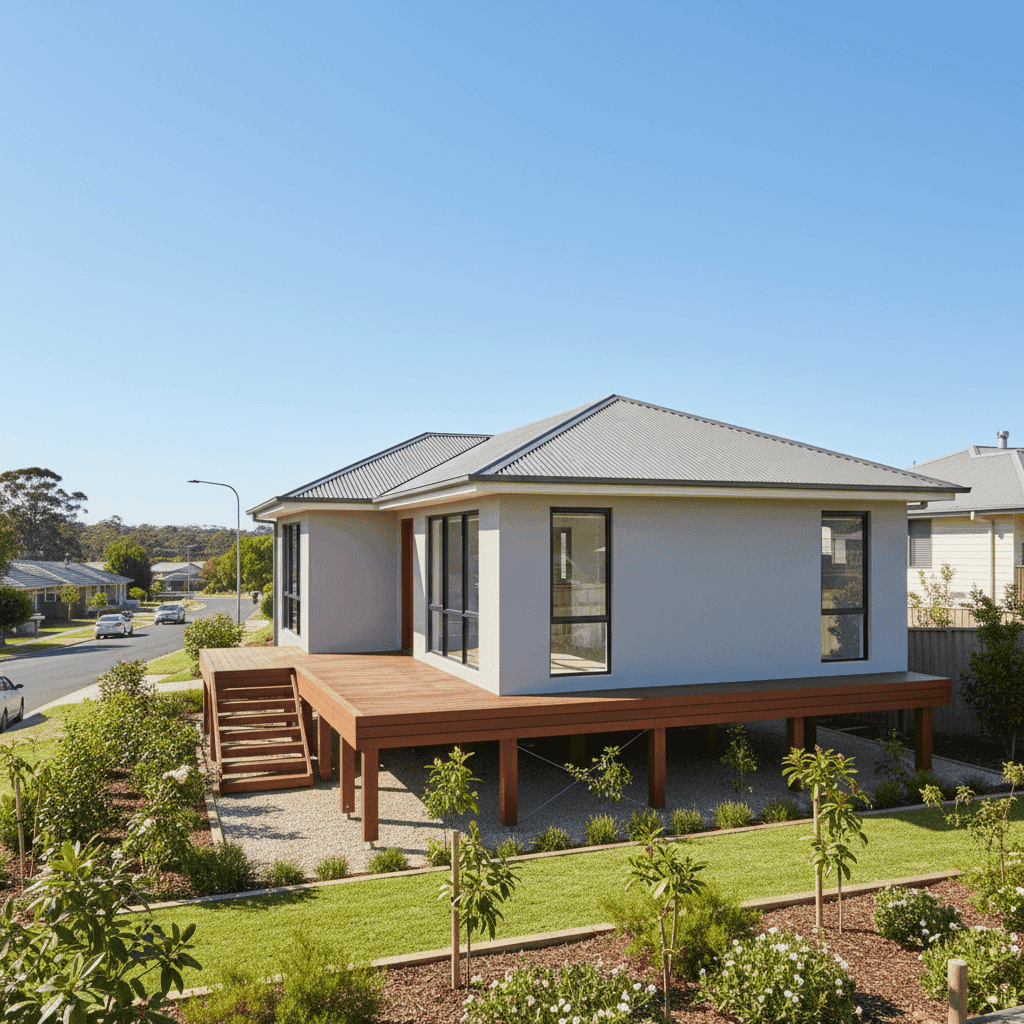
Belmont is a relaxed lakeside suburb on the western shore of Lake Macquarie, roughly 20 kilometres south of Newcastle. It's a popular spot for families and downsizers alike, with a mix of established homes and newer builds sitting close to the water. If you own a free standing home here, understanding what you should be paying for home and contents insurance — and why — can save you a meaningful amount each year.
This article breaks down a real insurance quote for a three-bedroom, two-bathroom free standing home in Belmont, compares it against local, state and national benchmarks, and offers practical tips for getting better value on your cover.
---
Is This Quote Fair?
The quote in question comes in at $2,047 per year (or around $203 per month) for combined home and contents insurance, covering a building sum insured of $200,000 and contents valued at $50,000. The building excess is $3,000 and the contents excess is $500.
Our price rating for this quote is FAIR — Around Average.
That rating reflects a nuanced picture. The premium sits comfortably below the suburb average of $3,315 per year and also below the suburb median of $2,587 per year, which is encouraging. It's also well under the NSW state average of $3,801/yr and the national average of $2,965/yr. On those measures, this quote looks quite competitive.
However, it's worth noting that the suburb's 25th percentile sits at $1,370 per year — meaning roughly a quarter of comparable quotes in Belmont come in below that figure. So while $2,047 is by no means excessive, there is room to explore whether a lower premium is achievable with a different insurer or a slightly adjusted level of cover.
The higher building excess of $3,000 is also worth factoring in. A larger excess typically reduces the annual premium, so part of what makes this quote look affordable is that you'd be shouldering more out-of-pocket cost if you needed to make a building claim. That trade-off suits some homeowners — particularly those with emergency savings — but it's not the right fit for everyone.
---
How Belmont Compares
To put this quote in proper context, here's how Belmont's insurance costs sit relative to broader benchmarks:
| Benchmark | Average Premium | Median Premium |
|---|---|---|
| Belmont (NSW 2280) | $3,315/yr | $2,587/yr |
| Lake Macquarie LGA | $3,593/yr | — |
| NSW State | $3,801/yr | $3,410/yr |
| National | $2,965/yr | $2,716/yr |
(Based on a sample of 49 quotes for the Belmont suburb.)
Belmont's average premium of $3,315 is notably lower than both the Lake Macquarie LGA average ($3,593) and the NSW state average ($3,801). This suggests that, as a suburb, Belmont is relatively affordable to insure compared to many other parts of New South Wales — though it still tracks above the national average.
You can explore the full dataset for this postcode at the Belmont suburb stats page, or compare it against all NSW suburbs.
---
Property Features That Affect Your Premium
Every home is different, and insurers weigh up a range of property characteristics when calculating your premium. Here's how the key features of this particular home are likely influencing the price:
Hebel external walls Hebel (autoclaved aerated concrete) is generally viewed favourably by insurers. It's non-combustible, resistant to termites, and offers good thermal and acoustic performance. Compared to standard brick or timber-clad homes, Hebel walls can contribute to a more competitive premium.
Steel/Colorbond roof A Colorbond steel roof is one of the most insurer-friendly roofing materials available in Australia. It's durable, fire-resistant, and holds up well in storms and heavy rain — all of which reduce the likelihood of a claim. This is a genuine asset when it comes to keeping premiums down.
Stump foundation Homes on stumps (also called pier or post foundations) can be a mixed bag for insurers. On the positive side, they allow for good underfloor ventilation and are common in older Australian builds. On the other hand, they can be more susceptible to movement and storm damage than slab foundations. Insurers may price this in depending on their risk models.
Construction year: 2010 A home built in 2010 benefits from relatively modern building standards, including improved cyclone and bushfire construction codes introduced in the early 2000s. This generally works in the homeowner's favour at premium time.
Carpet flooring and standard fittings Carpet is less expensive to replace than hardwood or tile, and standard-quality fittings mean the rebuild cost estimates are more straightforward. Both factors tend to keep the sum insured — and therefore the premium — at a manageable level.
No pool, solar panels or ducted climate control The absence of these features simplifies the risk profile. Pools introduce liability considerations, solar panels add replacement cost complexity, and ducted systems can be expensive to repair. Not having them keeps things clean from an underwriting perspective.
---
Tips for Homeowners in Belmont
1. Check whether your building sum insured is adequate A building sum insured of $200,000 for a 169 sqm home in 2026 may be on the lower end, depending on local construction costs. Use a building cost calculator — many insurers provide one — to verify this figure before renewing. Being underinsured can be just as costly as overpaying on your premium.
2. Consider whether the $3,000 building excess suits your situation A higher excess lowers your premium, but it also means you'll pay more out of pocket for any building claim. If you don't have that buffer readily available, it may be worth requesting a quote with a lower excess and comparing the difference in annual cost.
3. Shop around at renewal time Insurance loyalty rarely pays. Insurers often offer their best rates to new customers, and premiums can shift significantly from year to year. Even if you're happy with your current insurer, getting a comparison quote before you renew is a smart habit — especially given the spread between the 25th percentile ($1,370) and the 75th percentile ($3,812) in Belmont suggests significant price variation in this market.
4. Review your contents value annually $50,000 in contents cover is a reasonable starting point, but it's easy for this figure to drift out of date as you accumulate furniture, electronics, appliances and personal belongings. An underestimate here can leave you significantly out of pocket after a major claim.
---
Compare Your Options at CoverClub
Whether you're reviewing an existing policy or shopping for cover for the first time, CoverClub makes it straightforward to see what's available in your area. Get a home insurance quote today and find out whether you're paying a fair price — or whether there's a better deal waiting for you.