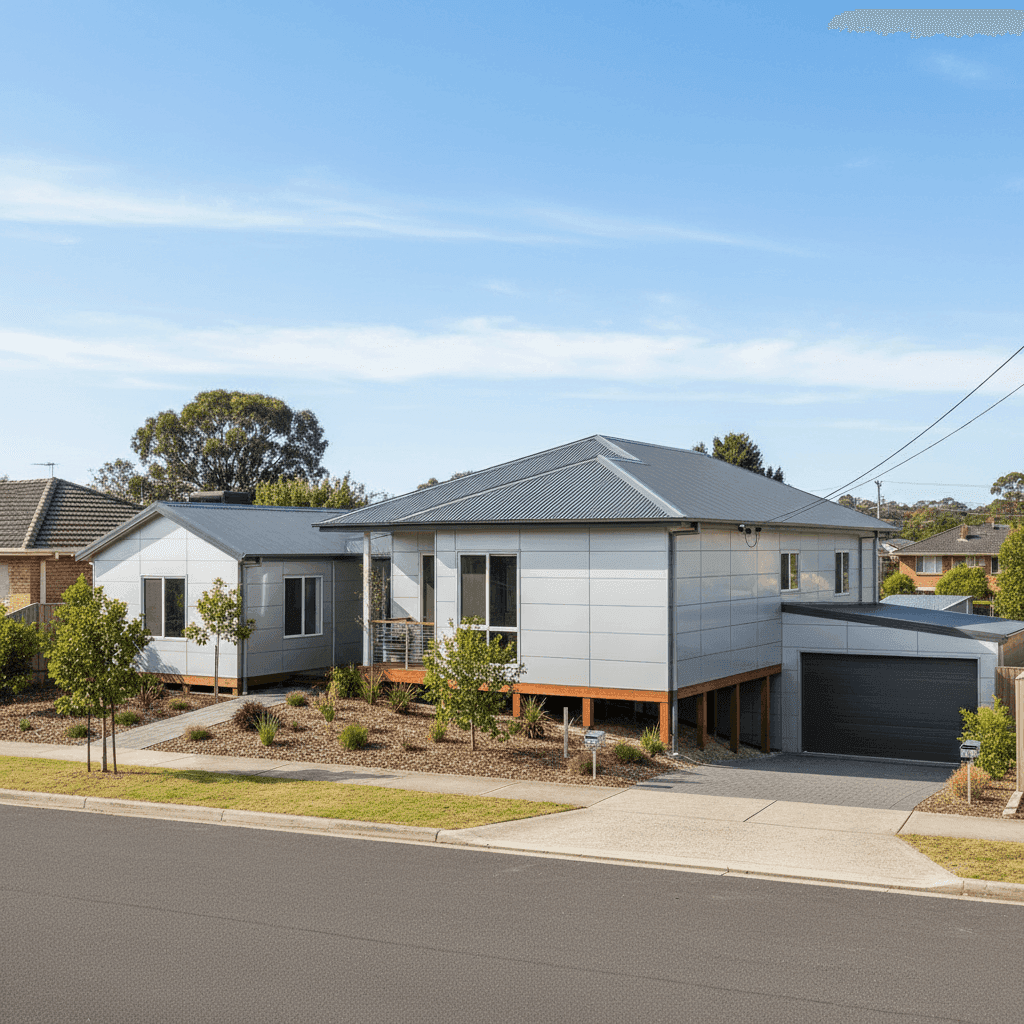
If you own a free standing home in Belmont, NSW 2280, you're probably curious about whether you're paying a fair price for home insurance — or leaving money on the table. This article breaks down a real home and contents insurance quote for a four-bedroom property in Belmont, compares it against local, state, and national benchmarks, and offers practical tips to help you get the best value cover.
---
Is This Quote Fair?
The annual premium for this quote comes in at $2,236 per year (or $219/month), covering both building (sum insured: $844,000) and contents ($16,000). The building excess is $1,000 and the contents excess is $500.
Based on our pricing data, this quote is rated CHEAP — below average for the area. That's genuinely good news. With 26 quotes sampled across Belmont, the suburb average sits at $3,525/yr and the median at $3,571/yr. This quote comes in well below the 25th percentile of $2,487/yr, meaning it's cheaper than at least 75% of comparable quotes in the suburb.
In other words, if you locked in a policy at this price, you'd be getting a competitive deal relative to most Belmont homeowners shopping for similar cover.
---
How Belmont Compares
To put this quote into proper context, it helps to zoom out and look at the broader insurance landscape.
| Benchmark | Average Premium | Median Premium |
|---|---|---|
| Belmont (NSW 2280) | $3,525/yr | $3,571/yr |
| NSW (State) | $9,528/yr | $3,770/yr |
| National | $5,347/yr | $2,764/yr |
| Lake Macquarie LGA | $11,064/yr | — |
A few things stand out here. The NSW state average of $9,528/yr is dramatically higher than the state median of $3,770/yr — a sign that a relatively small number of very high-risk or high-value properties are pulling the average upward significantly. Similarly, the national average of $5,347/yr is nearly double the national median of $2,764/yr.
The Lake Macquarie LGA average of $11,064/yr looks alarming at first glance, but again, averages can be skewed by outliers — particularly high-value waterfront homes or properties in flood-prone pockets of the region.
For a property like this one in Belmont, the relevant comparison is the suburb median of $3,571/yr. At $2,236/yr, this quote is $1,335 cheaper per year than the typical Belmont homeowner is paying — a meaningful saving over the life of a policy.
---
Property Features That Affect Your Premium
Several characteristics of this property will have influenced the quote, both positively and negatively. Here's what's worth knowing:
Construction Era & Materials
Built in 1953, this home is over 70 years old. Older homes can attract higher premiums due to ageing wiring, plumbing, and structural elements that may be more costly to repair or replace. However, aluminium external walls are generally viewed favourably by insurers — they're durable, low-maintenance, and resistant to rot and termites. The steel/Colorbond roof is similarly well-regarded; it's fire-resistant, long-lasting, and widely used across coastal NSW.
Stump Foundation
The home sits on stumps, which is common for older Australian properties, particularly in coastal and lakeside areas like Belmont. Stump foundations can be a risk factor if the stumps are timber and showing signs of deterioration, but they also allow for good underfloor ventilation and easier access for repairs. Insurers may factor this into their assessment.
Ducted Climate Control
The presence of ducted climate control adds to the replacement cost of the home, which is reflected in the $844,000 building sum insured. Ducted systems are expensive to install and replace, so it's important to ensure your sum insured accounts for this.
Granny Flat
This property includes a granny flat, which adds both value and complexity to the insurance picture. A granny flat increases the total floor area and replacement cost, and it's essential that your policy explicitly covers the secondary dwelling — not all standard home insurance policies do this automatically. Always confirm with your insurer that the granny flat is included in your building cover.
Carpet Flooring & Standard Fittings
Carpet throughout and standard-quality fittings suggest a mid-range replacement cost, which likely keeps the contents valuation and building sum insured from inflating unnecessarily. Premium fittings — think stone benchtops, custom cabinetry, or imported tiles — can significantly increase rebuild costs.
No Pool, No Solar
The absence of a pool and solar panels removes two common sources of premium uplift. Pools add liability risk and maintenance complexity; solar panels, while increasingly common, can add to rebuild costs and create complications around roof integrity assessments.
---
Tips for Homeowners in Belmont
Whether you're renewing your policy or shopping around for the first time, here are four practical steps to make sure you're getting the right cover at the right price.
- Verify your granny flat is covered. Don't assume your standard building policy automatically includes the secondary dwelling. Ask your insurer directly, and get confirmation in writing. Some policies treat a granny flat as a separate structure requiring additional cover.
- Review your building sum insured regularly. Construction costs have risen sharply in recent years across NSW. A sum insured set three or four years ago may no longer reflect the actual cost of rebuilding your home — including the granny flat, ducted climate system, and any improvements you've made. Use a building cost calculator or speak to a quantity surveyor if you're unsure.
- Check your stump foundations. If your stumps are original timber from 1953, it's worth having them inspected. Some insurers may ask about the condition of your foundations, and undisclosed deterioration could affect a claim. Replacing ageing stumps before they become a problem can also reduce your risk profile.
- Compare quotes before you renew. Insurance loyalty rarely pays off in Australia. Insurers frequently offer better rates to new customers than to long-standing ones. Even if your current premium feels reasonable, running a comparison at renewal time takes minutes and could save you hundreds of dollars a year.
---
Compare Home Insurance Quotes in Belmont
Finding the right home insurance policy in Belmont doesn't have to be complicated. CoverClub makes it easy to compare quotes from multiple insurers side by side, so you can see exactly what you're getting — and what you're paying for.
Get a home insurance quote for your Belmont property today and find out whether your current cover is as competitive as it should be. You can also explore detailed insurance pricing data for Belmont NSW 2280 to see how your premium stacks up against your neighbours.