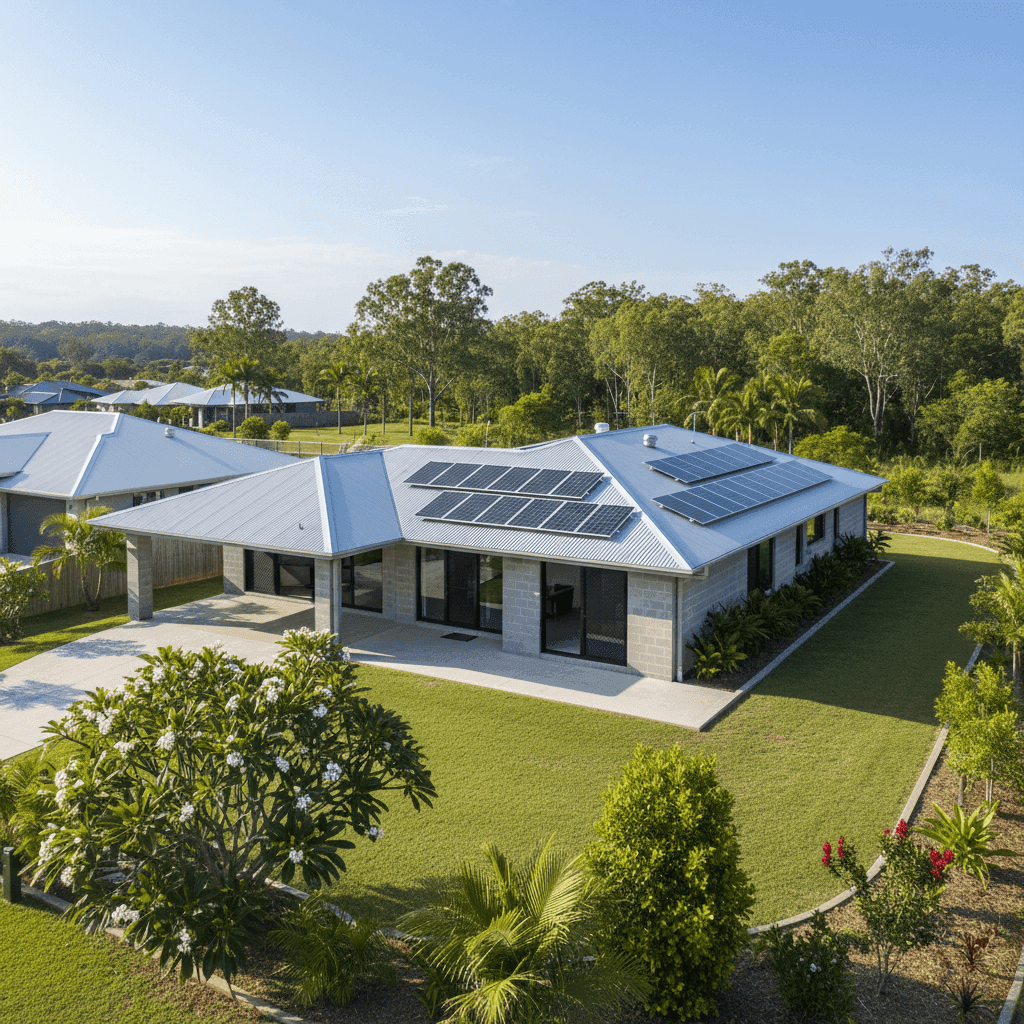
If you own a free standing home in Bemerside, QLD 4850, you already know that insuring a property in Far North Queensland comes with its own set of considerations — cyclone exposure chief among them. This article takes a close look at a real home and contents insurance quote for a four-bedroom, concrete-walled home in Bemerside, compares it against local, state and national benchmarks, and offers practical tips to help you get the best possible cover at a fair price.
---
Is This Quote Fair?
The annual premium for this property came in at $3,794 per year (or around $357 per month), covering both building ($350,000 sum insured) and contents ($80,000). Based on our pricing data, this quote is rated CHEAP — below average for the area.
That's genuinely good news. Bemerside sits in a cyclone risk zone, which typically pushes premiums well above what you'd pay in southern states. The fact that this quote lands below the suburb average, the state average, and even the national average is a strong result — and worth understanding in context before you simply accept it or shop elsewhere without a clear benchmark in mind.
A $1,000 excess applies to both the building and contents components, which is a standard figure. Opting for a higher excess is one lever you can pull to reduce premiums further, though it's worth making sure you could comfortably cover that out-of-pocket cost in the event of a claim.
---
How Bemerside Compares
To put this quote in perspective, here's how it stacks up against the broader market:
| Benchmark | Premium |
|---|---|
| This quote | $3,794/yr |
| Bemerside suburb average | $7,163/yr |
| Bemerside suburb median | $4,311/yr |
| Bemerside 25th percentile | $4,165/yr |
| QLD state average | $9,129/yr |
| QLD state median | $3,903/yr |
| National average | $5,347/yr |
| National median | $2,764/yr |
A few things stand out here. First, the Bemerside suburb average of $7,163 is nearly double this quote — a significant gap that underscores just how much premiums can vary between properties in the same postcode. The wide spread between the 25th percentile ($4,165) and 75th percentile ($11,615) tells a story of high variability, likely driven by differences in construction type, sum insured, and individual insurer risk appetites for cyclone-prone areas.
At the Queensland state level, the average premium of $9,129 reflects the outsized impact of cyclone and flood exposure across the state. This quote sits well below that figure. Compared to national benchmarks, the $3,794 premium is above the national median of $2,764 — which is expected given the elevated natural hazard risk in this part of Queensland — but comfortably below the national average of $5,347.
In short: this is a competitively priced quote for a cyclone-risk property in regional Queensland.
---
Property Features That Affect Your Premium
Several characteristics of this property are likely influencing the premium, both positively and negatively.
Construction type — Concrete walls, Colorbond roof Concrete external walls are generally viewed favourably by insurers. They offer strong resistance to wind, fire, and impact — all relevant in a cyclone-prone region. A steel Colorbond roof is similarly durable and widely used in cyclone-rated construction across Queensland. Together, these materials may be contributing to a lower-than-average premium compared to timber-framed or fibro homes in the same area.
Age of construction — Built in 1934 This is one of the more nuanced factors. A home built in 1934 predates modern cyclone-resistant building codes, which were significantly tightened in Queensland following Cyclone Tracy in 1974 and again after later events. Insurers may apply additional scrutiny to older homes, particularly around roof-to-wall connections and overall structural integrity. That said, if the property has been well maintained or retrofitted, this risk can be partially mitigated.
Cyclone risk area Bemerside falls within a designated cyclone risk zone. This is one of the primary drivers of elevated premiums across the region. Insurers price this risk into their calculations, and it's why the suburb average is so much higher than the national median. It's also why a quote below the suburb median is worth holding onto.
Solar panels Solar panels are an increasingly common feature on Queensland homes, but they do add complexity to an insurance policy. Panels need to be covered under the building sum insured, and damage from hail, wind, or falling debris is a real possibility in this climate. It's worth confirming with your insurer that your solar system is explicitly covered and that the $350,000 building sum insured accounts for replacement costs including the panels.
Ducted climate control Ducted air conditioning is a significant fixed asset and should be included in your building sum insured. In Queensland's climate, it's also a high-use system, meaning wear and potential for storm-related damage is real. Again, verify this is captured in your policy.
Slab foundation, 235 sqm floor area A concrete slab foundation is generally low-risk from an insurer's perspective. Combined with the 235 sqm building size, the $350,000 sum insured works out to roughly $1,489 per sqm — a reasonable figure for a standard-quality finish, though reconstruction costs in regional Queensland can vary significantly based on labour availability and material transport costs.
---
Tips for Homeowners in Bemerside
1. Review your building sum insured carefully Underinsurance is one of the most common problems uncovered after a major claim. Make sure your $350,000 sum insured reflects the true cost of rebuilding your home from scratch — including demolition, debris removal, and any cyclone-rated construction requirements. Factor in the solar panels and ducted air conditioning as part of this calculation. Use a building cost calculator or ask a local builder for a rough estimate.
2. Consider a cyclone-specific policy review Not all home insurance policies treat cyclone damage the same way. Some policies include a separate cyclone excess (which can be significantly higher than your standard excess), while others may have specific exclusions around storm surge or gradual water ingress. Read the Product Disclosure Statement carefully and ask your insurer directly about cyclone-related terms.
3. Explore retrofitting options for your older home Given the 1934 construction date, it may be worth investigating whether your roof-to-wall connections meet current cyclone-resistance standards. The Queensland Government and some local councils have offered rebate programmes for cyclone-proofing upgrades in the past. Structural improvements could not only protect your home but may also make you eligible for lower premiums with some insurers.
4. Compare quotes at renewal — don't auto-renew Even with a competitive quote, the insurance market changes every year. Insurers adjust their risk models, reinsurance costs fluctuate, and new products enter the market. Make a habit of comparing at least two or three quotes before renewing. The spread in Bemerside's premium data (from $4,165 to $11,615) shows just how much variation exists — you could easily save hundreds by shopping around.
---
Compare Home Insurance Quotes in Bemerside
Whether you're reviewing an existing policy or shopping for the first time, comparing quotes is the single most effective way to make sure you're not overpaying. CoverClub makes it easy to see how your premium stacks up and find competitive options tailored to your property. Get a quote today and see what the market is offering for homes in Bemerside and across Queensland.