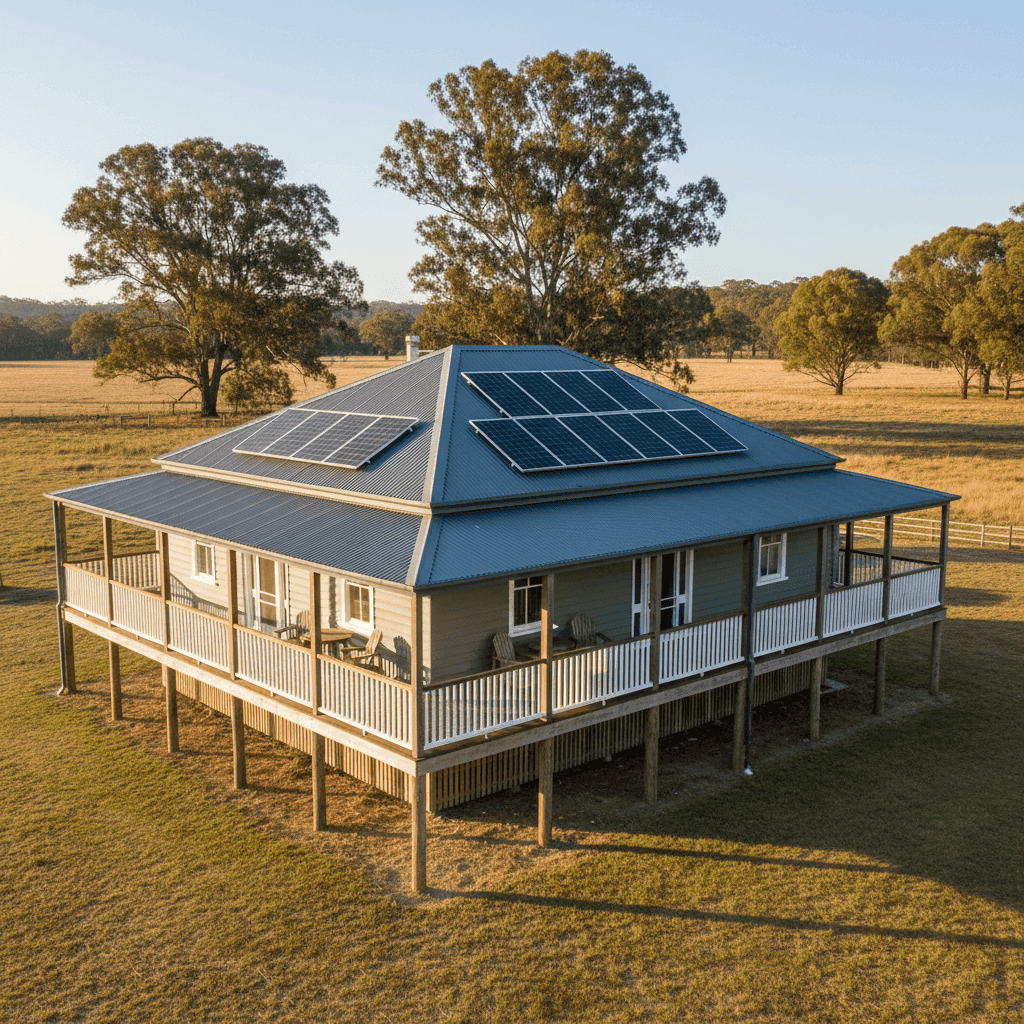
If you own a free standing home in Ben Bullen, NSW 2790, you're likely no stranger to the unique challenges — and charms — of rural living in the Central Tablelands. Nestled within the Blue Mountains Local Government Area, Ben Bullen is a quiet locality where properties tend to be larger, older, and built with character materials like weatherboard timber. All of those factors play a meaningful role when insurers calculate your premium.
This article breaks down a real home and contents insurance quote for a six-bedroom, weatherboard home in Ben Bullen, compares it against local, state, and national benchmarks, and offers practical tips to help you get the best value cover.
---
Is This Quote Fair?
The annual premium for this property came in at $5,775 per year (or $604/month), covering a building sum insured of $1,381,000 and $68,000 in contents. Our pricing engine has rated this quote as CHEAP — below average for this type of property and location.
That's a meaningful finding. A six-bedroom, 370 sqm home on stumps with weatherboard walls is the kind of property that can attract higher premiums due to its size, construction type, and age. The fact that this quote sits below average suggests the insurer has priced the risk competitively — and that the homeowner may be getting genuine value here.
Of course, "cheap" doesn't mean underinsured. With a building sum insured of $1,381,000, the cover level appears proportionate to a large, established rural property. The $3,000 building excess is on the higher side, which typically helps reduce the annual premium, while the $500 contents excess is fairly standard.
---
How Ben Bullen Compares
Understanding where your premium sits relative to broader benchmarks helps you judge whether you're being treated fairly by your insurer. Here's how this quote stacks up:
| Benchmark | Annual Premium |
|---|---|
| This Quote | $5,775 |
| LGA (Blue Mountains) Average | $4,220 |
| NSW State Average | $9,528 |
| NSW State Median | $3,770 |
| National Average | $5,347 |
| National Median | $2,764 |
A few things stand out here. The NSW state average of $9,528 is remarkably high — a reflection of the diverse and often high-risk properties spread across the state, from flood-prone river towns to bushfire-exposed rural areas. Against that benchmark, this quote looks very competitive.
The NSW state insurance data shows just how wide the spread can be across the state, and Ben Bullen's position within the Blue Mountains LGA adds context: the LGA average of $4,220 is actually lower than this quote, which is expected given the larger-than-average size and higher sum insured of this particular property.
Compared to the national average of $5,347, this quote is only slightly above — again, reasonable for a 370 sqm home with a $1.38 million building sum insured.
You can explore more localised pricing data on the Ben Bullen suburb stats page.
---
Property Features That Affect Your Premium
Every property tells a story, and insurers read that story carefully. Here are the key features of this home and how they likely influence the premium:
Weatherboard Timber Walls
Weatherboard is one of the most common construction types in regional NSW, but it carries a higher fire and storm risk than brick veneer or full brick. Timber is combustible, susceptible to rot, and can be more expensive to repair or replace. Insurers typically apply a loading for weatherboard homes, particularly in areas with bushfire exposure.
Steel/Colorbond Roof
On the flip side, a Colorbond steel roof is viewed favourably by most insurers. It's durable, low-maintenance, and performs well in storms and high winds. This likely offsets some of the risk associated with the timber walls.
Elevated on Stumps (At Least 1 Metre)
Being elevated by at least one metre on stumps is a double-edged sword. It can reduce flood risk by keeping the floor level above ground water, but it also exposes the subfloor to wind damage and can increase the cost of repairs. For a rural property like this, the elevation may actually work in the homeowner's favour from a flood-risk perspective.
Age of Construction (1985)
A home built in 1985 is now 40 years old. Older homes can attract higher premiums due to ageing electrical wiring, plumbing, and structural components — all of which increase the likelihood of a claim. That said, a well-maintained 1985 home is far less risky than a poorly maintained newer one.
Solar Panels
Solar panels are listed on this property, which adds modest replacement value to the building sum insured. Most standard home insurance policies cover solar panels as part of the building, so it's important to ensure they're factored into your sum insured — which appears to be the case here.
Size: 370 sqm
At 370 sqm, this is a large home by any measure. Rebuild costs scale with size, which is reflected in the $1,381,000 sum insured. Getting the sum insured right is critical — underinsuring a large home can leave you significantly out of pocket after a major loss.
---
Tips for Homeowners in Ben Bullen
1. Review Your Sum Insured Annually
Construction costs in regional NSW have risen sharply in recent years. A sum insured that was accurate two years ago may no longer reflect the true cost to rebuild. Use a building cost calculator or speak with a quantity surveyor to validate your figure each year.
2. Maintain Your Weatherboard Cladding
Insurers may reduce or deny claims if a loss is linked to poor maintenance. Regularly inspect your weatherboard for rot, warping, or paint failure, and address issues promptly. Well-maintained timber cladding not only protects your home but demonstrates to your insurer that you're a lower-risk policyholder.
3. Consider Your Excess Strategy
This policy carries a $3,000 building excess. While a higher excess reduces your premium, make sure it's an amount you can genuinely afford to pay at short notice. If a storm causes $4,000 worth of damage, you'll only receive $1,000 — so the excess level needs to match your financial buffer.
4. Don't Overlook Bushfire Preparedness
Ben Bullen and the surrounding Central Tablelands region can be exposed to bushfire risk during dry summers. Maintaining a defendable space around your home, clearing gutters, and fitting ember guards to vents are all steps that reduce risk — and some insurers reward proactive fire preparation with better premiums or terms.
---
Compare Your Options with CoverClub
Whether you're renewing your current policy or shopping around for the first time, it pays to compare. CoverClub makes it easy to see how your home insurance quote stacks up against real market data — so you're never left guessing whether you're getting a fair deal.
Get a home insurance quote today and find out what Ben Bullen homeowners are actually paying for cover like yours.