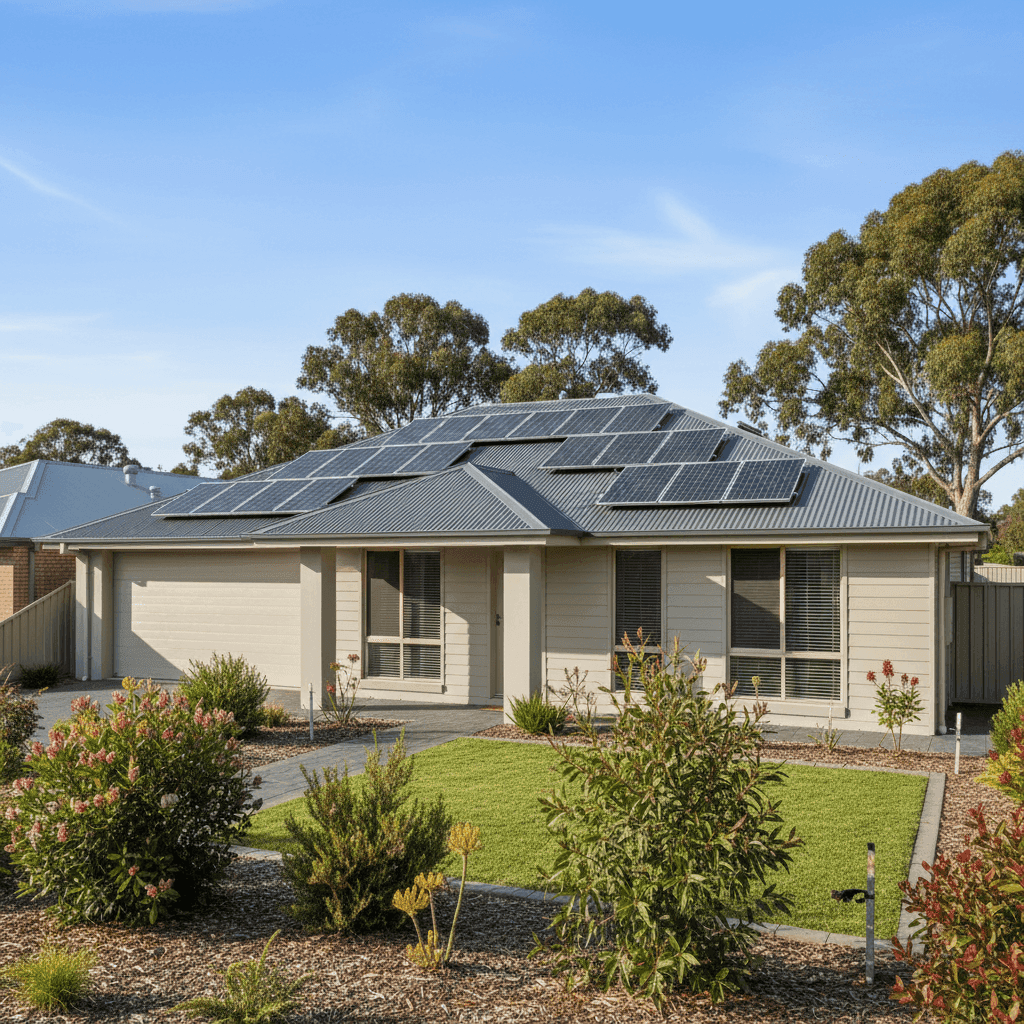
If you own a free standing home in Benalla, VIC 3672, you've probably wondered whether you're paying too much — or too little — for home and contents insurance. Benalla is a regional Victorian town with a strong community feel, but like anywhere in Australia, the cost of protecting your home can vary significantly depending on your property's characteristics and the insurer you choose. In this article, we break down a real home and contents insurance quote for a two-bedroom property in Benalla and put it into context using suburb, state, and national data.
---
Is This Quote Fair?
The quote in question comes in at $2,182 per year (or around $209 per month) for a combined home and contents policy. It covers a building sum insured of $278,000 and contents valued at $30,000, with a $2,000 excess applying to both building and contents claims.
Our price rating for this quote is Fair — Around Average, and the data backs that up.
Looking at Benalla suburb insurance statistics, the median premium across 65 quotes sits at $2,777 per year. This quote falls comfortably below that median, which is an encouraging sign. It also sits just above the 25th percentile of $2,027, meaning roughly three-quarters of comparable quotes in the area are more expensive. That's a reasonably competitive result.
It's worth noting the suburb average of $15,726 is dramatically higher than the median — a clear sign that a small number of very high-cost quotes are pulling the average upward. The median is a far more reliable benchmark for typical Benalla homeowners, and against that figure, this quote performs well.
---
How Benalla Compares
To get a fuller picture, it helps to zoom out and compare Benalla against broader benchmarks.
| Benchmark | Premium |
|---|---|
| This Quote | $2,182/yr |
| Benalla Suburb Median | $2,777/yr |
| Benalla LGA Average | $2,943/yr |
| VIC State Median | $2,718/yr |
| VIC State Average | $3,000/yr |
| National Median | $2,764/yr |
| National Average | $5,347/yr |
Across the board, this quote sits below every median and average benchmark — whether you're looking at the Victorian state level or the national picture. Benalla's LGA average of $2,943 and the VIC state average of $3,000 are both notably higher than what's been quoted here.
Nationally, home insurance costs are heavily skewed by high-risk areas in Queensland and Western Australia — cyclone-prone regions, flood zones, and bushfire corridors all push the national average up to $5,347. The national median of $2,764 is a more grounded comparison point, and again, this quote comes in below it.
For a regional Victorian property, a premium of $2,182 represents solid value — particularly given the features of this home.
---
Property Features That Affect Your Premium
Several characteristics of this property influence where the premium lands. Here's how each one plays a role:
Hardiplank/Hardiflex external walls are generally viewed favourably by insurers. This fibre cement cladding is non-combustible, resistant to rot and termites, and holds up well in variable weather conditions — all of which reduce risk from an underwriting perspective.
Steel/Colorbond roofing is another positive. Colorbond is durable, fire-resistant, and low-maintenance, making it one of the more insurer-friendly roofing materials available in Australia. It's far less prone to storm damage than older tile or corrugated iron roofs.
Stump foundations are common in older regional Victorian homes — this property was built in 1988 — and while they're generally accepted by insurers, they can occasionally attract scrutiny around subsidence or pest risk. Keeping stumps in good condition is important for both structural integrity and insurability.
Solar panels are listed as a feature of this property. Most home insurance policies cover solar panels as part of the building structure, but it's worth confirming this with your insurer and ensuring your sum insured accounts for the replacement cost of the system.
Ducted climate control adds value to the property and is typically covered under building insurance. However, as with solar, it's worth checking whether your sum insured adequately reflects the cost of replacing this system if needed.
At 105 square metres, this is a modest-sized home, which generally keeps rebuild costs — and therefore premiums — lower than larger properties. The standard fittings quality also means there are no high-end finishes inflating the replacement value.
No pool and no cyclone risk area designation both help keep the premium down further.
---
Tips for Homeowners in Benalla
1. Review your sum insured regularly Building costs have risen sharply across regional Victoria in recent years. A sum insured of $278,000 for a 105 sqm home may be adequate today, but it's worth checking against current construction costs annually — underinsurance is one of the most common and costly mistakes homeowners make.
2. Confirm solar panel coverage Solar systems can cost $5,000–$15,000 or more to replace. Ask your insurer explicitly whether your panels are covered under the building policy, whether they're covered for accidental damage, and whether the inverter is included.
3. Maintain your stump foundations Stumps that are in poor condition — whether from rot, termite damage, or subsidence — can affect both the structural safety of your home and your ability to make a successful claim. An annual inspection by a qualified tradesperson is a worthwhile investment.
4. Compare quotes before renewing Even if your current premium seems reasonable, the home insurance market in Benalla can vary widely between providers. Our data shows quotes ranging from around $2,027 (25th percentile) to $3,612 (75th percentile) for comparable properties — a difference of over $1,500 per year. Shopping around at renewal time costs nothing and could save you significantly.
---
Ready to Compare?
Whether you're renewing an existing policy or insuring a home for the first time, it pays to see what the market has to offer. CoverClub makes it easy to compare home and contents insurance quotes tailored to your property in Benalla. Get a quote today and find out if you could be paying less — or getting more cover for what you already pay.