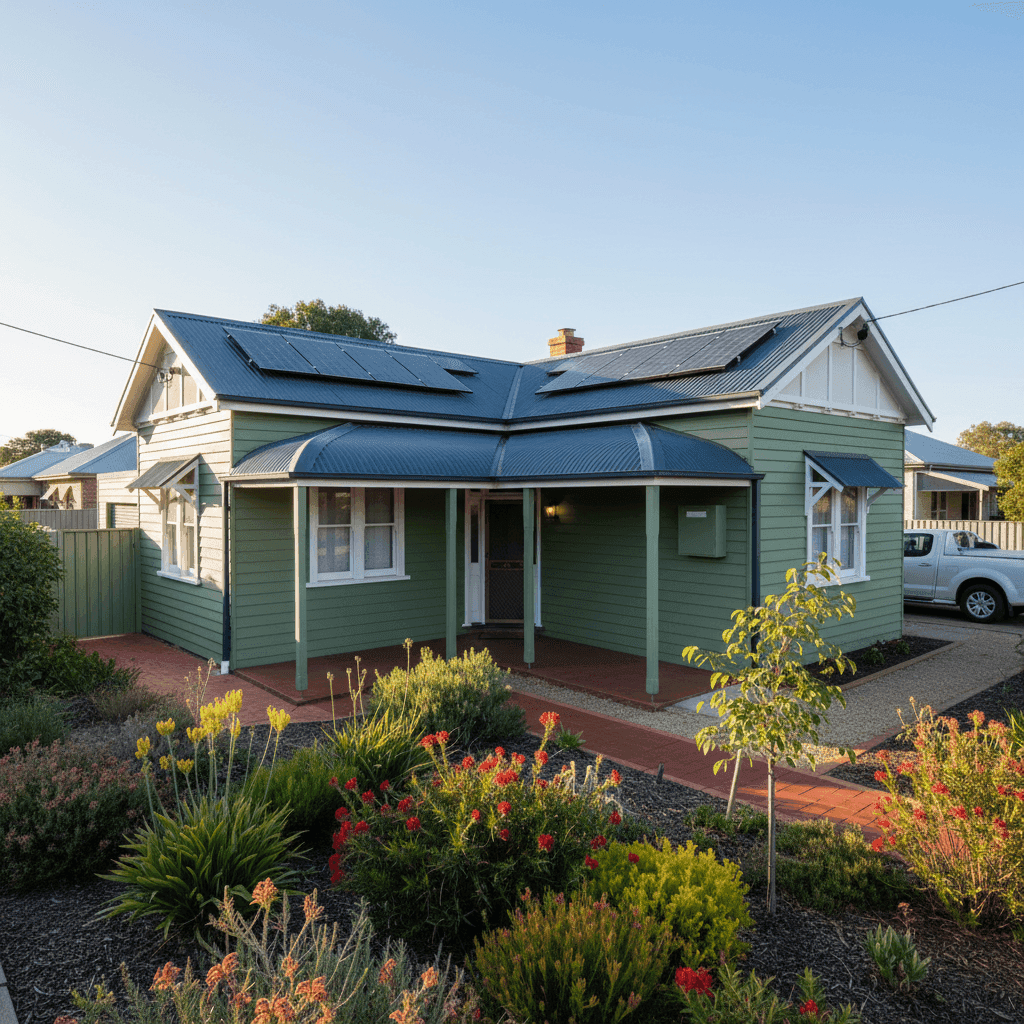
If you own a free standing home in Benalla, VIC 3672, you've probably wondered whether you're paying a fair price for home and contents insurance — or whether your insurer is quietly charging you more than they should. In this article, we break down a real insurance quote for a 3-bedroom, 2-bathroom weatherboard home in Benalla, comparing it against local, state, and national benchmarks to help you understand exactly where your premium sits.
---
Is This Quote Fair?
The quote in question comes in at $4,239 per year (or $399/month) for combined home and contents cover, with a building sum insured of $698,000 and contents valued at $78,000. Both the building and contents excess are set at $1,000.
Our price rating for this quote is Expensive (Above Average).
To put that in context: the suburb median premium in Benalla is $2,777/yr, meaning this quote is roughly 53% above the midpoint of what other Benalla homeowners are paying. It also sits above the suburb's 75th percentile of $3,612/yr — meaning it's more expensive than at least three-quarters of comparable quotes in the area.
That said, it's worth noting the suburb average is a skewed $15,726/yr, which suggests a small number of very high-risk or high-value properties are pulling the mean upward significantly. The median is a far more reliable indicator of typical costs, and against that benchmark, this quote is on the pricier side.
The relatively high building sum insured of $698,000 for a 130 sqm home is likely one of the primary drivers of the elevated premium. Reconstruction costs in regional Victoria can be significant, especially for older homes with character features, but it's worth reviewing whether this figure accurately reflects your home's rebuild value rather than its market value.
---
How Benalla Compares
Understanding your premium means looking beyond your street. Here's how Benalla stacks up against broader benchmarks:
| Benchmark | Annual Premium |
|---|---|
| This Quote | $4,239 |
| Benalla Suburb Median | $2,777 |
| Benalla Suburb 75th Percentile | $3,612 |
| Benalla LGA Average | $2,943 |
| VIC State Median | $2,718 |
| VIC State Average | $3,000 |
| National Median | $2,764 |
| National Average | $5,347 |
(Based on [65 quotes collected for Benalla](https://coverclub.com.au/stats/VIC/3672/benalla))
A few things stand out here. First, Benalla's median premium of $2,777 is actually very close to both the VIC state median of $2,718 and the national median of $2,764 — suggesting that, as a suburb, Benalla doesn't carry unusually high baseline risk. This makes the above-average quote even more worth scrutinising.
Second, the national average of $5,347 is substantially higher than this quote, but that figure is heavily influenced by high-risk coastal and cyclone-prone areas in Queensland and Western Australia. For a regional Victorian property, the median is the more meaningful comparison point.
---
Property Features That Affect Your Premium
Several characteristics of this property play a meaningful role in how insurers price the risk:
Weatherboard timber construction is one of the most significant factors. Timber-framed homes — particularly those built in the 1940s — are considered higher risk by insurers due to their susceptibility to fire and the cost of sourcing period-appropriate materials during a rebuild. This is a common feature across regional Victoria and typically pushes premiums higher compared to brick veneer or double-brick homes.
Construction year (1940) compounds this. Older homes may have ageing wiring, plumbing, and structural elements that increase the likelihood of a claim. Some insurers apply age loadings to properties built before a certain threshold, and an 84-year-old home will almost always attract scrutiny.
Stump foundations are another consideration. Homes on stumps are more vulnerable to movement, subsidence, and pest ingress than slab-on-ground alternatives. In regional Victoria, where soil conditions can vary, this can influence underwriting decisions.
Solar panels are a positive in terms of sustainability, but they do add to the insured value of the property and can introduce specific risks (such as fire caused by faulty inverters), which some insurers factor into their pricing.
On the other hand, no pool simplifies the risk profile — pools add liability exposure and can increase premiums. The Colorbond steel roof is generally viewed favourably by insurers, as it's durable, fire-resistant, and low-maintenance compared to terracotta tiles or ageing iron roofing.
The ducted climate control system adds to the contents and building value but is unlikely to be a major premium driver on its own.
---
Tips for Homeowners in Benalla
If you're looking to ensure you're getting value from your home insurance, here are four practical steps worth taking:
- Review your building sum insured carefully. A sum insured of $698,000 for a 130 sqm home may be accurate, but it's worth cross-checking with a quantity surveyor or using an online rebuild cost calculator. Over-insuring inflates your premium without providing additional benefit at claim time — and under-insuring can leave you seriously out of pocket.
- Shop around with multiple insurers. Premiums for the same property can vary by hundreds — sometimes thousands — of dollars between insurers. Given that this quote sits above the suburb's 75th percentile, there's a reasonable chance a comparable policy is available at a lower price. Comparison platforms like CoverClub make this process straightforward.
- Ask about discounts for security and safety features. If your home has deadbolts, an alarm system, or smoke detectors, make sure these are noted on your policy. Many insurers offer discounts for properties with enhanced security, and failing to declare these features means leaving potential savings on the table.
- Consider the age of your home's wiring and plumbing. For a home built in 1940, it may be worth having an electrician inspect your switchboard and wiring. Not only does this reduce your fire risk, but some insurers will look more favourably on a property with documented, up-to-date electrical work — potentially reducing your premium or making it easier to obtain cover.
---
Compare Your Options with CoverClub
Whether you're renewing your current policy or shopping for the first time, it pays to compare. CoverClub helps Australian homeowners cut through the noise by providing transparent pricing data and easy access to quotes. If you own a home in Benalla or anywhere else in Victoria, get a quote today and see how your current premium stacks up. You can also explore suburb-level insurance stats for Benalla or browse VIC state insurance data to better understand the market before you buy.