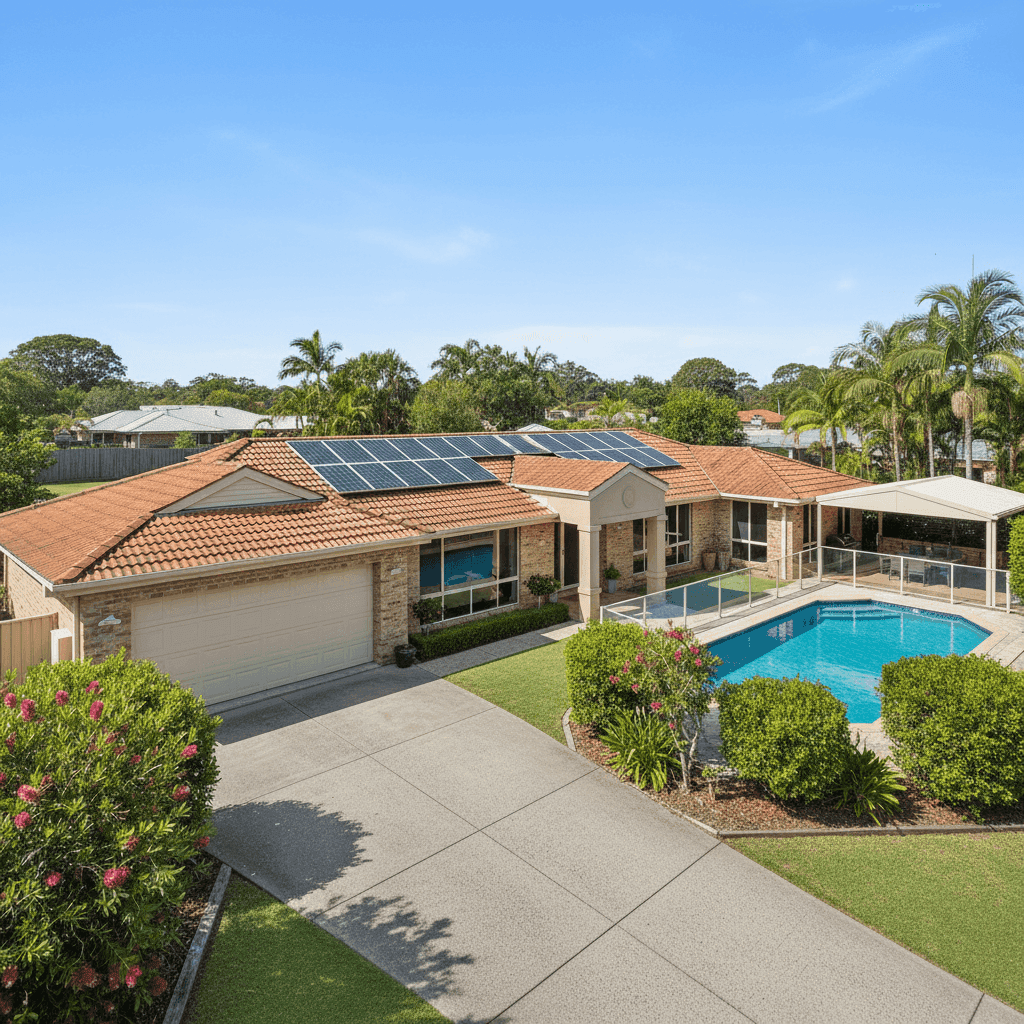
Benowa is one of the Gold Coast's most sought-after residential pockets — a leafy, established suburb in postcode 4217 that blends family-friendly streets with proximity to top schools, parks, and the buzz of Surfers Paradise. If you own a free standing home here, understanding what you should be paying for home and contents insurance is just as important as knowing your property's market value. This article breaks down a real insurance quote for a five-bedroom brick veneer home in Benowa, compares it against local, state, and national benchmarks, and offers practical guidance for getting the best value on your cover.
---
Is This Quote Fair?
The annual premium on this quote comes in at $2,476 per year (or $237 per month) for combined home and contents cover, with a building sum insured of $970,000 and contents valued at $70,000. Both the building and contents excess are set at $2,000.
Our price rating for this quote is CHEAP — below average for the Benowa area. That's a meaningful result. Based on a sample of 71 quotes collected for homes in this suburb, the median premium sits at $3,419 per year and the suburb average is $5,081 per year. This quote lands well below both figures — and even sits beneath the 25th percentile of $2,785 per year, meaning it is cheaper than at least three-quarters of comparable quotes in the area.
In short: if this level of cover meets your needs, this is a competitively priced policy worth taking seriously.
---
How Benowa Compares
To put this quote in proper context, it helps to zoom out and look at the broader pricing landscape. You can explore the full data on our Benowa suburb stats page, but here's a quick summary:
| Benchmark | Premium |
|---|---|
| This quote | $2,476/yr |
| Benowa 25th percentile | $2,785/yr |
| Benowa median | $3,419/yr |
| Benowa average | $5,081/yr |
| Benowa 75th percentile | $5,317/yr |
| LGA (Gold Coast) average | $8,161/yr |
| QLD state average | $9,129/yr |
| QLD state median | $3,903/yr |
| National average | $5,347/yr |
| National median | $2,764/yr |
A few things stand out here. Queensland's state average of $9,129 per year is extraordinarily high — a reflection of the significant cyclone, flood, and storm risk that affects much of the state, particularly in northern and coastal regions. You can dig into the statewide picture on our QLD insurance stats page.
Benowa, however, benefits from a more favourable risk profile than many QLD postcodes. The suburb is not classified as a cyclone risk area, which removes one of the biggest premium drivers in Queensland. This helps explain why Benowa's median of $3,419 is notably lower than the QLD state median of $3,903.
Compared to the national picture, this quote also performs well. The national median sits at $2,764 per year, and this quote at $2,476 comes in beneath even that figure — impressive for a large, well-appointed Gold Coast home with a high building sum insured.
The Gold Coast LGA average of $8,161 per year is worth noting too. That figure is dragged upward by higher-risk coastal and flood-prone areas within the LGA, so it shouldn't be taken as a direct comparison for Benowa specifically.
---
Property Features That Affect Your Premium
Several characteristics of this property influence its insurance pricing — some favourably, others less so.
Brick veneer construction with a tiled roof is generally viewed positively by insurers. Brick veneer walls offer solid fire resistance and structural durability, while tiled roofs are considered more resilient than metal sheeting or older materials like asbestos cement. Together, these construction types typically attract lower premiums than timber-framed or mixed-material homes.
Slab foundation is standard for Queensland homes built in this era and presents no particular risk concerns. Similarly, tiled flooring throughout is practical in a Queensland climate and less susceptible to water damage than carpet or timber floors — a minor but relevant factor in flood or leak scenarios.
Built in 2002, this property is relatively modern. Homes constructed after the significant building code reforms of the late 1990s and early 2000s tend to be better engineered for Queensland weather conditions, which can be reflected in more competitive premiums.
The swimming pool adds some liability considerations to a policy — insurers factor in the potential for accidents on the property. It's worth confirming your policy includes adequate public liability cover (most standard home policies include at least $10 million).
Solar panels are an increasingly common feature on Australian homes, but they do add to the replacement cost of the building. Ensure your building sum insured of $970,000 accounts for the cost of replacing the solar system in a total loss scenario, as panels can cost $10,000–$30,000 or more to reinstall.
Ducted climate control is another high-value fixture. Like solar, it should be factored into your building sum insured rather than treated as a contents item, as it is permanently fixed to the structure.
At 277 square metres, this is a sizeable home, and the $970,000 building sum insured reflects that. It's always worth having your building sum insured independently verified — underinsurance remains one of the most common and costly mistakes Australian homeowners make.
---
Tips for Homeowners in Benowa
1. Confirm your building sum insured covers full rebuild costs The $970,000 figure on this policy is substantial, but building costs have risen sharply in Queensland since 2020 due to labour and material shortages. Use a building cost calculator or consult a quantity surveyor to ensure your sum insured reflects current rebuild costs — not just the market value of your home.
2. Review your contents cover annually $70,000 in contents cover is a starting point, but a five-bedroom home with ducted air conditioning, a pool, and quality fittings likely contains more than that in furnishings, appliances, and valuables. Many Australians significantly underestimate their contents value — take the time to do a proper room-by-room assessment.
3. Check what your policy says about pool liability If you have children or regularly entertain guests, confirm that your home insurance includes adequate public liability cover for incidents involving the pool. Most standard policies do, but coverage limits and exclusions vary between insurers.
4. Don't assume cheap means inadequate This quote is priced below the suburb average, but that doesn't automatically mean it's inferior cover. Compare the product disclosure statement (PDS) carefully — look at what's included, what's excluded, and how claims are handled. Price is one factor; policy quality is another.
---
Compare Your Own Quote
Whether you're reviewing an existing policy or shopping for the first time, it pays to see what the market looks like for your specific property. CoverClub aggregates real quote data from across Australia so you can benchmark your premium with confidence. Get a quote and compare in minutes — no obligation, no jargon, just clear information to help you make a smarter decision on one of your most important financial protections.