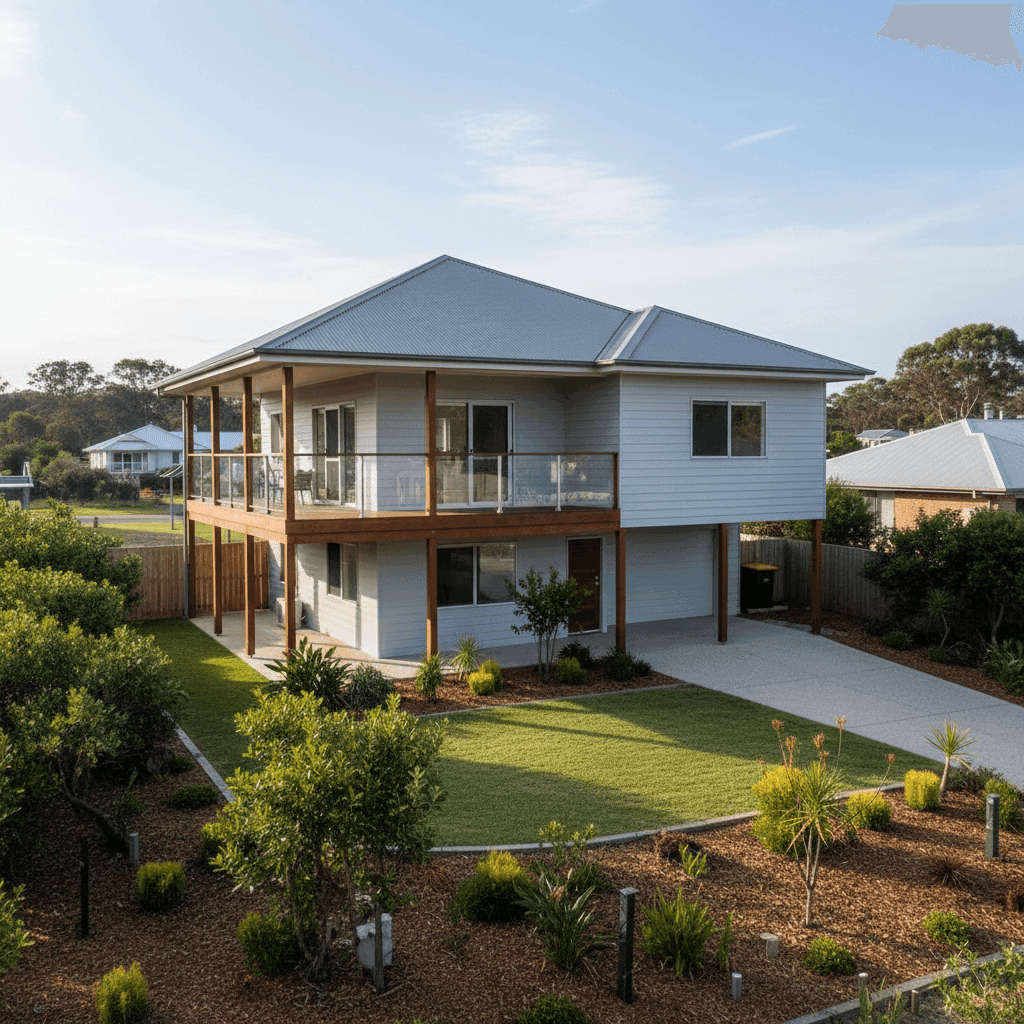
Berrara is a quiet coastal village on the NSW South Coast, nestled within the Shoalhaven region and beloved for its relaxed lifestyle and proximity to the sea. For owners of free standing homes in this area, understanding what drives home insurance costs — and whether a given quote represents good value — can make a meaningful difference to household budgets. This article breaks down a real home and contents insurance quote for a four-bedroom property in Berrara, compares it against local, state, and national benchmarks, and offers practical guidance for getting the most out of your cover.
---
Is This Quote Fair?
The annual premium for this quote comes in at $1,430 per year (or $146/month), covering both building (sum insured: $1,000,000) and contents ($40,000). Our pricing engine has rated this quote as Fair — Around Average.
That rating holds up well under scrutiny. The suburb average for Berrara sits at $1,802/year, and the median is $1,701/year, meaning this quote lands meaningfully below both figures. In fact, it falls closer to the 25th percentile of $1,379/year than to the median — suggesting this is a competitive result for the area, even if it's not the cheapest available.
It's worth noting that the building excess is set at $3,000 and the contents excess at $1,000. Higher excesses are one of the most common levers insurers use to bring premiums down, so the relatively modest annual cost here is partly a reflection of that trade-off. If you ever need to make a claim, you'll need to cover that excess out of pocket before your insurer steps in.
Overall, for a newly built, well-constructed home in a coastal NSW postcode, a premium of $1,430/year is a reasonable outcome — but there's always room to explore whether a better deal exists.
---
How Berrara Compares
To put this quote in proper context, it helps to zoom out and look at the broader insurance landscape. Here's how Berrara stacks up:
| Benchmark | Premium |
|---|---|
| This quote | $1,430/yr |
| Berrara suburb average | $1,802/yr |
| Berrara suburb median | $1,701/yr |
| Berrara 25th percentile | $1,379/yr |
| NSW state average | $9,528/yr |
| NSW state median | $3,770/yr |
| National average | $5,347/yr |
| National median | $2,764/yr |
The contrast with NSW state figures is striking. The NSW state average of $9,528/year is heavily skewed by high-risk postcodes — think flood-prone inland areas, cyclone-affected northern regions, and densely populated metro suburbs with high theft rates. The national average of $5,347/year tells a similar story.
Berrara's own suburb median of $1,701/year is well below both state and national medians, which reflects a combination of lower catastrophe risk, relatively modern housing stock, and the coastal-but-not-cyclone-prone nature of the NSW South Coast. You can explore the full breakdown of local pricing trends on the Berrara suburb stats page.
It's also worth noting that the LGA average (Unincorporated Other Territories) sits at $2,613/year — again, comfortably above this quote, reinforcing that $1,430/year is a solid result for the region.
---
Property Features That Affect Your Premium
Several characteristics of this property will have influenced the final premium, both positively and negatively.
Construction year (2023): A brand-new home is one of the strongest premium-reducing factors available. Modern builds must comply with current Australian Standards and the National Construction Code, meaning they're engineered to withstand weather events, have up-to-date electrical and plumbing systems, and carry far less risk of structural failure than older homes. Insurers reward this with lower base rates.
Hardiplank/Hardiflex cladding: Fibre cement cladding is highly regarded by insurers for its fire resistance, durability, and low maintenance requirements. Unlike timber weatherboards, it won't rot or warp, and it performs well in bushfire-prone or coastal environments — both relevant considerations for the NSW South Coast.
Steel/Colorbond roof: Colorbond is the gold standard for Australian residential roofing. It's lightweight, corrosion-resistant, and handles coastal salt air far better than terracotta or concrete tiles. Insurers generally view it favourably, and it's less prone to storm damage than older roofing materials.
Stump foundation: Homes on stumps (also known as pier foundations) are elevated off the ground, which can reduce flood and moisture damage risk. However, the underfloor space does require periodic inspection and maintenance to ensure stumps remain sound — something worth keeping on top of to avoid complications at claim time.
Vinyl flooring: A practical and cost-effective flooring choice, vinyl is straightforward to replace and generally keeps contents valuations manageable. It won't swell or warp with moisture the way timber floors can, which is a minor plus in a coastal environment.
Ducted climate control: This is one of the few features that can nudge premiums upward slightly, as ducted systems are expensive to repair or replace and add to the overall building sum insured. At $1,000,000, the building cover here is generous — make sure that figure accurately reflects your rebuild cost, not just the market value of the property.
No pool, no solar panels: Both of these features can add complexity and cost to a policy. Their absence simplifies the risk profile and helps keep the premium lean.
---
Tips for Homeowners in Berrara
1. Review your building sum insured annually. Construction costs have risen sharply across Australia in recent years, and a sum insured that was adequate when you built or bought your home may no longer reflect the true cost of rebuilding. Use a building cost calculator or speak to a quantity surveyor to ensure you're not underinsured — it's one of the most common and costly mistakes homeowners make.
2. Consider whether your excess levels suit your financial situation. The $3,000 building excess on this policy is on the higher end. If you have strong emergency savings, that trade-off makes sense. But if a $3,000 out-of-pocket expense would be a significant burden, it may be worth paying a slightly higher premium to bring the excess down to a more manageable level.
3. Protect your home against coastal conditions. Even without cyclone risk, the NSW South Coast experiences strong winds, heavy rainfall, and salt-laden air. Regularly inspect your Colorbond roof for any loose fixings or corrosion around flashings, check that gutters are clear, and ensure your stump foundations are inspected every few years. Proactive maintenance can prevent claims — and help you avoid premium increases at renewal.
4. Shop around at renewal time. Insurance loyalty rarely pays. Insurers frequently offer their best rates to new customers, meaning long-term policyholders can end up paying more than necessary. Use a comparison platform like CoverClub to benchmark your renewal quote against the market before you commit.
---
Find a Better Deal with CoverClub
Whether you're a first-time buyer or a seasoned homeowner, comparing quotes is one of the simplest ways to make sure you're not paying more than you need to. CoverClub aggregates real insurance data from across Australia to help you understand what's fair for your postcode, property type, and risk profile. Get a home insurance quote today and see how your current cover stacks up — you might be surprised what's available.