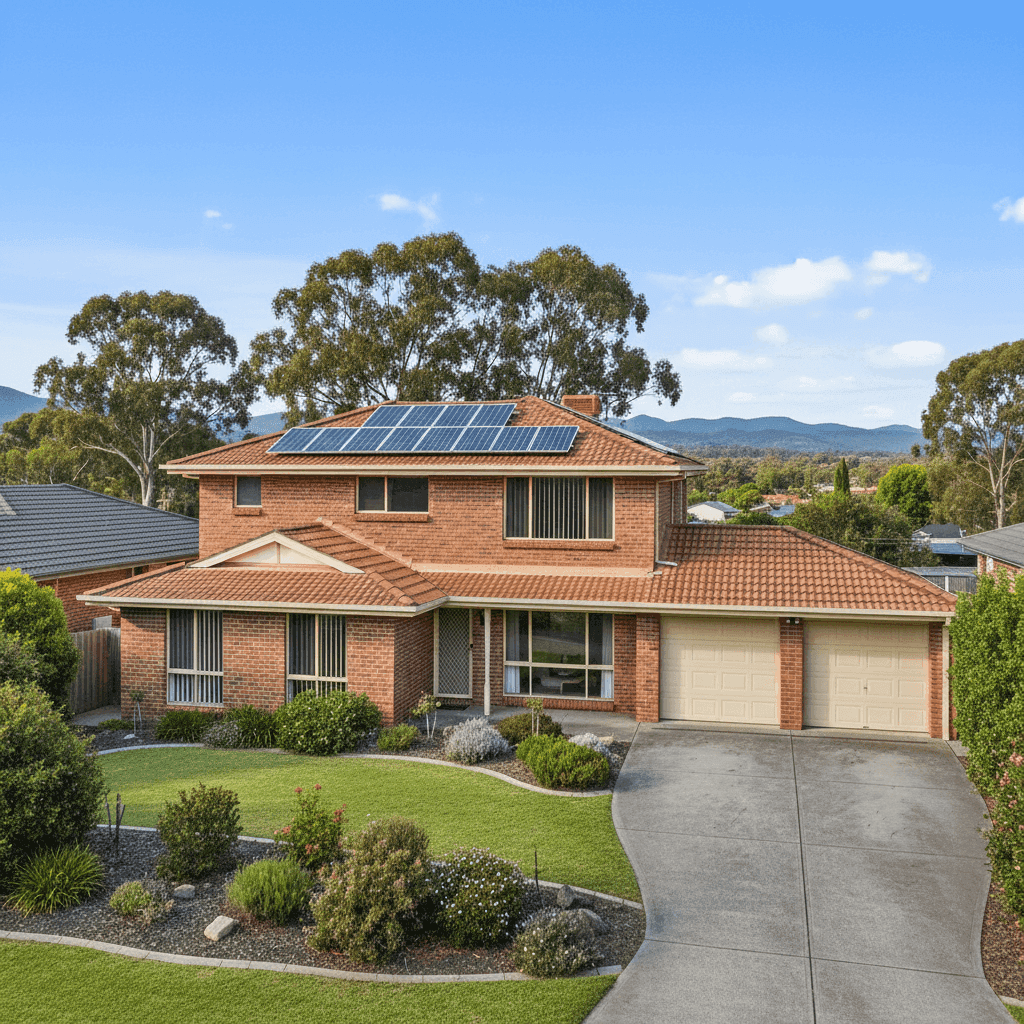
If you own a free standing home in Berwick, VIC 3806, you've probably wondered whether you're paying too much — or too little — for home insurance. In this article, we break down a real home and contents insurance quote for a four-bedroom, two-bathroom brick veneer property in this popular south-eastern Melbourne suburb, and compare it against local, state, and national benchmarks to help you make a more informed decision.
---
Is This Quote Fair?
The annual premium for this quote comes in at $1,476 per year (or roughly $141 per month), covering both building ($648,000 sum insured) and contents ($50,000), each with a $1,000 excess.
Our price rating for this quote is FAIR — Around Average.
What does that mean in practice? Based on 148 quotes collected for the Berwick area, the suburb's 25th percentile sits at $1,467 per year — meaning this premium is just above the cheapest quarter of quotes in the area. It's well below the suburb average of $2,219 and the median of $1,926, which suggests this is a reasonably competitive result, though not the lowest available.
In short: this homeowner is paying less than most of their neighbours, but there may still be room to do better.
---
How Berwick Compares
To put this quote in proper context, here's how Berwick stacks up against broader benchmarks:
| Benchmark | Average Premium | Median Premium |
|---|---|---|
| Berwick (3806) | $2,219/yr | $1,926/yr |
| LGA: Casey | $2,142/yr | — |
| Victoria | $3,000/yr | $2,718/yr |
| National | $5,347/yr | $2,764/yr |
A few things stand out here. First, Berwick homeowners are paying significantly less than the Victorian state average of $3,000 per year, which reflects the suburb's relatively low-risk profile — no cyclone exposure, established infrastructure, and predominantly brick construction. Second, the national average of $5,347 is heavily skewed by high-risk regions in Queensland and Western Australia, where cyclone, flood, and bushfire risks push premiums dramatically higher.
The LGA average for Casey ($2,142) tracks closely with the Berwick suburb average, suggesting consistent pricing across the broader council area. For a property sitting near the 25th percentile at $1,476, this quote is performing well relative to both local and statewide norms.
---
Property Features That Affect Your Premium
Insurance pricing isn't arbitrary — every feature of a property plays a role in how risk is assessed. Here's how the characteristics of this particular home influence its premium:
Brick Veneer Walls Brick veneer is one of the more insurer-friendly construction types in Australia. It offers solid fire resistance and durability compared to weatherboard or cladding alternatives, which often attract higher premiums. This is a genuine advantage when it comes to keeping costs down.
Tiled Roof Concrete or terracotta tiles are viewed favourably by insurers — they're resilient against ember attack and general weather events. Compared to Colorbond or older corrugated iron, tiles tend to sit in a lower risk bracket.
Slab Foundation A concrete slab foundation is standard for homes of this era and is generally considered low-risk. It avoids the complications associated with stumped or suspended floors, which can be more susceptible to moisture and movement.
Built in 2007 A construction year of 2007 means this home is relatively modern — built to post-2003 bushfire and building code standards, but not so new that replacement costs are inflated by premium finishes or unusual materials. This is a sweet spot for insurers.
Solar Panels The presence of solar panels adds a modest level of complexity to the risk profile. Panels represent a replacement cost on the roof and can complicate claims involving storm or hail damage. Some insurers include solar panels under building cover automatically; others require specific endorsement. It's worth confirming your policy wording covers them explicitly.
Ducted Climate Control Ducted heating and cooling systems are a significant fixed asset and are typically included in the building sum insured. At $648,000, the sum insured here should adequately account for this, but it's worth ensuring the figure reflects full replacement cost — including systems like these — rather than just the structural shell.
Standard Fittings, 214 sqm At 214 square metres with standard-quality fittings, this property sits comfortably within the mid-range for Berwick. There's no over-insurance risk from luxury finishes, and the building sum insured of $648,000 appears appropriate for a home of this size and specification in the current construction cost environment.
---
Tips for Homeowners in Berwick
1. Review your building sum insured annually Construction costs have risen significantly in recent years. A sum insured that was accurate in 2022 may now be under-insured. Use an independent building cost calculator or speak with a quantity surveyor to ensure your $648,000 figure still reflects genuine replacement cost — including demolition, professional fees, and the ducted systems mentioned above.
2. Confirm your solar panels are covered Not all policies automatically cover rooftop solar systems under building insurance. Check your Product Disclosure Statement (PDS) carefully to confirm panels are included, and ensure the replacement value is factored into your sum insured.
3. Shop around at renewal time Even a "fair" quote can often be bettered. Insurers regularly adjust their pricing models, and loyalty doesn't always pay — in fact, new customers frequently receive better rates than long-standing policyholders. Set a reminder to compare quotes at least 30 days before your renewal date.
4. Consider a slightly higher excess to reduce your premium At $1,000, the excess here is fairly standard. If you have sufficient savings to cover a larger out-of-pocket cost in the event of a claim, increasing your excess to $1,500 or $2,000 can meaningfully reduce your annual premium — sometimes by 10–15%.
---
Compare Your Own Quote
Whether you're a first-time buyer in Berwick or reviewing your existing cover, it pays to see what else is on the market. CoverClub aggregates real quote data from across Australia so you can see exactly how your premium stacks up — not just against suburb averages, but against what other homeowners with similar properties are actually paying.
Get a home insurance quote and compare it instantly →
You can also explore detailed pricing data for Berwick and the 3806 postcode or browse Victoria-wide insurance trends to get a fuller picture of where your premium sits.