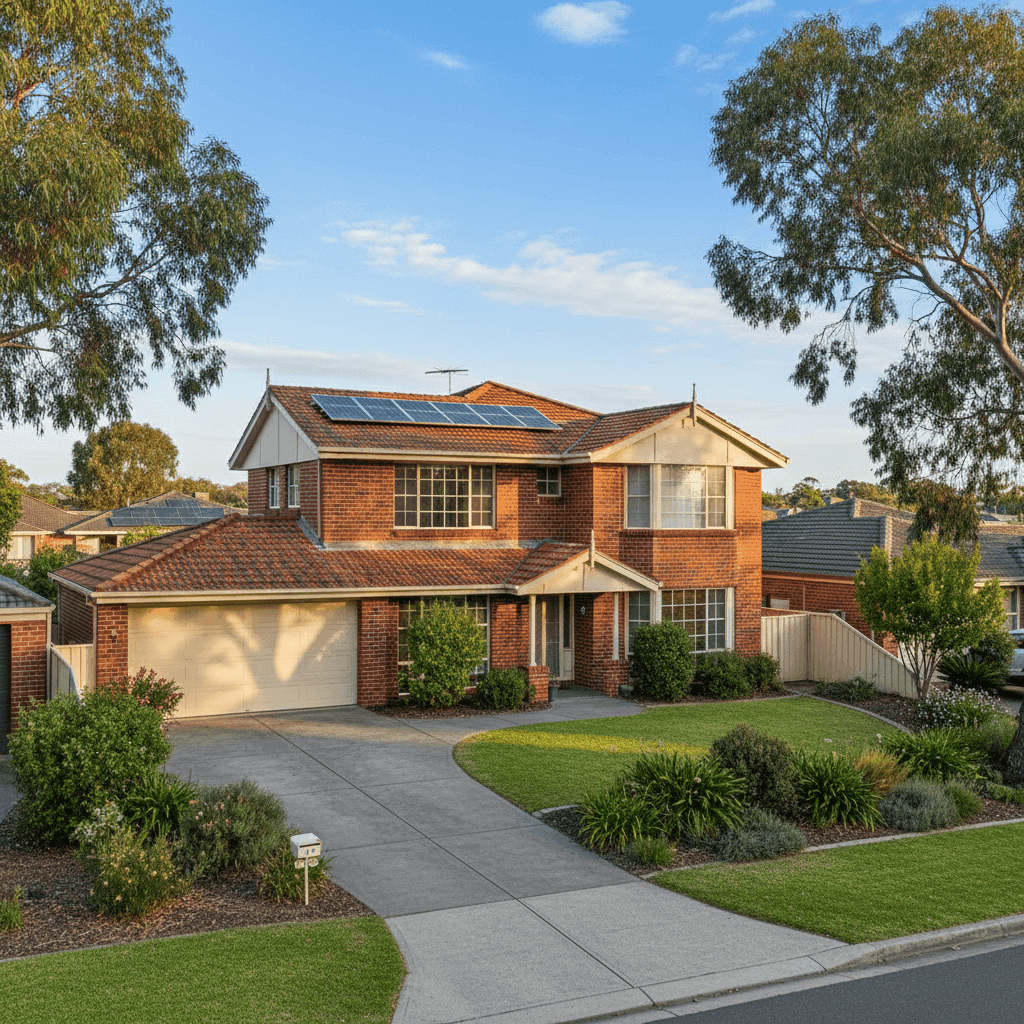
Berwick is one of Melbourne's most established outer south-eastern suburbs — a family-friendly pocket of the City of Casey known for its leafy streetscapes, quality schools, and a strong mix of brick veneer homes built from the late 1980s through to the early 2000s. If you own a free standing home here, understanding what you should be paying for home and contents insurance is genuinely useful — and that's exactly what we've done with this analysis.
---
Is This Quote Fair?
The quote we're analysing comes in at $1,973 per year (or around $200/month) for a combined home and contents policy, covering a $750,000 building sum insured and $220,000 in contents. Both the building and contents excess are set at $2,000 each.
Our rating for this quote is FAIR — around average.
Here's why: based on 148 quotes collected for Berwick (3806), the suburb average sits at $2,219/year and the median at $1,926/year. This quote lands just $47 above the median — meaning roughly half of Berwick homeowners are paying less, and half are paying more. It's not a bargain, but it's also not overpriced. For a five-bedroom home with a $750,000 building sum insured and $220,000 in contents, it's a reasonable position to be in.
The 25th percentile for the suburb is $1,467/year, so there is room to potentially do better — particularly if you're willing to shop around or adjust your excess levels. The 75th percentile sits at $2,574/year, meaning this quote comfortably avoids the more expensive end of the market.
---
How Berwick Compares
Context is everything when evaluating an insurance premium. Here's how Berwick stacks up:
| Benchmark | Average Premium | Median Premium |
|---|---|---|
| Berwick (3806) | $2,219/yr | $1,926/yr |
| LGA: City of Casey | $2,142/yr | — |
| Victoria | $3,000/yr | $2,718/yr |
| National | $5,347/yr | $2,764/yr |
A few things stand out here. First, Victorian homeowners pay considerably more on average than Berwick residents — the state average of $3,000/year is 35% higher than the suburb average. This reflects the fact that many Victorian postcodes carry elevated risk profiles, particularly those exposed to bushfire zones, flood plains, or coastal weather events. Berwick, by comparison, is a relatively low-risk suburban environment.
Second, the national average of $5,347/year is dramatically higher — more than double the Berwick average. This is heavily influenced by high-risk regions in Queensland, Western Australia, and the Northern Territory, where cyclone, flood, and storm risks push premiums significantly upward. Berwick homeowners are, broadly speaking, in a fortunate position relative to much of the country.
At the LGA level, the City of Casey average of $2,142/year is very close to the Berwick suburb figure, suggesting consistent pricing across the broader council area.
---
Property Features That Affect Your Premium
Insurers don't price every home the same way — they assess a range of property characteristics to determine risk. Here's how the features of this particular home factor in:
Brick Veneer Walls & Tiled Roof Brick veneer is one of the most common and well-regarded construction types in Australian suburbia, and insurers generally view it favourably. It offers solid fire resistance and structural durability. Paired with a tiled roof — another standard, lower-risk material — this home sits in a construction category that typically attracts mid-range premiums rather than the surcharges associated with timber-framed or steel-clad homes.
Slab Foundation A concrete slab foundation is considered stable and low-maintenance from an insurance perspective. It reduces the risk of subsidence-related claims and is well-suited to the soil conditions common in Melbourne's south-east.
Construction Year: 1993 At around 30 years old, this home is mature but not aged. Homes built in the early 1990s generally met reasonable building standards, though insurers may factor in the likelihood of ageing plumbing, electrical systems, or roofing materials. It's worth ensuring your sum insured reflects current rebuild costs, not just the original construction value.
Solar Panels This property has solar panels installed, which adds a modest layer of complexity to the insurance picture. Solar systems are typically covered under building insurance, but it's important to confirm with your insurer that the panels and inverter are explicitly included in your policy — and that the sum insured is sufficient to cover their replacement cost.
Ducted Climate Control Ducted heating and cooling systems are a significant fixed asset in any home. Like solar panels, these are generally covered under building insurance, but their replacement cost can be substantial. Ensuring your $750,000 building sum insured accounts for this — along with any other built-in features — is an important check.
Timber & Laminate Flooring From a contents perspective, high-quality flooring can influence the overall rebuild cost. Timber and laminate floors are generally included in the building sum insured rather than contents, but it's worth confirming this with your insurer, particularly for any floating floor installations.
No Pool, No Cyclone Risk The absence of a swimming pool removes a common liability exposure, and Berwick's location well outside cyclone-prone regions means no cyclone-specific loading applies to this policy — a meaningful saving compared to properties in northern Australia.
---
Tips for Homeowners in Berwick
1. Review your building sum insured annually Construction costs have risen sharply across Victoria in recent years. A $750,000 sum insured may have been appropriate when the policy was first taken out, but it's worth cross-checking against current rebuild cost calculators — particularly given the home's size of 214 sqm and its standard fittings. Underinsurance is one of the most common — and costly — mistakes homeowners make.
2. Confirm solar panels and ducted systems are covered Don't assume these are automatically included. Ask your insurer specifically whether your solar panel system (including inverter and mounting hardware) and ducted climate control system are covered under your building policy, and whether the current sum insured is sufficient to replace them.
3. Consider whether your excess level is working for you Both the building and contents excess on this policy are set at $2,000. Raising your excess is one of the most straightforward ways to reduce your annual premium — but only if you're confident you could cover that amount out of pocket in the event of a claim. Conversely, if cash flow is a concern, a lower excess with a slightly higher premium might offer better peace of mind.
4. Shop around at renewal time A "fair" rating means this quote is competitive — but it doesn't mean it's the best available. Insurers reprice policies regularly, and loyalty doesn't always pay. Using a comparison tool at renewal time takes only a few minutes and could reveal a meaningfully cheaper option for the same level of cover.
---
Compare Your Own Quote
Whether you're reviewing an existing policy or shopping for the first time, CoverClub makes it easy to see how your premium stacks up against real quotes from across your suburb and state. Get a home insurance quote today and find out if you're paying a fair price — or if there's a better deal waiting for you.